
Masai Mara & the Conservancies
Africa's most celebrated wildlife arena. The Great Wildebeest Migration, the Mara River crossings, and the Maasai community conservancies surrounding the National Reserve — where night drives, walking, and off-road tracking are permitted and vehicles never crowd a sighting.
Where the Safari Was Defined
Photo by Denice Alex on Unsplash
About Masai Mara & the Conservancies
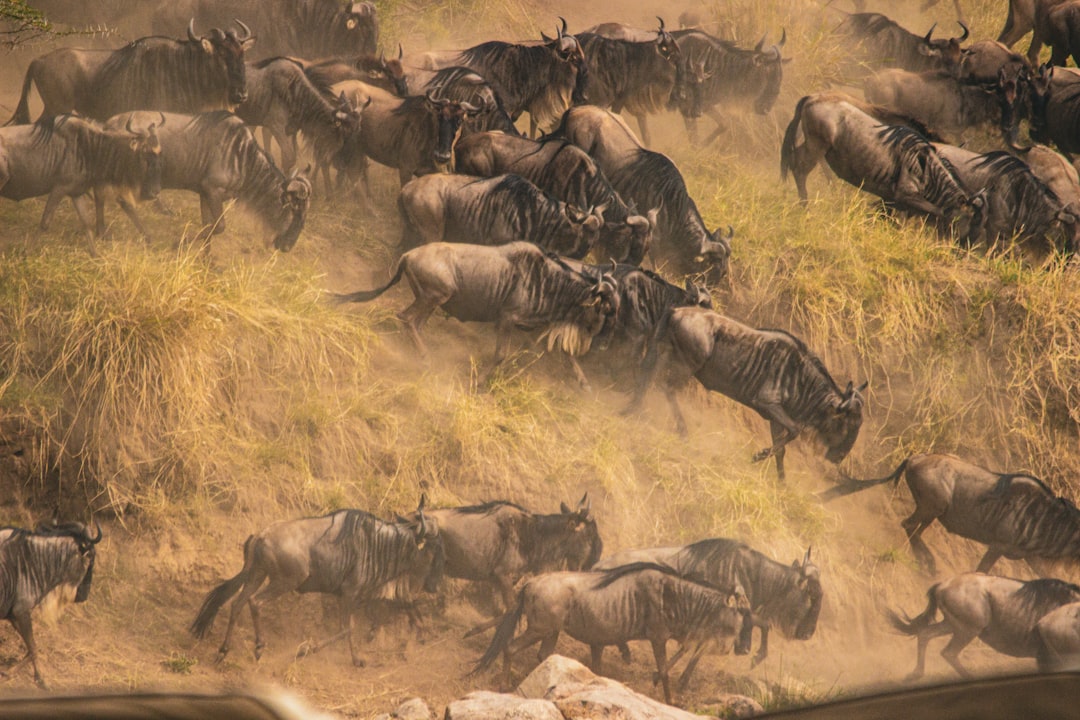
The Masai Mara is the reference point. Every safari destination in Africa is, consciously or not, compared to it. The reason is simple: the combination of wildlife density, landscape drama, and the Great Wildebeest Migration — the largest annual movement of large land mammals on earth — produces a concentration of spectacle that no other destination consistently replicates. The Mara is the northern extension of Tanzania's Serengeti ecosystem, separated by an artificial border that the animals completely ignore. Between July and October, over a million wildebeest, 200,000 zebra, and hundreds of thousands of Thomson's gazelle flow northward from the depleted dry-season Serengeti grasslands into the Mara's still-green pastures.
The Mara River, which bisects the crossing routes, hosts the most dramatic moments: the herds arriving at the bank, the smell of the water, the crocodiles waiting in the shallows, the moment a single animal commits and the whole herd follows — thousands of animals crossing simultaneously in a churning, desperate, spectacular mass. This is what people come for, and it delivers. But the Mara is divided into two fundamentally different visitor experiences. The National Reserve (public) is open to all; vehicle density at popular sightings can be heavy during peak migration; no off-road driving, no night drives, no walking safaris. Excellent wildlife access but with the crowding that comes from public access.
The private conservancies surrounding the reserve — Naboisho, Mara North, Olare Motorogi, Mara Naboisho, Ol Kinyei — are Maasai community-owned land where the operational model is fundamentally different. Strict bed and vehicle limits are enforced. Off-road tracking is permitted; night drives reveal the nocturnal cast; walking safaris with armed guides add depth. The wildlife density rivals the main reserve with a fraction of the congestion. For travellers who can afford it, staying in a conservancy camp for at least part of the Mara visit is the difference between observing a spectacle and being immersed in one. The price difference reflects a genuinely different quality of experience, and the conservancy model — community landowners receiving direct revenue from carefully regulated tourism — is producing the most ecologically and economically sustainable safari format in Africa.
Things to Do in Masai Mara & the Conservancies
Witness a Mara River crossing
The defining Mara experience. Not a scheduled event — herds may take 2-3 days to work up the courage to cross, then cross dozens of times in a day. Your guide monitors radio networks tracking herd movements; patience at the river bank is rewarded with one of the most dramatic wildlife spectacles available anywhere on the continent.
Stay in a conservancy camp
The Maasai-owned private conservancies (Naboisho, Mara North, Olare Motorogi, Ol Kinyei) enforce vehicle limits and permit off-road tracking, night drives, and walking — none available in the National Reserve. The combination produces categorically superior wildlife encounters. At least part of any serious Mara stay should be in a conservancy.
Take a night drive
Permitted only in the private conservancies, not the National Reserve. Spotlit drives after dinner reveal leopards hunting, hyena clans on the move, civets, genets, and the predator activity that intensifies after dark. The defining advantage of conservancy stays.
Walking safari with an armed guide
Two to four hour guided walks through conservancy grasslands and woodland margins. Tracking practice, vegetation ecology, dung identification — the depth of bush understanding that game drives skim past. Conducted with serious protocols given the predator density.
Visit a Maasai community
Conducted with respect through legitimate community partnerships, Maasai village visits provide substantive cultural depth. The conservancy model has built ongoing community relationships rather than transactional tourist encounters. Pay a fair fee for cultural engagement and any photographs.
Hot air balloon over the plains
Dawn hot air balloon flights over the Mara plains, drifting silently above the herds in the first light, are among the most evocative African experiences available. Typically followed by a champagne breakfast on the savanna. Significant cost but consistently rated as a trip highlight.
When to Visit Masai Mara & the Conservancies
Migration Peak
July, October
The definitive window. Wildebeest flow into the Mara from Tanzania; the Mara River crossings begin in July, peak August-September, and continue into October. Mid-morning until late afternoon at the river often delivers crossings. Peak pricing applies; conservancy camps book 12-18 months ahead.
Short Rains
November, December
The migration has largely returned south. Sharp afternoon showers transform the landscape to vivid green; migratory birds arrive; resident predator populations remain. Lower rates and lower crowds; excellent value for first-time Mara visitors not specifically targeting the river crossings.
Calving Season
January, March
Warm and dry. Strong game viewing across the resident wildlife. February brings concentrated calving among the resident herbivores, drawing predator activity. Strong photography conditions; manageable crowds.
Long Rains
April, May
Heavy persistent rain; dense vegetation reducing game visibility; some access tracks affected. Dramatically lower rates across the industry. The lowest-volume window of the year. Intrepid travellers find this the most rewarding value season.
Getting to Masai Mara & the Conservancies
By light aircraft from Wilson Airport in Nairobi (45 minutes) to one of the Mara airstrips serving specific conservancies and reserve sectors — Safarilink Aviation is the premier operator with scheduled morning and afternoon circuits. Most travellers fly. By road, the Mara is approximately 270km from Nairobi (5-6 hours on a mix of paved highway and rough graded roads); the final section becomes very rough in wet conditions. Strict 15kg soft-bag luggage limit on all light aircraft transfers. Park and conservancy fees are payable separately from accommodation in most cases — confirm with your operator.
Where to Stay
Ultra-luxury conservancy camps (USD $700-2,500+ per person per night): Angama Mara (clifftop position above the Oloololo Escarpment), Mara Plains Camp (Olare Motorogi), Sand River Mara, Ngare Serian, &Beyond Bateleur Camp. Premium mid-range (USD $400-700): Basecamp Eagle View (Naboisho), Encounter Mara, Saruni Mara. Mid-range (USD $200-400): Mara Sopa Lodge, Zebra Plains Mara Camp, several conservancy mid-tier options. Budget (USD $100-200): Enkorok Mara Camp, Enchoro Wildlife Camp. The conservancy camps justify their pricing through the bed-density framework and the activity privileges; reserve-only stays at budget rates can deliver wildlife access but compromise on quality of encounter.
Travel Tips for Masai Mara & the Conservancies
Frequently Asked Questions
- National Reserve or conservancies?
- Both have their place. The Reserve offers reliable wildlife access at lower cost but with vehicle crowding at popular sightings during peak migration. The conservancies offer off-road tracking, night drives, walking, lower vehicle density, and superior intimacy of encounter — at premium prices. The optimal Mara visit combines both: a night or two in the Reserve, then conservancy nights for the deeper engagement.
- When does the Mara River crossing happen?
- Generally July-September with the highest crossing frequency in August. The exact crossings are unpredictable — driven by rainfall, herd dynamics, and predator pressure. Plan a minimum 4 nights to maximise the chance of witnessing crossings. Patient guides who track herd movement on the radio networks dramatically improve odds.
- How long should I stay at the Masai Mara?
- Three to five nights minimum, longer during peak migration. The wildlife and the migration reward patience; rushing the Mara is the most common visitor mistake. Five nights split between two camps (one Reserve, one conservancy) is the textbook approach.
- Is the Mara safe?
- Yes, safe and well-managed. Standard wildlife-safety protocols apply (do not exit the vehicle in the Reserve; follow guide instructions on foot in the conservancies). The Narok-Mara corridor has occasional banditry on remote sections — most travellers fly in to avoid the road exposure.
Explore More, Masai Mara & the Conservancies
Things To Do
Plan Your Trip
More in Kenya
Amboseli National Park
Kenya's iconic Kilimanjaro-backdrop elephant park. The world's most thoroughly studied elephant population, the Amboseli swamps fed by subte…
Tsavo East & West
21,000 square kilometres of semi-arid bush, volcanic terrain, and riverine ecosystem — the largest protected area in Kenya. Red elephants of…
Samburu National Reserve
Kenya's northern frontier — arid, volcanic, and harsh. The endemic Special Five (Grevy's zebra, Somali ostrich, reticulated giraffe, gerenuk…
Laikipia & Ol Pejeta
Kenya's exclusive conservation heartland on the Laikipia Plateau. The world's last two Northern White Rhinoceroses, East Africa's largest bl…
Mount Kenya
Africa's second-highest mountain at 5,199 metres — more technically varied and more genuinely wild than Kilimanjaro. The Sirimon, Chogoria, …
Nairobi
The only capital city on earth with a national park within its boundaries. The David Sheldrick Wildlife Trust elephant nursery, the Giraffe …
Lamu Island & Archipelago
Kenya's UNESCO-listed Swahili Old Town — the oldest, best-preserved Swahili settlement in East Africa, dating to the 14th century. No motor …
Diani Beach
Twenty-five kilometres of silver-white sand and turquoise Indian Ocean on Kenya's south coast. World-class kitesurfing, marine park diving, …
Rift Valley Lakes
Three distinct experiences within a few hours of each other in central Kenya — Lake Nakuru's rhino sanctuary and flamingos, Lake Naivasha's …