
Amboseli National Park
Kenya's iconic Kilimanjaro-backdrop elephant park. The world's most thoroughly studied elephant population, the Amboseli swamps fed by subterranean meltwater, Observation Hill, and the most photographed safari image in Africa.
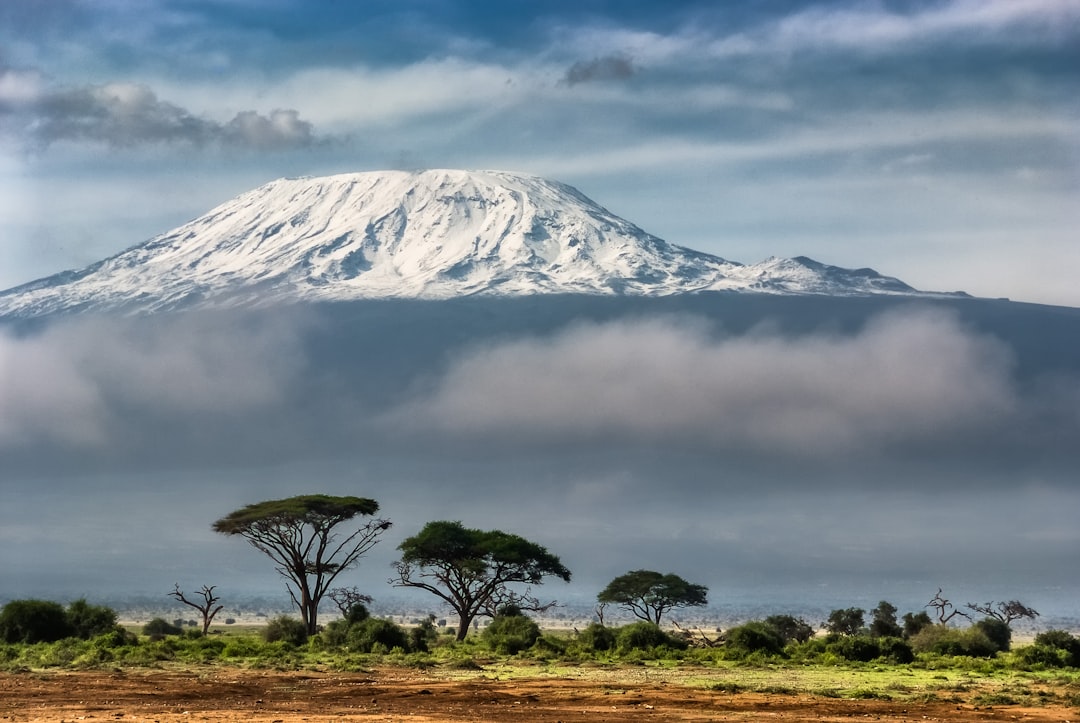
Elephants Under Kilimanjaro
Photo by Sergey Pesterev on Unsplash
About Amboseli National Park
There is a specific image that defines Amboseli, and it is so frequently reproduced that it has become the archetype of the African safari photograph: a herd of elephants in the foreground, the Amboseli swamps providing their green water source behind them, and the ice cap of Kilimanjaro — 5,895 metres, the highest point in Africa — rising above the Tanzanian border in the background. The image is real. The photograph exists to be taken. The elephants are there. Kilimanjaro is there. And the particular qualities of the Amboseli ecosystem — the flat open terrain, the swamp-fed grasslands, the extraordinary habituation of the elephants — make this one of the most reliable and most intimate elephant experiences anywhere in Africa.
The research programme founded by Dr Cynthia Moss in 1972 has documented every individual in Amboseli's elephant population — their births, deaths, social bonds, and life histories — for over 50 years. The result is a population of elephants that have coexisted with researchers and tourists for generations. The habituation is complete; the encounters are extraordinarily close and extraordinarily relaxed. When your guide points out a specific matriarch and knows her lineage, her family group's history, and the specific scarring from a past injury, you are seeing the legacy of half a century of research made visible in a single encounter.
The Kilimanjaro variable is the operational challenge. The mountain is visible from Amboseli but not always — cloud typically forms around the upper slopes by mid-morning, obscuring the summit for most of the day. The reliable window is early morning before approximately 9am, and occasionally again in late afternoon as the cloud disperses. The implication: dawn game drives are not merely about golden light for wildlife photography. They are the only reliable opportunity to see the full Kilimanjaro backdrop. The drive that departs camp before sunrise, arriving at an elephant viewing area as the mountain catches the first direct sunlight, delivers the image. Sleeping in is incompatible with the Amboseli objective. The park also features Observation Hill — a designated point where visitors are explicitly permitted to exit their vehicles for a 360° panorama over the swamps and the plains. The ability to stand on the ground in an active wildlife area, in open air, is a different quality of presence from the vehicle-bound safari experience.
Things to Do in Amboseli National Park
Dawn game drive for Kilimanjaro photography
The defining Amboseli activity. Depart camp pre-dawn; reach an elephant viewing area as Kilimanjaro catches the first direct sunlight. The mountain is reliably visible for the first 2-3 hours after sunrise before cloud builds. Sleeping in is incompatible with the Amboseli objective.
Stand on Observation Hill
One of Amboseli's unique features — a designated point where visitors are explicitly permitted to exit the vehicle. 360° panorama covering the Sinet Delta (excellent birdwatching), the swamp systems, and the plains where elephant herds move. The on-foot presence is a different quality of experience.
Encounter the habituated elephant herds
Dr Cynthia Moss's research has produced the most thoroughly documented elephant population in the world. Guides know individual animals, their family histories, and their behaviours. Encounters routinely place vehicles within metres of breeding herds with calves.
Visit the swamps
The Enkongo Narok and Ol Tukai swamps — fed by subterranean meltwater from Kilimanjaro's glaciers — are the ecological heart of Amboseli. The swamps draw elephants, hippos, and substantial waterbird populations year-round, providing the green foreground for the iconic photographs.
Visit a Maasai community
Maasai community visits near Amboseli are best conducted with respect through lodge-arranged partnerships. The combination of pastoral cattle culture and Maasai traditional life provides cultural context for the broader region.
Combine with Tsavo East and West
Amboseli pairs naturally with the Tsavo parks for a southern Kenya circuit. The drive between is 3-4 hours through the Tanzanian border area. The combination covers elephants-under-Kilimanjaro, red elephants, Mzima Springs, and the SGR train through Tsavo.
When to Visit Amboseli National Park
Primary Dry
July, October
Peak wildlife concentration around the swamps. Kilimanjaro is visible at dawn through mid-morning before cloud builds. Cool early mornings (10-12°C), warm afternoons (28°C). Peak pricing applies; the iconic Amboseli photography is most reliable in this window.
Secondary Dry
January, March
Warm and dry. Calving season in February brings new elephant calves and predator activity. Kilimanjaro is often clearest in this window — drier air, less cloud. Crowds are manageable; pricing slightly lower than the July peak.
Short Rains
November, December
Afternoon showers transform the landscape green. Migratory birds arrive. Kilimanjaro views are less reliable but the green landscape is photogenic. Lower rates and crowds make this a strong value window.
Long Rains
April, May
Heavy persistent rain reduces wildlife visibility; Kilimanjaro often obscured by cloud. Dramatically lower rates. Some access tracks affected. For travellers prioritising value over conditions.
Getting to Amboseli National Park
By light aircraft from Wilson Airport in Nairobi (45 minutes) to the Amboseli airstrip — Safarilink operates scheduled circuits. By road, Amboseli is 240km from Nairobi (4 hours on a mix of paved highway and the rough Namanga-Amboseli road); self-drive is possible but the final 75km is corrugated gravel that requires patience. From Tanzania, the Namanga border is 60km from the park entrance. Strict 15kg soft-bag luggage limit on light aircraft.
Where to Stay
Luxury: Elewana Tortilis Camp (private conservancy adjacent to the park with exceptional Kilimanjaro views and positioning), Porini Amboseli Camp (Selenkay Conservancy with strong cultural programme), Ol Donyo Lodge (in the Chyulu Hills, dramatic architecture). Premium mid-range: Amboseli Serena Safari Lodge (well-positioned, reliable), Kibo Safari Camp. Mid-range: Sentrim Amboseli Lodge, Ol Tukai Lodge. Most visitors stay 3 nights; the conservancy properties just outside the park boundary often deliver superior wildlife encounters than the interior lodges.
Travel Tips for Amboseli National Park
Frequently Asked Questions
- Will I see Kilimanjaro?
- Almost certainly on at least one dawn or early-morning game drive across a 3-night stay. The mountain is reliably visible for 2-3 hours after sunrise before cloud builds. The risk is sleeping in. Plan dawn departures every morning to maximise odds.
- Is Amboseli worth visiting outside the dry season?
- Yes, with adjusted expectations. Kilimanjaro views are less reliable in the wet season but the elephant encounters remain the strongest in Africa year-round, and the green-season landscapes have their own beauty. The dry season delivers the iconic image more reliably.
- How does Amboseli compare to Kruger or the Mara?
- Different. Amboseli's focus is the elephants and the Kilimanjaro backdrop, not the Big Five breadth. Kruger and the Mara have more diverse wildlife in larger areas. Amboseli's particular niche — the most habituated and most photographed elephant population on earth, under Africa's highest mountain — is unique.
- Can I climb Kilimanjaro from Amboseli?
- No — Kilimanjaro is in Tanzania, accessed from Moshi or Arusha. From Amboseli you photograph the mountain from across the Kenyan border. To climb, you cross into Tanzania (Namanga border) and begin from the Tanzanian gateway towns. The two experiences pair well in a combined Kenya-Tanzania itinerary.
Explore More, Amboseli National Park
Things To Do
Plan Your Trip
More in Kenya
Masai Mara & the Conservancies
Africa's most celebrated wildlife arena. The Great Wildebeest Migration, the Mara River crossings, and the Maasai community conservancies su…
Tsavo East & West
21,000 square kilometres of semi-arid bush, volcanic terrain, and riverine ecosystem — the largest protected area in Kenya. Red elephants of…
Samburu National Reserve
Kenya's northern frontier — arid, volcanic, and harsh. The endemic Special Five (Grevy's zebra, Somali ostrich, reticulated giraffe, gerenuk…
Laikipia & Ol Pejeta
Kenya's exclusive conservation heartland on the Laikipia Plateau. The world's last two Northern White Rhinoceroses, East Africa's largest bl…
Mount Kenya
Africa's second-highest mountain at 5,199 metres — more technically varied and more genuinely wild than Kilimanjaro. The Sirimon, Chogoria, …
Nairobi
The only capital city on earth with a national park within its boundaries. The David Sheldrick Wildlife Trust elephant nursery, the Giraffe …
Lamu Island & Archipelago
Kenya's UNESCO-listed Swahili Old Town — the oldest, best-preserved Swahili settlement in East Africa, dating to the 14th century. No motor …
Diani Beach
Twenty-five kilometres of silver-white sand and turquoise Indian Ocean on Kenya's south coast. World-class kitesurfing, marine park diving, …
Rift Valley Lakes
Three distinct experiences within a few hours of each other in central Kenya — Lake Nakuru's rhino sanctuary and flamingos, Lake Naivasha's …