
Tsavo East & West
21,000 square kilometres of semi-arid bush, volcanic terrain, and riverine ecosystem — the largest protected area in Kenya. Red elephants of Tsavo East, Mzima Springs underwater hippos, black rhinos at Ngulia Sanctuary, and the SGR wildlife train.
Kenya's Untamed Wilderness
About Tsavo East & West
Combined, Tsavo East and West form one of the largest protected wilderness areas on the planet — 21,000 square kilometres of semi-arid bush, volcanic terrain, and riverine ecosystem bisected by the Nairobi-Mombasa highway and the Standard Gauge Railway. The scale of Tsavo is the first thing it impresses upon you: the horizon extends in every direction, vehicle density is a fraction of the Masai Mara, and the sense of genuine, unexplored wilderness is among the strongest in Kenya. Tsavo is the safari for travellers who have done the more famous parks and want the wildlife without the crowds.
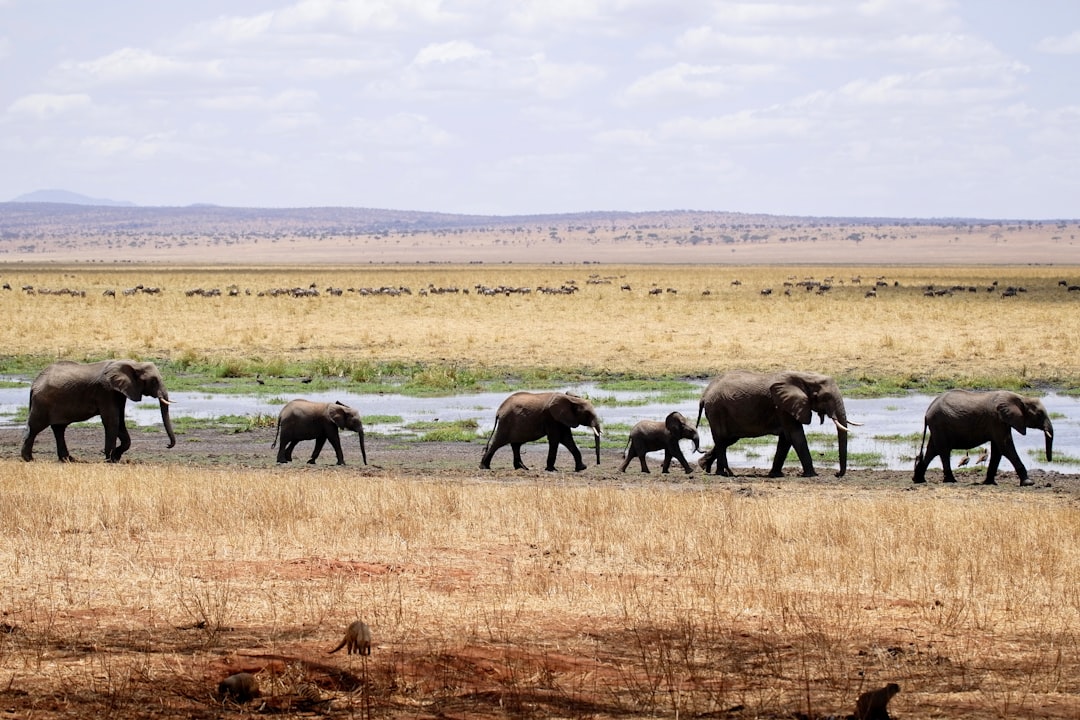
Tsavo East's defining characteristic is its red elephants. The iron-rich laterite clay of the semi-arid plains, churned up by elephants dusting and wallowing, coats their grey hides in a russet red that becomes more vivid as the dry season progresses. A herd of red elephants moving across the Galana River flats against the pale blue sky of the dry season is one of the most distinctive wildlife images in Africa. The park's flat terrain and the Galana River concentrate wildlife in the dry season in patterns that make game drives productive. The Yatta Plateau, one of the world's longest lava flows, provides elevated driving with sweeping views.
Tsavo West's character is defined by its recent volcanic past. The Shetani Lava Flows — black, jagged, barely colonised by vegetation — cut through the park in stark geological contrast (Shetani means 'devil' in Swahili; the flows look recent enough to justify it). Mzima Springs is Tsavo West's centrepiece: a subterranean oasis where an estimated 50 million gallons of crystal-clear water emerge daily from beneath the lava, fed by underground aquifers from the Chyulu Hills. The springs support hippos, Nile crocodiles, and large fish in extraordinary water clarity. A submerged glass observation chamber allows visitors to descend below the water surface and watch hippos moving underwater — one of the most unusual wildlife viewing opportunities in Kenya. The Ngulia Rhino Sanctuary provides protected access to black rhinos — critically endangered, but here reliably encountered.
Things to Do in Tsavo East & West
Photograph the red elephants of Tsavo East
The signature Tsavo East image. Game drives along the Galana River and the open plains intercept the herds moving between water and grazing. The colour intensifies through the dry season; September-October produces the deepest red. Bring telephoto coverage.
Visit Mzima Springs underwater observation
Tsavo West's centrepiece. The submerged glass observation chamber descends below the water surface allowing visitors to watch hippos moving underwater — one of the most unusual wildlife viewing opportunities in Africa. The clarity of the spring water is extraordinary.
Track black rhinos at Ngulia Sanctuary
The fortified Ngulia Rhino Sanctuary in Tsavo West provides protected access to critically endangered black rhinos. The sanctuary management has made this one of the more reliable locations for black rhino encounters in Kenya outside Laikipia/Ol Pejeta.
Ride the SGR train through Tsavo
The Standard Gauge Railway's Nairobi-Mombasa route cuts directly through the heart of Tsavo for hours of the journey. Elephants, giraffes, and lions are regularly visible from the carriages. The dawn passage through Tsavo on the overnight train is one of the most extraordinary train journeys in Africa. First Class (KES 4,500) is worth the upgrade for the larger windows and quieter carriage.
Walk the Shetani Lava Flows
The black volcanic lava fields of Tsavo West, barely colonised by vegetation, look geologically recent. Short guided walks across the cooled lava with experienced rangers provide context for the park's volcanic history and the recent geology of the Great Rift system.
Drive the Yatta Plateau
One of the world's longest lava flows runs through Tsavo East. The elevated plateau provides sweeping driving views across the surrounding plains. A half-day drive covering the plateau and the Galana River circuit produces some of Tsavo East's most photogenic landscape compositions.
When to Visit Tsavo East & West
Long Dry
June, October
The premier Tsavo window. Wildlife concentrates at the Galana River and Mzima Springs. The red-elephant phenomenon peaks as elephants dust in the laterite. Visibility is at maximum. Heat builds through September-October. Vehicle density remains low even in peak season — Tsavo's scale absorbs visitors.
Secondary Dry
January, March
Warm and dry. Strong wildlife viewing across both parks. Less heat than late dry but still excellent. The SGR wildlife train journey is at its most productive in dry months when wildlife concentrates at remaining water near the line.
Short Rains
November, December
Afternoon showers transform the bush green. Migratory birds arrive. Wildlife disperses across the now-watered landscape. Lower rates; lower crowds. Strong photographic light from the post-rain saturation.
Long Rains
April, May
Heavy persistent rain; dense vegetation reducing visibility; some interior tracks become impassable. Dramatically lower rates and crowds. Best for botanical interest and serious value travellers.
Getting to Tsavo East & West
Multiple approaches. By SGR train from Nairobi or Mombasa — the wildlife train through Tsavo is itself a destination, 5.5 hours each way, with passages through the parks. Book First Class (KES 4,500/USD $35). By light aircraft from Wilson Airport (45-60 minutes) to one of the Tsavo airstrips. By road from Nairobi (5-6 hours to Tsavo East via Voi; longer to Tsavo West). Many travellers combine: SGR one way, fly the other. From the coast (Mombasa, Diani): 2-3 hour drive to Voi Gate of Tsavo East.
Where to Stay
Luxury: Elewana Finch Hattons (Tsavo West, luxury tented camp with strong heritage), Galdessa Camp (Tsavo East riverside), Sala's Camp (Tsavo East). Mid-range: Severin Safari Camp (Tsavo West), Ashnil Aruba Lodge (Tsavo East), Voi Safari Lodge. Budget: KWS public bandas at Aruba Dam (Tsavo East) and other park-managed accommodation. Many visitors stay 2-3 nights split between Tsavo East and Tsavo West to cover both parks' distinct character. The SGR train approach allows efficient coast-bound combination.
Travel Tips for Tsavo East & West
Frequently Asked Questions
- Tsavo East or Tsavo West?
- Both, if you have time. Tsavo East is the larger, drier, red-elephant park with open plains and the Galana River. Tsavo West is more volcanic, has Mzima Springs and Ngulia Rhino Sanctuary, and more varied terrain. A combined 2-3 night stay split between them covers both characters.
- Is Tsavo really as wild as it looks?
- Yes — the scale is genuine. Entire morning game drives in Tsavo East without seeing another vehicle are normal in the dry season. The red elephants cross the Galana on their own schedule. This is the wilderness that Kenya's more famous parks aspire to replicate.
- Is the SGR train worth the experience?
- Yes, especially for travellers combining safari and coast. The wildlife visible from the carriages through Tsavo is genuine; the journey itself is comfortable; First Class adds materially to the experience. Book the daytime departure for full wildlife viewing.
- Can I see the Big Five at Tsavo?
- Yes, with effort. Lion and elephant are common; buffalo and leopard are present but require patient game driving across the vast park; black rhino is restricted to Ngulia Sanctuary (Tsavo West). The Big Five emphasis suits the Mara or Kruger better; Tsavo's value is the scale and the red elephant.
Explore More, Tsavo East & West
Things To Do
Plan Your Trip
More in Kenya
Masai Mara & the Conservancies
Africa's most celebrated wildlife arena. The Great Wildebeest Migration, the Mara River crossings, and the Maasai community conservancies su…
Amboseli National Park
Kenya's iconic Kilimanjaro-backdrop elephant park. The world's most thoroughly studied elephant population, the Amboseli swamps fed by subte…
Samburu National Reserve
Kenya's northern frontier — arid, volcanic, and harsh. The endemic Special Five (Grevy's zebra, Somali ostrich, reticulated giraffe, gerenuk…
Laikipia & Ol Pejeta
Kenya's exclusive conservation heartland on the Laikipia Plateau. The world's last two Northern White Rhinoceroses, East Africa's largest bl…
Mount Kenya
Africa's second-highest mountain at 5,199 metres — more technically varied and more genuinely wild than Kilimanjaro. The Sirimon, Chogoria, …
Nairobi
The only capital city on earth with a national park within its boundaries. The David Sheldrick Wildlife Trust elephant nursery, the Giraffe …
Lamu Island & Archipelago
Kenya's UNESCO-listed Swahili Old Town — the oldest, best-preserved Swahili settlement in East Africa, dating to the 14th century. No motor …
Diani Beach
Twenty-five kilometres of silver-white sand and turquoise Indian Ocean on Kenya's south coast. World-class kitesurfing, marine park diving, …
Rift Valley Lakes
Three distinct experiences within a few hours of each other in central Kenya — Lake Nakuru's rhino sanctuary and flamingos, Lake Naivasha's …