A practical month-by-month guide to the great migration across the Serengeti and Masai Mara, covering when to go, where the herds are, costs and how long to stay.
- Animals on the move
- 1.5m+ wildebeest, plus zebra and gazelle
- Countries
- Tanzania (Serengeti) and Kenya (Masai Mara)
- Calving season
- Late January to March, southern Serengeti/Ndutu
- River crossings
- July to October, northern Serengeti and Mara
- Recommended stay
- 4-7 nights in the migration zone
- Book ahead
- 9-12 months for peak crossing season
The great migration is the year-round movement of more than 1.5 million wildebeest, along with several hundred thousand zebra and gazelle, around the Serengeti-Mara ecosystem of Tanzania and Kenya. It is not a single stampede on a fixed date but a slow, circular journey driven by rainfall and fresh grazing, turning roughly clockwise across an area of around 30,000 square kilometres.
Because the herds are always somewhere, the real question is not whether you will see them but which chapter you want to catch: the calving on the southern plains, the long march north, or the river crossings.
This guide breaks the cycle down month by month, weighs up the Serengeti against the Masai Mara, and covers how many days you need, where to stay and what it realistically costs.
What the Great Migration actually is
The migration is a continuous loop rather than an event. Wildebeest follow the rains in search of nutrient-rich short grass, and because the rainfall pattern across the ecosystem is reasonably predictable, so is the herds' broad route. They spend the green months on the mineral-rich southern plains, then move north-west and north as those plains dry out, before circling back south when the rains return.
Where is the Serengeti, exactly? It sits in northern Tanzania, sharing its northern boundary with Kenya's Masai Mara National Reserve. Together they form one unbroken ecosystem; the wildebeest do not recognise the international border and cross it freely. Serengeti National Park covers around 14,750 square kilometres, with the wider ecosystem taking in the Ngorongoro Conservation Area and several Kenyan conservancies.
The single most useful thing to understand before booking is that the migration cannot be "missed". The herds are present in the ecosystem every day of the year. What changes is their location, so the date of your trip should be chosen to match the part of the cycle you most want to witness.
The great migration calendar, month by month
Timings shift by a few weeks each year depending on the rains, so treat any calendar as a strong guide rather than a timetable. That said, the pattern below holds in most years and is what experienced operators plan around.
- January to March: The herds gather on the short-grass plains of the southern Serengeti and the Ndutu area, on the edge of the Ngorongoro Conservation Area. Calving peaks in February, when around 8,000 calves can be born per day. Predator action is intense.
- April to May: The plains dry and the herds begin moving north-west through the central Serengeti (Seronera). This is the long rains, so expect afternoon showers, fewer crowds and lower prices.
- June to July: Columns push into the Western Corridor and confront the Grumeti River, with smaller but dramatic crossings. The dry season is beginning and conditions are good.
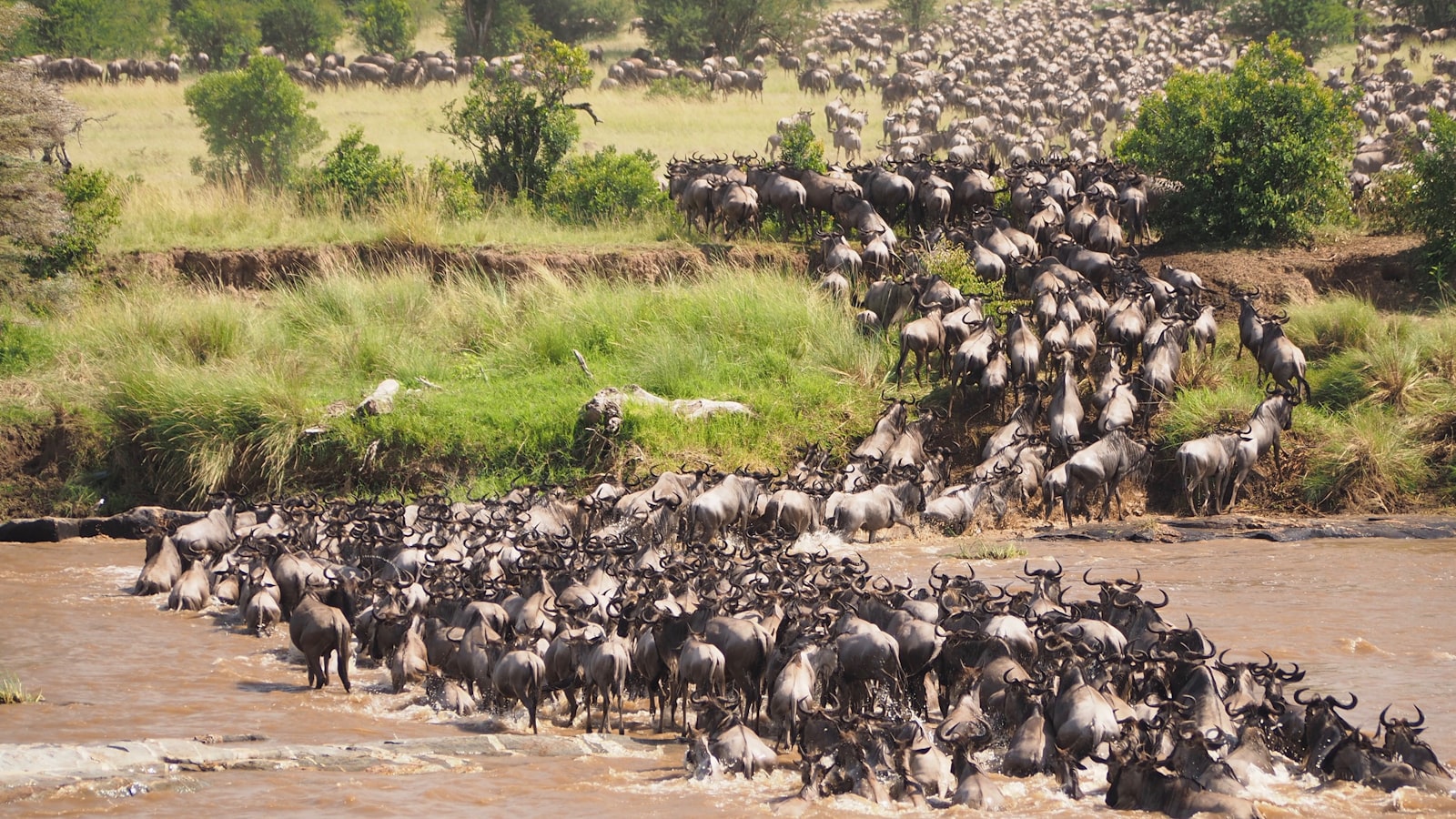
- July to October: The herds reach the far northern Serengeti and the Masai Mara, and the famous Mara River crossings take place, often back and forth across the same river several times.
- November to early December: The short rains pull the herds back south through the eastern Serengeti towards the calving grounds, completing the loop.
Calving season versus river-crossing season
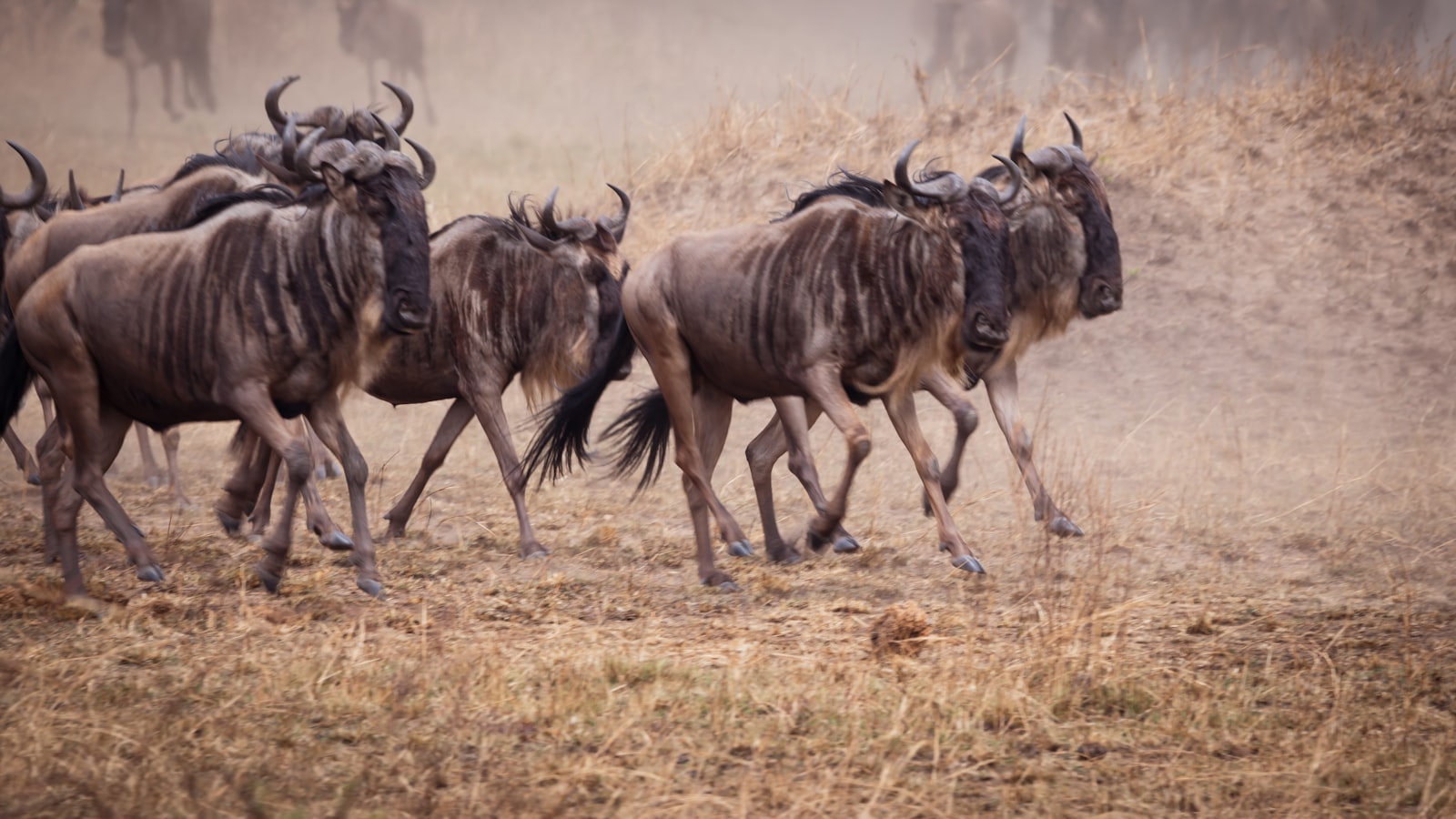
Photo by Helena Pfisterer on Unsplash
The two headline chapters offer very different experiences. Calving season, from late January to March, concentrates the herds on the open southern plains near Ndutu. The spectacle is the sheer density of animals and the constant presence of predators: lion, cheetah and hyena all time their hunting around the vulnerable newborns. Photographers love the uncluttered, grassy backdrops and the lower visitor numbers compared with the peak crossing months.
River-crossing season, from roughly July to October, is the more dramatic and more sought-after period. Thousands of wildebeest mass on the riverbanks before plunging in, navigating strong currents and waiting crocodiles. Crossings are unpredictable: a herd can build at the water's edge for hours and then turn back, so patience and a full day in the right area are essential.
If you want guaranteed huge numbers in one place with strong predator sightings, choose calving. If you want the high-adrenaline river drama and are willing to pay peak prices and book far ahead, choose the crossing months.
Serengeti or Masai Mara: which side and when
Both countries see the same animals, just at different points in the year. For most of the cycle the herds are in Tanzania's Serengeti: the southern plains from December to March, the central and western Serengeti from April to July, and the northern Serengeti from July onwards. Tanzania therefore offers far more flexibility on timing.
Kenya's Masai Mara holds the herds for a shorter window, broadly July to October, which coincides with the Mara River crossings on the Kenyan side. The Mara is more compact and easier to reach, with shorter transfers from Nairobi, but it can feel busier at crossing points because vehicles concentrate where the action is.
A common approach is to base your choice on month. Travelling in February? Go to the southern Serengeti. Travelling in August or September? Either the northern Serengeti or the Masai Mara will put you near the river crossings, and the northern Serengeti tends to be quieter than the Mara.
How many days you need and where to stay
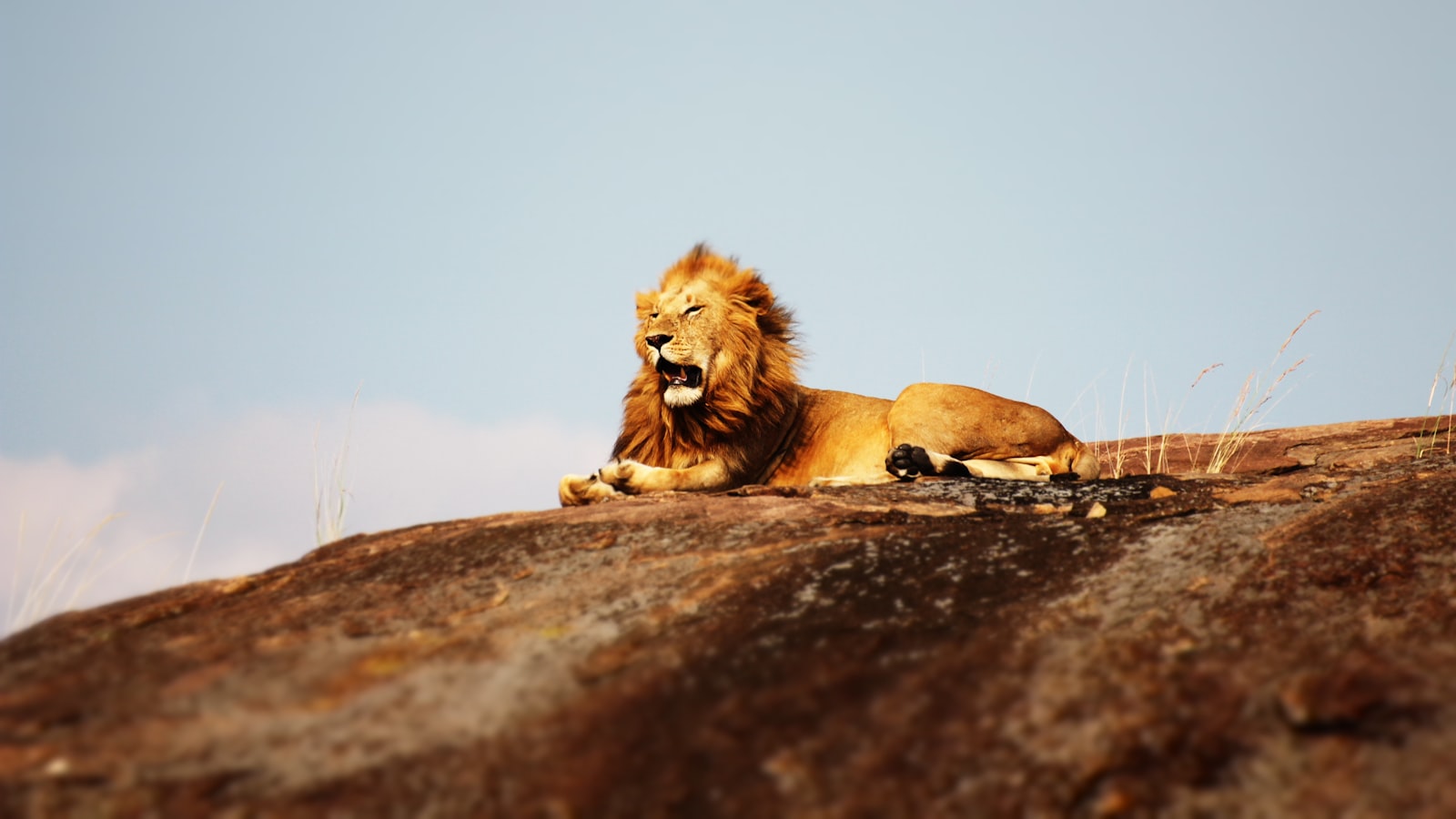
Photo by Mike Holford on Unsplash
Plan a minimum of three full days in the migration zone, and ideally four to five, especially for the crossings. Because a crossing may not happen on any given day, more time dramatically improves your odds. A typical trip pairs three or four nights near the herds with a night or two elsewhere, such as the Ngorongoro Crater or Tarangire, for variety.
Accommodation falls into two camps. Mobile or seasonal migration camps relocate two or three times a year to stay close to the herds; booking one positioned for your dates is the single best way to be near the action at dawn. Permanent lodges and tented camps stay put year-round, which is excellent value when the herds are nearby but less so when they have moved on.
When choosing, match the camp's seasonal position to your travel month rather than picking on facilities alone. A beautiful permanent lodge in the central Serengeti is little use in February when the herds are 100 kilometres south at Ndutu.
Realistic costs and booking lead time
A guided Serengeti safari is not a budget trip. Mid-range lodge-based safaris generally run from around 350 to 600 USD per person per night including park fees, meals, game drives and a guide. Quality mobile migration camps and higher-end tented camps typically sit between 700 and 1,500 USD per person per night, and the most exclusive properties climb well beyond that. Serengeti park entry fees alone are roughly 70 to 80 USD per adult per day.
Prices peak in the July to October crossing season and over the December to February holidays, and soften noticeably in the April to May long rains, when you can find genuine value with the trade-off of wetter conditions. International flights, domestic light-aircraft transfers and tips are usually extra.
Book early. For peak crossing dates, the best mobile camps fill 9 to 12 months ahead, and serious photographers often book a year or more out. For calving season and shoulder months, three to six months is usually enough, though the strongest camps still go first.
Predators and common misconceptions
The migration is as much about the hunters as the herds. The Serengeti-Mara ecosystem holds one of the densest lion populations in Africa, alongside cheetah, leopard, spotted hyena and, at the rivers, large Nile crocodiles. Calving season offers the most concentrated predator-prey drama, while the river crossings deliver the crocodile encounters most visitors picture.
The biggest misconception is that the migration is a one-off event you must arrive on the exact right day to see. It is a constant presence in the landscape; the skill lies in choosing the right region for your month. A second myth is that you must visit Kenya for it, when in fact the herds spend most of the year in Tanzania.
Finally, do not assume a river crossing is guaranteed simply because you are there in September. Crossings depend on the herds' mood and the rains. Allowing several days, using a well-positioned camp and travelling with an experienced guide are what turn a hopeful trip into a successful one.
Frequently Asked Questions
- What is the best time to see the Great Migration?
- It depends on what you want. For the calving and dense predator action, visit the southern Serengeti from late January to March. For the dramatic Mara River crossings, travel between July and October to the northern Serengeti or Kenya's Masai Mara. The herds are in the ecosystem all year, so there is no bad time, only different chapters.
- Where is the Serengeti?
- Serengeti National Park is in northern Tanzania, in East Africa. It shares its northern border with Kenya's Masai Mara National Reserve, and together they form a single ecosystem of around 30,000 square kilometres. The park covers roughly 14,750 square kilometres and is usually reached by light aircraft or road from Arusha, the main safari gateway town.
- Can you miss the Great Migration?
- No. The migration is a continuous, year-round loop of 1.5 million-plus wildebeest, so the herds are always somewhere in the Serengeti-Mara ecosystem. What changes is their location. As long as your camp or lodge is positioned in the right region for your travel month, you will be near the herds. You cannot turn up and find them simply gone.
- Serengeti or Masai Mara for the migration?
- Tanzania's Serengeti holds the herds for most of the year and offers the widest choice of timings, including calving from December to March. Kenya's Masai Mara is best from July to October, when the Mara River crossings happen there. Choose by month: the Serengeti for the calving and most of the cycle, either side for the July to October crossings.
- How many days do you need for a migration safari?
- Aim for at least three full days in the migration zone, and four to five for the river crossings, since a crossing may not happen on any single day. Many travellers combine three or four nights near the herds with a night or two at the Ngorongoro Crater or Tarangire, making a typical trip around six to eight nights overall.
- How much does a Great Migration safari cost?
- Mid-range lodge safaris usually run from around 350 to 600 USD per person per night, all-inclusive of park fees, meals and game drives. Quality mobile migration camps and premium tented camps sit between 700 and 1,500 USD per night, with luxury properties higher. Prices peak in the July to October crossing season and ease in the April to May long rains.
- How far ahead should I book?
- For peak July to October crossing dates, book the best mobile camps 9 to 12 months ahead, as they sell out fast and photographers often reserve a year or more in advance. For calving season and shoulder months, three to six months is generally enough, although the strongest camps and guides still go first, so earlier is always safer.