
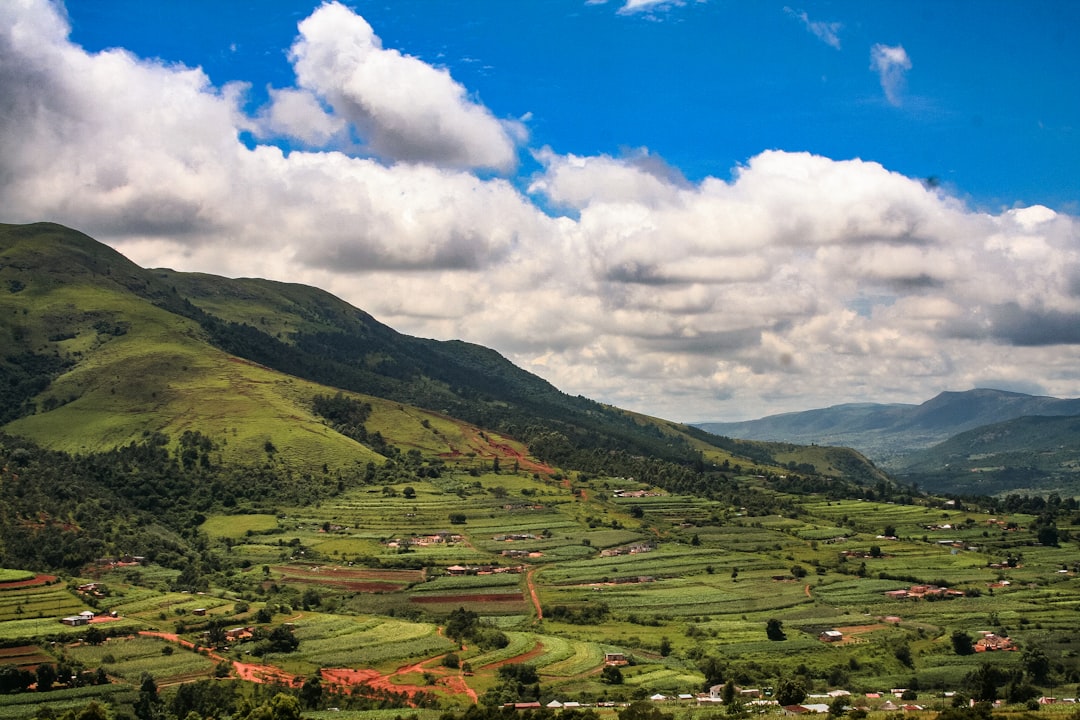
Ezulwini Valley & Lobamba
Eswatini's cultural, spiritual, and logistical centre. The corridor between Mbabane and Manzini holds Lobamba (the spiritual capital), the Swaziland National Museum, Sheba's Breasts, Execution Rock, and the country's densest accommodation and craft markets.
The Valley of Heaven
Photo by Eswatini Photography on Unsplash
About Ezulwini Valley & Lobamba
The Ezulwini Valley — the 'Valley of Heaven' in siSwati — is the geographic, cultural, and logistical centre of Eswatini. The corridor connects the administrative capital of Mbabane in the north to the commercial hub of Manzini in the south, passing through the legislative and spiritual capital of Lobamba. For first-time visitors, the Ezulwini Valley is the optimal basecamp: central, well-served by accommodation, and containing the cultural institutions that provide the context for understanding the country.
Lobamba's status as the spiritual capital is real, not ceremonial. The King's primary royal residence is located here. The Parliament meets here. The national ceremonies, Umhlanga in late August/September drawing 40,000 young Swazi women to the royal village of Ludzidzini, and the sacred Incwala First Fruits Festival in December/January, both take place at the Royal Residences in and around Lobamba. Visiting Lobamba provides direct contact with the institutional life of one of the last functioning absolute monarchies on earth. The Swaziland National Museum provides essential context for understanding the country's colonial history, independence movement, and contemporary political structure. The King Sobhuza II Memorial Park honours the longest-reigning monarch in modern history (1921-1982) who led Eswatini to independence in 1968.
The valley's dense accommodation options across all price tiers and its central position make it the natural base for exploring the surrounding country. Day trips to Malolotja (northwest), Mkhaya and Hlane (northeast lowveld), Phophonyane (northwest), Mantenga (within the valley itself) and Mlilwane (also within the valley) are all feasible from an Ezulwini base. Beyond the cultural institutions, the valley supports the country's densest craft market network (the Ezulwini Craft Market and the wider Malkerns Valley craft circuit), the major shopping and dining infrastructure, and a half-dozen significant hiking and birding sites including Sheba's Breasts (the twin granite peaks visible from the valley floor) and Execution Rock with its African fish eagle population. Ezulwini is where Eswatini makes itself legible to the visitor.
Things to Do in Ezulwini Valley & Lobamba
Visit the Swaziland National Museum at Lobamba
Comprehensive coverage of the nation's colonial history, independence movement, and contemporary political structure. Essential context for understanding what you are seeing throughout the country. Allow 1-2 hours.
Pay respects at the King Sobhuza II Memorial Park
Honours the longest-reigning monarch in modern history (1921-1982). The park provides biographical and historical material on the king who led Eswatini to independence in 1968. Adjacent to the museum; combine the two.
Hike Sheba's Breasts
The twin granite peaks visible from the valley floor. Approach trails are accessible from the valley road; half-day hiking to the saddle between the peaks rewards with excellent views across the Ezulwini corridor. Moderate fitness required.
Climb or visit Execution Rock (Nyonyane)
The granite formation with complex pre-colonial cultural history; excellent birding around the rock face. The African fish eagle is regularly sighted. Climbable for the full panoramic view; reaches into Mlilwane Wildlife Sanctuary at the base.
Shop the Ezulwini Craft Market
The primary commercial craft market in the valley. Locally carved timber, soapstone sculptures, woven textiles, and beadwork. Prices are negotiable; quality varies; look for pieces from individual artisans rather than mass-produced stock.
Attend Umhlanga (if visiting in August/September)
Tourists are welcome to observe the ceremony at Ludzidzini. Modest dress expected; photography of general proceedings permitted but specific sacred moments are not. Accommodation in the valley books out completely — reserve 3-6 months ahead.
When to Visit Ezulwini Valley & Lobamba
Umhlanga Season
August, September
The Reed Dance brings 40,000 young Swazi women to Ludzidzini for an eight-day ceremony of song, dance, and reed presentation to the Queen Mother. The valley reaches full capacity; book accommodation 3-6 months ahead. The most extraordinary cultural moment of the Eswatini calendar.
Dry Winter
May, September
Comfortable hiking conditions for Sheba's Breasts and Execution Rock. Pleasant valley walking; clear views; mild days. The standard recommended window for the wider Ezulwini exploration outside the festival periods.
Incwala Period
December, January
The sacred Incwala First Fruits Festival, less visitor-accessible than Umhlanga but the country's most spiritually significant ceremony. Exact dates set by lunar cycle; confirmed only weeks before. Specific protocols apply to attendees.
Shoulder
April, October
Transitional periods between festival seasons. Lower visitor numbers; reduced accommodation pressure; comfortable conditions. Strong for travellers wanting cultural depth without the festival crowds.
Getting to Ezulwini Valley & Lobamba
Ezulwini is the centre of Eswatini and easily accessible from all border crossings. From Mbabane: 10 km southeast (15 minutes on the MR3). From Manzini: 25 km west (30 minutes). From King Mswati III International Airport (SHO): approximately 40 km (45 minutes). From the Oshoek/Ngwenya border with South Africa: approximately 35 km (40 minutes via Mbabane). From the Lavumisa border: approximately 200 km (3 hours). The MR3 highway is the spine of the valley; well-maintained tarred road, easy self-drive.
Where to Stay
Luxury: Royal Swazi Spa (the historic flagship), Lugogo Sun (modern resort), Summerfield Botanical Garden. Mid-range: Mantenga Lodge (close to the cultural village; consistent quality), The Foresters Arms (colonial-era charm in highland forest 30 minutes from the valley centre), Hilton Garden Inn Mbabane. Budget/community: extensive guesthouses across the valley; Lidwala Lodge, Esther's Lodge in Malkerns (15 minutes south). Ezulwini's accommodation density across all tiers makes it the natural basecamp for any Eswatini trip.
Travel Tips for Ezulwini Valley & Lobamba
Frequently Asked Questions
- Is Ezulwini the right basecamp for Eswatini?
- Yes, for almost all visitors. The valley is centrally located, has the country's densest accommodation across all price tiers, and is within day-trip reach of every major destination. The exceptions are travellers focused on Hlane and the northeast lowveld (consider staying at Ndlovu Camp) or Malolotja's deep highland (use the reserve cabins).
- Can visitors attend Umhlanga?
- Yes, with appropriate respect. The ceremony takes place at the Royal Residence at Ludzidzini in late August/September. Tourists are welcome to observe the major dance days; modest dress and respectful photography protocols apply. The atmosphere is genuine and the experience is one of the most extraordinary cultural events on the African continent.
- Where do I find Sibebe Rock?
- Sibebe Rock is 8 km north of Mbabane, accessible via a 30-minute drive from central Ezulwini. The world's second-largest monolith (3-billion-year-old granite dome) is climbed via a guided 3-4 hour hike. A worthwhile half-day excursion from an Ezulwini base.
- What's the best season for Ezulwini?
- May to September for comfortable hiking and clear views. August/September for Umhlanga cultural depth (book accommodation 3-6 months ahead). The wet season (November-March) is hot and humid; afternoon thunderstorms are dramatic but disrupt outdoor plans.
Explore More, Ezulwini Valley & Lobamba
Things To Do
Plan Your Trip
More in Eswatini
Mlilwane Wildlife Sanctuary
Eswatini's oldest protected area and the only southern African destination where visitors can walk, cycle, and horseback ride directly throu…
Hlane Royal National Park
Eswatini's largest national park, home to exceptional white rhino densities, elephants, lions, and the legendary Ndlovu Camp floodlit waterh…
Malolotja Nature Reserve
44,000 acres of pristine afromontane wilderness — the canopy tour, 89-metre Malolotja Falls, 12 globally threatened bird species, ancient cy…
Mkhaya Game Reserve
Strictly guided, exclusively accessed — Mkhaya's tightly controlled model delivers the highest-certainty black and white rhino encounters in…
Mantenga Cultural Village
A meticulous reconstruction of a 19th-century Swazi homestead, inhabited by community members who perform daily traditional activities. Dail…
Phophonyane Falls Nature Reserve
Ten kilometres north of Piggs Peak — an 80-metre waterfall over rocks dated at 3.55 billion years old. Subtropical forest, 240+ bird species…
Maguga Dam
A scenic reservoir on the Komati River in the Hhohho region — panoramic valley views, boat cruises, and the start of the MR1 craft corridor …
Malkerns Valley
The fertile agricultural valley south of Ezulwini hosting Swazi Candles, Gone Rural, Baobab Batik, and the annual MTN Bushfire Festival. Dir…
Shewula Mountain Camp
Eswatini's pioneering community eco-tourism project on the Lubombo escarpment. A 100-kilometre panorama across the lowveld into Mozambique, …