A practical guide to a Botswana safari, covering the Okavango Delta, Chobe, the Central Kalahari and salt pans, when to go, flood timing, costs and logistics.
- Capital
- Gaborone
- Currency
- Botswana pula (BWP)
- Main gateways
- Maun (MUB) for the Delta, Kasane (BBK) for Chobe
- Best for game viewing
- Dry season, May–October
- Delta flood peak
- Roughly June–August
- Malaria
- Risk in the north; consult a doctor
Botswana is a landlocked country in southern Africa, bordered by Namibia, Zambia, Zimbabwe and South Africa, and it has built a reputation as one of the continent's premier safari destinations. Much of its surface is taken up by the Kalahari, a vast semi-desert, yet its most famous feature is water: the Okavango Delta, where a great river spreads out and vanishes into the sand rather than reaching the sea.
What sets Botswana apart is policy as much as landscape. The government pursues a deliberate "high-value, low-impact" tourism model, deliberately keeping visitor numbers low and prices high to protect enormous tracts of wilderness. The result is exclusivity and space, but also genuinely high costs compared with neighbouring countries.
This guide covers the flagship regions, the all-important Okavango flood timing, the best months to visit, how to get there and move between camps, and what it realistically costs to plan a Botswana safari.
Where is Botswana and how does its safari model work?
Botswana sits in the heart of southern Africa, sharing the Chobe and Zambezi rivers in the north-east near the four-country meeting point at Kazungula, close to Victoria Falls. It is large, stable and very sparsely populated, with a population of roughly 2.4 million people across an area the size of France, which means much of the country remains true wilderness.
The country's tourism is shaped by its "high-value, low-impact" approach. Many prime wildlife areas are leased as private concessions to a limited number of small camps, capping bed numbers and off-road traffic. For travellers this means uncrowded sightings and a strong sense of remoteness, but it also pushes Botswana firmly into the premium end of the safari market.
Because so much of the experience is delivered through fly-in camps in private concessions and the Okavango, Botswana rewards advance planning. Camps are small, sought-after and often booked many months ahead, particularly for the peak dry-season window.
The Okavango Delta and Moremi Game Reserve
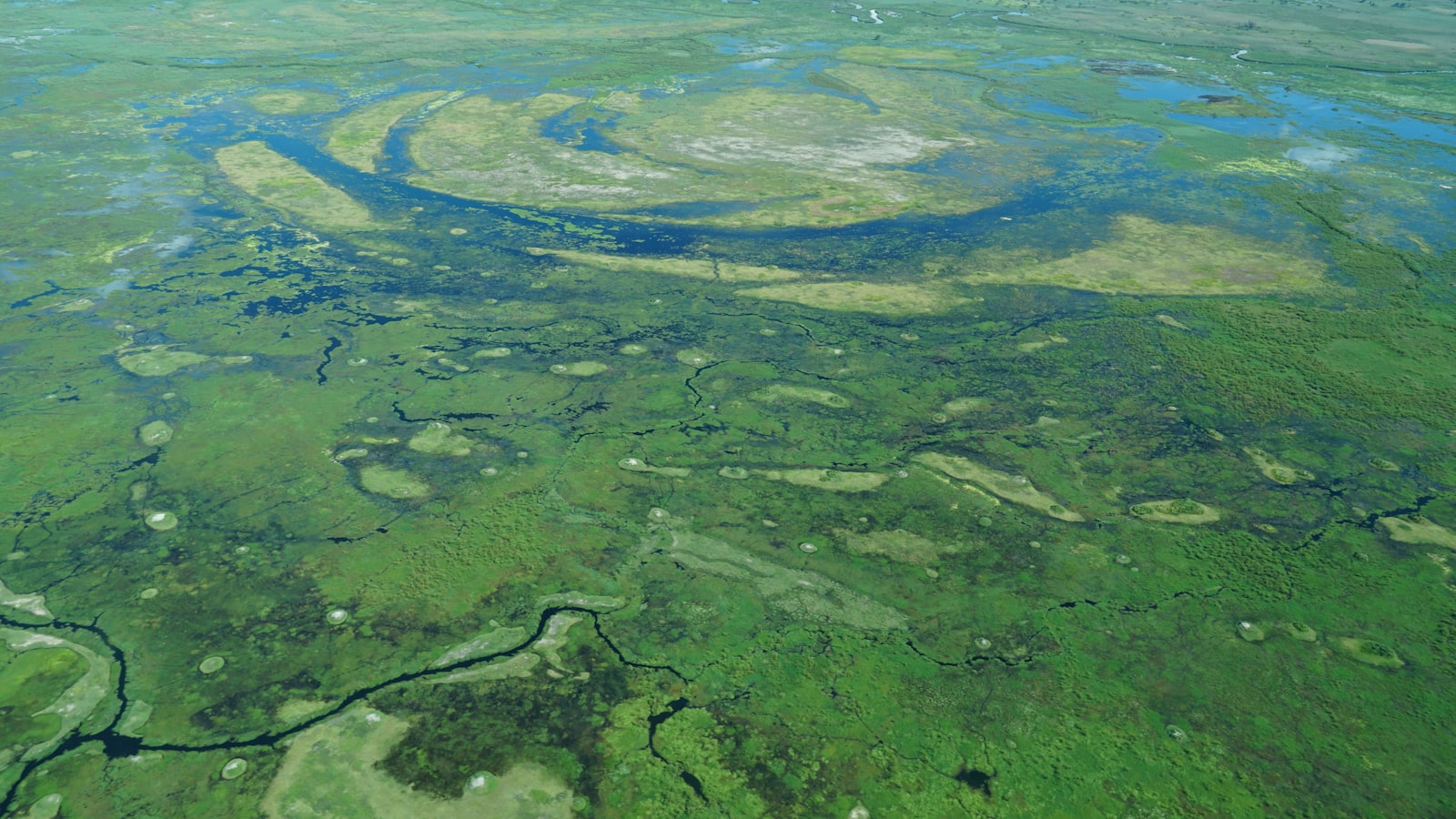
The Okavango Delta is the country's signature destination: a unique inland delta where the Okavango River fans out across the Kalahari into a maze of channels, lagoons, reed beds and palm-dotted islands. It is one of the great wetland wildernesses on earth and a UNESCO World Heritage Site.
The classic way to explore the Delta is by mokoro, a shallow dugout canoe poled through the channels by a guide standing at the stern, often combined with guided walks on the islands. This water-based, low-impact style of safari, alongside game drives where the terrain allows, is part of what makes the region distinctive. Wildlife is superb, with elephant, lion, leopard, the endangered African wild dog and exceptional birdlife.
The Moremi Game Reserve protects the eastern side of the Delta and is the only formally protected, publicly accessible part of it. Around the Delta lie numerous private concessions where camps offer more flexibility, including night drives and off-road game viewing that are not permitted inside the national reserve.
- Mokoro trips through papyrus-lined channels, usually in shallower water areas
- Guided walking safaris on Delta islands with an armed guide
- Game drives in Moremi and surrounding concessions for big cats and wild dog
- Some camps offer motorboat cruises in deeper, permanent water
Chobe National Park: elephants and the riverfront
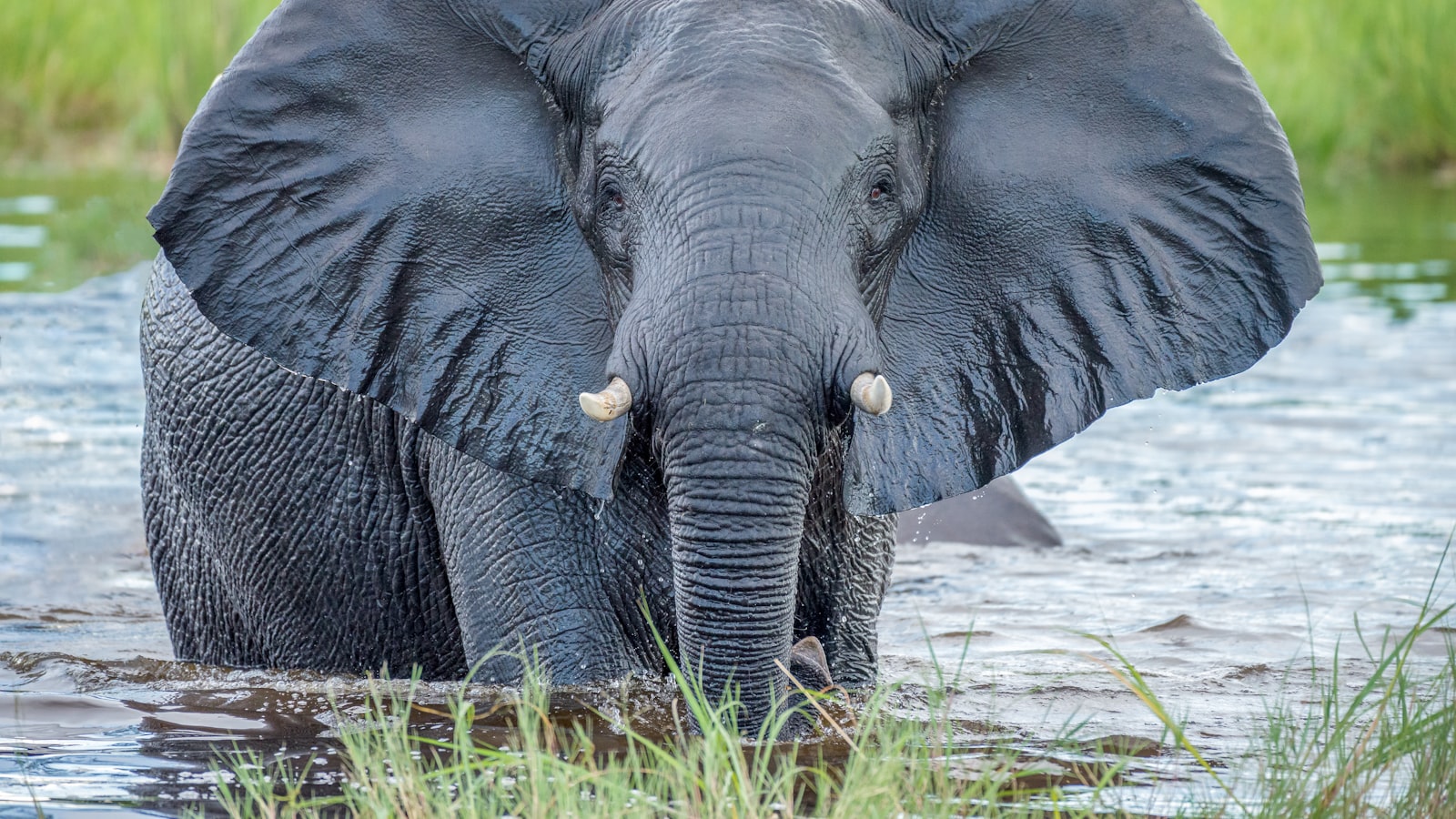
Photo by Felix M. Dorn on Unsplash
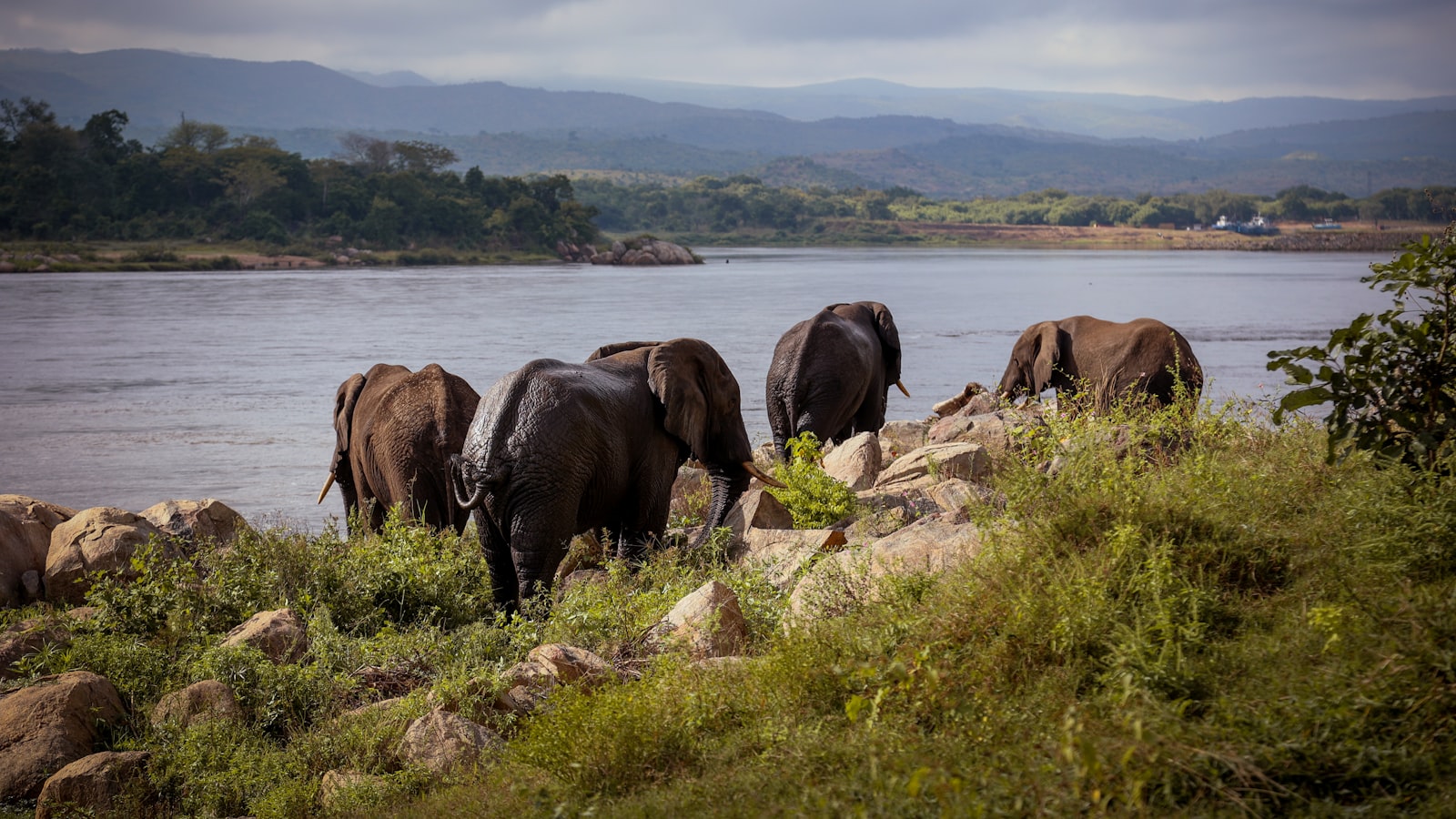
Chobe National Park, in the north-east, is famous for its huge elephant herds; Botswana holds one of the largest elephant populations in Africa, and Chobe is one of the best places to see them in numbers. The park is easily reached from Kasane and is often combined with a visit to Victoria Falls just across the border.
The Chobe Riverfront is the headline area, best experienced on a boat cruise in the late afternoon when elephants, buffalo, hippo and abundant birds gather along the water. Game drives along the river complement the cruises, and the contrast of land and water viewing in one place is a major draw.
Deeper inside the park, the Savuti area is known as predator country, with lions, spotted hyena and cheetah on its open plains. Savuti's Marsh and the seasonal Savuti Channel have a long history of changing water levels, and it makes a rewarding, wilder counterpoint to the busier riverfront.
The Central Kalahari, salt pans and Tsodilo Hills
The Central Kalahari Game Reserve is one of the largest protected areas on earth, a vast expanse of semi-desert savannah, ancient riverbeds and fossil valleys. It is celebrated for its black-maned Kalahari lions and for Deception Valley, and it comes spectacularly alive in the green season, when rains draw springbok, gemsbok and large herds onto fresh grazing.
To the north-east, the Makgadikgadi and Nxai Pans are among the world's largest salt pans. They host a major seasonal zebra migration between the pans and the Boteti River, habituated meerkats at some camps, and the surreal Kubu Island, where ancient baobabs stand on a granite outcrop ringed by white pan.
In the far north-west, the Tsodilo Hills rise from the Kalahari and hold one of the highest concentrations of rock art in the world, with thousands of paintings made over millennia. A UNESCO World Heritage Site sacred to local San and Hambukushu communities, it offers a cultural and archaeological dimension beyond classic game viewing.
Understanding the Okavango flood and the best time to visit
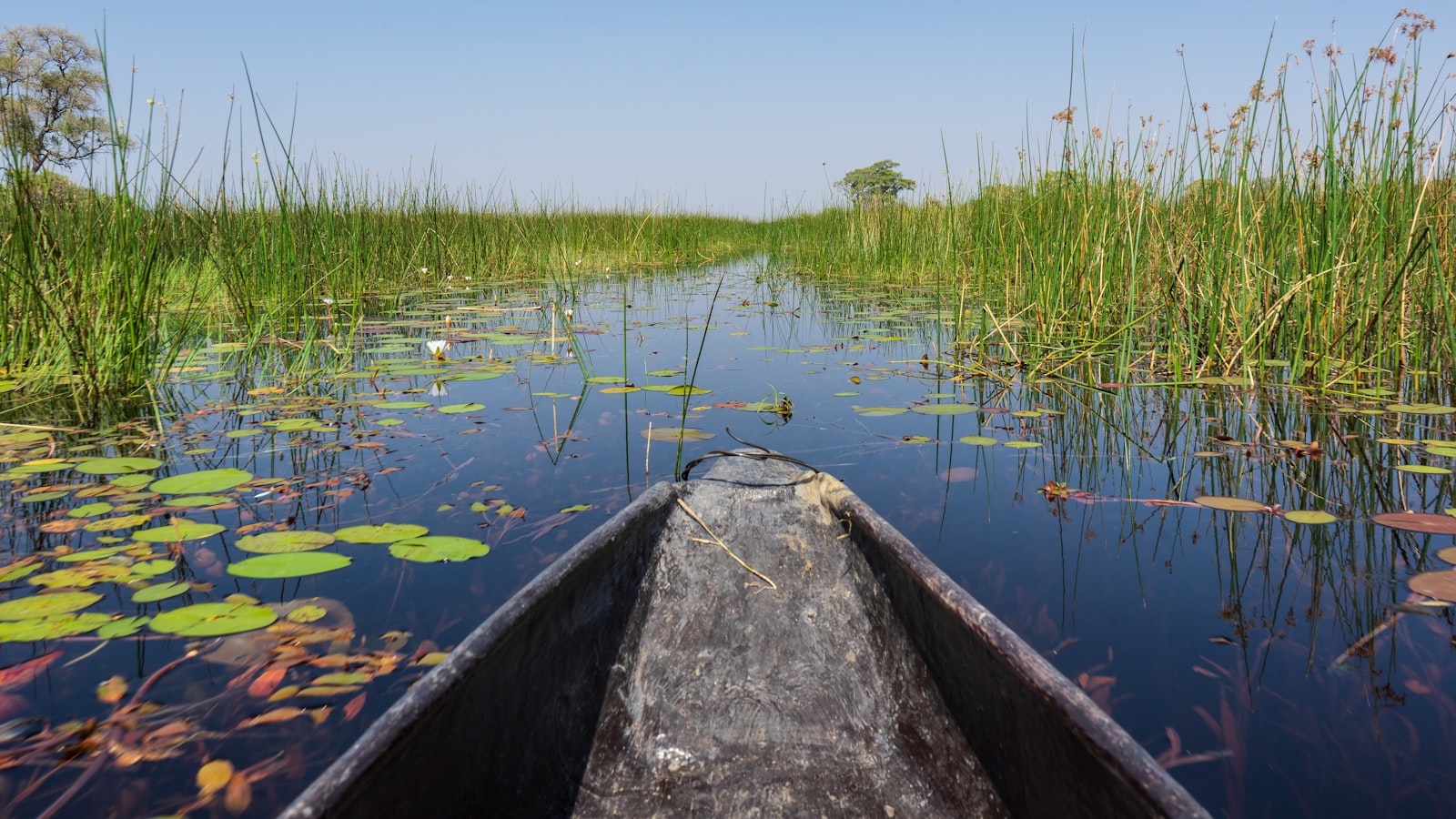
Photo by Ajeet Panesar on Unsplash
The Okavango's most counter-intuitive feature is its timing. The floodwaters that fill the Delta fall as summer rain over the Angolan highlands months earlier, then travel slowly down the Okavango River, so they typically only reach and spread across the Delta around June to August, deep into Botswana's dry season. This means the Delta is often at its fullest precisely when the surrounding land is driest.
For classic game viewing, the dry season from roughly May to October is the prime window. Vegetation thins, water sources shrink outside the Delta, and animals concentrate, while the Delta's flood peaks and supports excellent mokoro and water activities. This is peak season, with the highest prices and earliest bookings.
The green season, roughly November to April, brings dramatic skies, lush landscapes and lower prices. It is the time the Kalahari truly comes alive, with the zebra migration, mass calving and superb birding as migrants arrive. Game can be more dispersed and some roads become difficult, but for the pans, the Central Kalahari and value, it is a compelling alternative.
- May–October (dry): best general game viewing, peak Delta flood, highest prices
- June–August: typical Okavango flood peak; cool nights, especially June–July
- November–April (green): zebra migration, calving, birding, Kalahari at its best, lower rates
Getting there and getting around
Most safaris begin at one of two airports. Maun (MUB) is the gateway for the Okavango Delta and the Central Kalahari, while Kasane (BBK) serves Chobe and the Victoria Falls region. Both are reached by regional flights, commonly via Johannesburg in South Africa, and sometimes via Gaborone, Cape Town or Windhoek.
Within Botswana, the standard way to reach Delta and concession camps is by light-aircraft "air transfer". Small planes hop between bush airstrips on a scheduled or seat-rate basis, and these flights are often a separate, significant cost on top of camp rates. The hop from Maun into a Delta camp is short but essential, as many camps have no road access in flood.
Self-drive is possible and rewarding for the independent and well-prepared, particularly to Chobe, the Makgadikgadi and the Central Kalahari, but it is demanding. You need a fully equipped 4x4, recovery gear, supplies and navigation; areas are remote, distances long, and help can be far away. Most first-time visitors opt for fly-in camps or guided mobile safaris.
Costs, money, visas and health
Botswana is genuinely high-end. Reflecting the high-value, low-impact model, many Okavango Delta camps are all-inclusive and run from several hundred US dollars to well over a thousand USD per person per night, typically covering meals, drinks, guided activities and sometimes local flights. Mobile camping safaris and lodges near Maun or Kasane can be markedly cheaper, and self-drive with public campsites is the budget route, though sites should be booked ahead. All prices should be confirmed at the time of booking.
The local currency is the Botswana pula (BWP). Camps and lodges usually quote and settle in US dollars, while everyday spending, tips and town purchases are easier in pula; cards are widely accepted in towns but carry some cash for remote areas and gratuities.
Many nationalities, including UK, EU, US, Australian and Canadian passport holders, can enter Botswana visa-free for tourism for stays of up to 90 days, but you must check the current requirements and any electronic travel authorisation for your nationality before travel. Malaria is present in the northern safari areas, including the Okavango and Chobe, especially in the wetter months, so seek medical advice on antimalarials and take bite-prevention measures.
Frequently Asked Questions
- When is the best time to go on a Botswana safari?
- For classic game viewing, the dry season from May to October is best, when wildlife concentrates around water and the Okavango flood peaks. The green season, November to April, suits the Kalahari, the zebra migration, calving and birding, and brings lower prices, though game can be more dispersed and some roads tricky.
- Why does the Okavango Delta flood in the dry season?
- The floodwaters fall as summer rain over the Angolan highlands, then move slowly down the Okavango River for months. They generally reach and spread across the Delta around June to August, during Botswana's dry season, so the Delta is often fullest when the surrounding land is at its driest.
- How much does a Botswana safari cost?
- Botswana sits at the premium end. Many all-inclusive Okavango Delta camps run from several hundred to over a thousand US dollars per person per night, often plus light-aircraft transfers. Mobile camping safaris, lodges near Maun or Kasane, and self-drive are cheaper. Confirm all prices when booking, as rates vary by season.
- What is a mokoro safari?
- A mokoro is a shallow dugout canoe traditionally used in the Okavango Delta. A guide poles it quietly through the channels and lagoons while you watch wildlife and birds at water level. It is a peaceful, low-impact way to explore the Delta and is often combined with guided walking safaris on the islands.
- Do I need a visa to visit Botswana?
- Many nationalities, including UK, EU, US, Australian and Canadian passport holders, can visit Botswana visa-free for tourism, commonly for up to 90 days. Requirements and any electronic travel authorisation can change, so always confirm the current rules for your passport with an official source before you travel.
- Is there malaria in Botswana?
- Malaria is present in the northern safari regions, including the Okavango Delta and Chobe, particularly during and after the rains. The risk is lower in the dry south. Consult a doctor or travel clinic about antimalarial medication before your trip, and use repellent, cover up at dusk and sleep under nets or in screened rooms.
- How do you get around between safari camps in Botswana?
- Most Delta and concession camps are reached by light-aircraft "air transfers" between bush airstrips, usually starting from Maun, while Chobe is accessed from Kasane. These short flights are often a separate cost. Self-drive is possible for well-equipped 4x4 travellers, but it is remote and demanding, so many visitors choose fly-in safaris.