
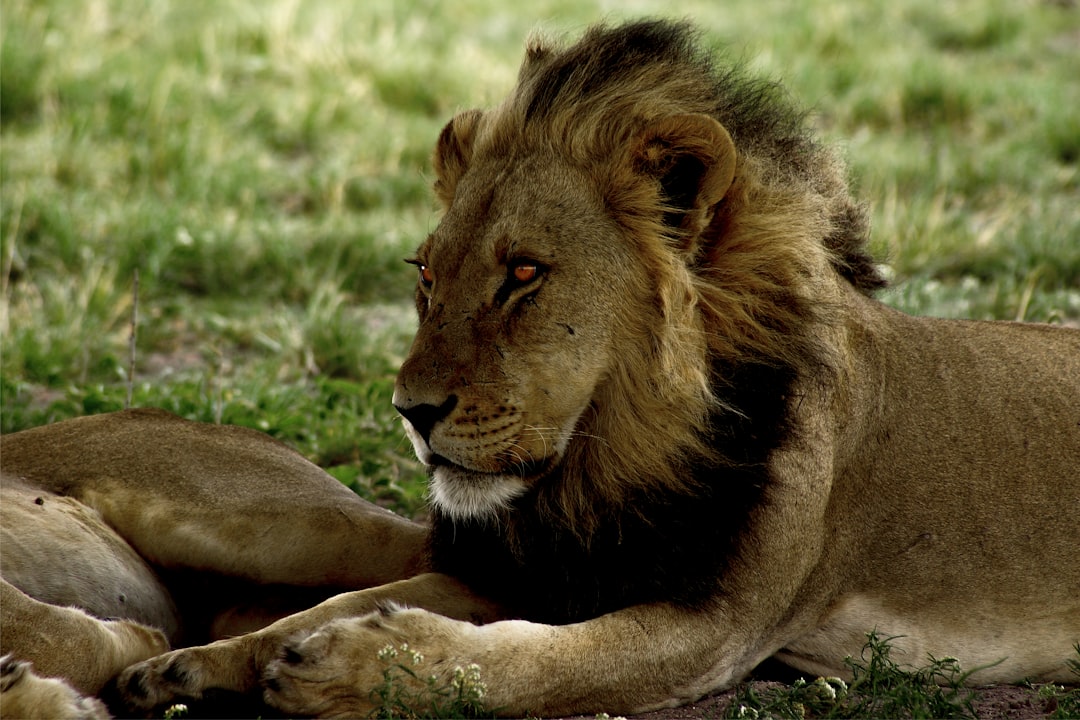
Central Kalahari Game Reserve
At 52,800 square kilometres, the second-largest game reserve on earth. Black-maned Kalahari lions, cheetah hunting on open fossil valleys, San community walks, and a wilderness immersion that no other African destination of this scale can deliver.
Black-Maned Lions and Absolute Wilderness
Photo by Leon Pauleikhoff on Unsplash
About Central Kalahari Game Reserve
The Central Kalahari Game Reserve covers 52,800 square kilometres, larger than Denmark, the second-largest game reserve on earth, and the largest single protected area in southern Africa. The fossil river valleys that cross its interior, Deception Valley, Passarge, Sunday Pan, Piper Pan, run for hundreds of kilometres without a permanent water source. The horizon in every direction is the same: flat, open, infinite. There are no roads through most of it. There are no lodges across vast tracts. There are no other people.
The CKGR operates on the inverse calendar of every other African safari destination. When the summer rains arrive (December to April), dormant grass seeds erupt across the fossil valleys into a brief intense pasture; herds of springbok, oryx, wildebeest, and red hartebeest migrate in from the surrounding Kalahari; and the black-maned Kalahari lions, males with thick dark manes extending to the chest, follow the herds. The predator-prey dynamics unfold across terrain with unobstructed sightlines for kilometres. During the dry season, the CKGR offers a different proposition entirely: vertiginous wilderness isolation. Deception Valley at sunrise, nothing in any direction. A night sky with zero light pollution across 52,800 square kilometres.
The reserve is also ancestral land of the San (Bushmen), the world's oldest continuous human culture. The Bergdama and Bakgalagadi San communities who live in and around the reserve provide some of the most substantive cultural safari experiences available in Botswana when conducted with respect through legitimate community partnerships, walks combining bush tracking with the interpretation of how the San hunter-gatherer system operated within this exact landscape for tens of thousands of years. This is not a casual safari destination. The CKGR rewards travellers who understand what they are seeing and who arrive with the time to engage with it properly.
Things to Do in Central Kalahari Game Reserve
Track black-maned lions in the fossil valleys
The CKGR's headline experience. The Deception Valley and Tau Pan areas hold the most studied prides; specific guides have decade-long understanding of pride dynamics. Most reliable during the green season prey concentration.
Watch cheetah hunt on the open pan
The open fossil valleys are ideal cheetah country — unobstructed sightlines support the species' pursuit-hunting strategy. Watching the lock, the burst to 110 km/h, the entire chase sequence from a single position is one of the most spectacular short-duration wildlife events available in Africa.
Walk with a San community guide
The deepest non-wildlife experience available at the CKGR. Tracking, plant identification, traditional bow-and-arrow technique, fire-making with the hand-drill, ostrich-eggshell water carriage, and the broader interpretation of how the San hunter-gatherer system has operated in this landscape for tens of thousands of years.
Photograph under zero light pollution
52,800 square kilometres of reserve with no artificial light. The Milky Way overhead, the southern hemisphere constellations clearly visible to the unaided eye. One of the best dark-sky destinations on the African continent for long-exposure and time-lapse astrophotography.
Encounter brown hyena and the Kalahari nocturnal cast
The Kalahari supports significant brown hyena populations, solitary and mostly nocturnal. Aardwolf, bat-eared fox, African wildcat, and caracal complete the smaller-mammal night-drive list. Encounters require evening or dawn timing with capable guides.
Combine with Makgadikgadi and Nxai Pan
The optimal green-season Kalahari circuit pairs CKGR with Makgadikgadi (zebra migration) and Nxai Pan (Baines' Baobabs and cheetah). 7-10 days covers the full Kalahari diversity. The CKGR is the centrepiece; the pans add ecological contrast.
When to Visit Central Kalahari Game Reserve
Green Season
December, April
The defining CKGR period. Summer rains transform the fossil valleys into short green pasture. Herbivore migrations peak January-March. Black-maned lion and cheetah encounters reach their most spectacular. Migratory bird populations surge. Daytime temperatures are hot (35°C+); afternoon thunderstorms are dramatic.
Cooler Dry
May, August
Wildlife disperses widely; sightings become less predictable but the wilderness immersion peaks. Daytime temperatures are mild (25°C), nights are cold (down to freezing), skies are clear. The CKGR at its emptiest, quietest, most expansive.
Hot Dry
September, November
The hottest, driest period before the rains break. Wildlife is at its most dispersed; surface water is absent from most of the reserve. Some lodges close briefly. Visitors are very few. The atmospheric peak — heat haze on the pans, dust, and the brown desert at its most extreme.
Pre-Rain Transition
November
The first rains break the late dry intensity. Wildlife begins returning to the valleys. Migratory bird arrival starts. Conditions hot but improving. Lower pricing in many properties before the peak green-season demand builds.
Getting to Central Kalahari Game Reserve
By light aircraft from Maun (MUB) — 45-75 minutes to the Tau Pan, Deception Valley, or Kalahari Plains Camp airstrips. The standard charter networks handle the transfer. By self-drive 4WD, the CKGR is accessible to advanced overlanders with full self-sufficiency (food, water, fuel, recovery gear) entering from Matswere Gate (east, from Rakops) or the Khutse southern gate. Deep sand, vast distances between any infrastructure, no fuel inside the reserve, and no formal water points at most campsites make this one of the most unforgiving self-drive destinations in southern Africa. Two-vehicle convoy strongly recommended. All DWNP campsites must be pre-booked (often 6-12 months ahead) through the Department of Wildlife.
Where to Stay
Premium lodges are concentrated in the central interior. Tau Pan Camp (Kwando Safaris) is the standard reference, raised tented chalets overlooking Tau Pan with excellent black-maned lion access. Kalahari Plains Camp (Wilderness Safaris) offers solar-powered desert design and integrated San cultural experience. Deception Valley Lodge sits on a private concession adjacent to the eastern boundary. Several operators (Sanctuary Retreats, Letaka, Bush Ways) run mobile tented expeditions during the green season, the most authentic CKGR format for travellers willing to forgo permanent infrastructure. DWNP public campsites at Deception Valley, Sunday Pan, Phokoje Pan, Piper Pan, Passarge Valley, and Tau Pan support self-sufficient self-drive overlanders; basic facilities only.
Travel Tips for Central Kalahari Game Reserve
Frequently Asked Questions
- When is the best time to visit the Central Kalahari?
- December to April for the green-season wildlife peak (migrations, predator action, black-maned lions on the open valleys). May to August for the wilderness immersion (mild days, cold nights, the CKGR at its emptiest). These are different experiences — pick based on priority.
- Is the CKGR worth the cost?
- For travellers who value the wilderness immersion and the specific Kalahari lion-and-cheetah dynamic, yes. For travellers prioritising sighting frequency and conventional Big Five access, Moremi or Chobe deliver more per day. The CKGR rewards a deliberate, patient style of travel.
- Can I self-drive the Central Kalahari?
- Yes, but only with advanced preparation. Two-vehicle convoy, high-clearance 4WD, full self-sufficiency in water and fuel, recovery equipment, and DWNP campsite bookings made 6+ months ahead. This is one of the most demanding self-drive destinations in southern Africa.
- How does the CKGR compare to the Okavango Delta?
- Different ecosystems entirely. The Delta is aquatic wetland with mokoro and boat-based safari; the CKGR is arid desert grassland with vehicle-based predator tracking. A combined Botswana itinerary covering both (Delta + Kalahari + optionally Chobe) is the textbook full-country trip.
Explore More, Central Kalahari Game Reserve
Things To Do
Plan Your Trip
More in Botswana
Okavango Delta
A vast inland delta where the Okavango River empties into the Kalahari Desert, creating 15,000 square kilometres of seasonal floodplains, pa…
Chobe National Park
The world's highest concentration of African elephants — around 120,000 across the greater Chobe ecosystem — drinks from the Chobe River eve…
Moremi Game Reserve & Khwai
The eastern third of the Okavango Delta and Botswana's only Big Five reserve. Moremi protects exceptional wild dog populations and Big Five …
Makgadikgadi Pans
Twelve thousand square kilometres of salt pans, the remains of a prehistoric super-lake. Lunar landscapes for dry-season quad-biking, Africa…
Kgalagadi Transfrontier Park
A 38,000 km² transfrontier park spanning Botswana and South Africa. Rolling red Kalahari dunes, black-maned lion prides, brown hyena, and th…
Linyanti & Selinda Concessions
The private concessions between the Okavango Delta and Chobe — ultra-exclusive safari territory with extraordinary wild dog populations, mas…
Nxai Pan National Park
A fossil lakebed adjacent to the Makgadikgadi with open terrain ideal for cheetah hunting and the ancient cluster of baobabs painted by Thom…
Tsodilo Hills
A UNESCO World Heritage rock art site with over 4,500 paintings on four quartzite massifs rising from the flat Kalahari, the highest concent…
Tuli Block
Far eastern Botswana at the meeting of three countries. Sandstone cliffs, massive baobabs, large elephant herds, and Mashatu Game Reserve's …