A practical guide to Lesotho, the mountain kingdom enclosed by South Africa, covering the Sani Pass, Maletsunyane Falls, Afriski, Basotho culture and when to visit.
- Capital
- Maseru
- Currency
- Lesotho loti (LSL), pegged 1:1 to the South African rand
- Language
- Sesotho and English (both official)
- Lowest point
- ~1,400m — the highest of any country
- Visa
- Visa-free for many nationalities (up to 14–90 days)
- Ski season
- Roughly June to August at Afriski
Lesotho is a sovereign kingdom of roughly two million people that sits entirely within the borders of South Africa, making it one of only three nations on earth completely surrounded by a single other country. What sets it apart is altitude: it is the only country whose entire territory lies above 1,000 metres, and its lowest point, around 1,400m, is the highest of any country. That fact has earned it the nickname the "Kingdom in the Sky".
This is high, folded basalt country of grassland plateaux, deep river gorges and villages reached by gravel switchbacks. It rewards travellers who want dramatic mountain driving, genuine cultural encounters with the Basotho people, and experiences you cannot have elsewhere in Southern Africa, from skiing in winter to the world's longest commercial abseil.
This guide covers where Lesotho is and how to reach it, the experiences worth building a trip around, when to go, how to get around, and the practical detail on money, visas, safety and budget.
Where is Lesotho and why is it called the Kingdom in the Sky?
Lesotho is an independent constitutional monarchy entirely enclosed by South Africa, bordered by the provinces of Free State, KwaZulu-Natal and Eastern Cape. It covers about 30,000 square kilometres, roughly the size of Belgium, and the capital, Maseru, sits on the western lowland border opposite the South African town of Ladybrand.
The "Kingdom in the Sky" name is literal rather than marketing. Every part of the country sits above 1,000m, and the highlands rise far higher: Thabana Ntlenyana, at 3,482m, is the tallest peak in Southern Africa. The Maloti and Drakensberg ranges feed rivers that supply much of the region's water, which is why Lesotho exports water to South Africa through a network of high dams.
The Basotho nation traces its founding to King Moshoeshoe I, who united refugee clans in the early 19th century on the flat-topped mountain of Thaba-Bosiu. The country became the British protectorate of Basutoland and gained independence in 1966.
How to get to Lesotho
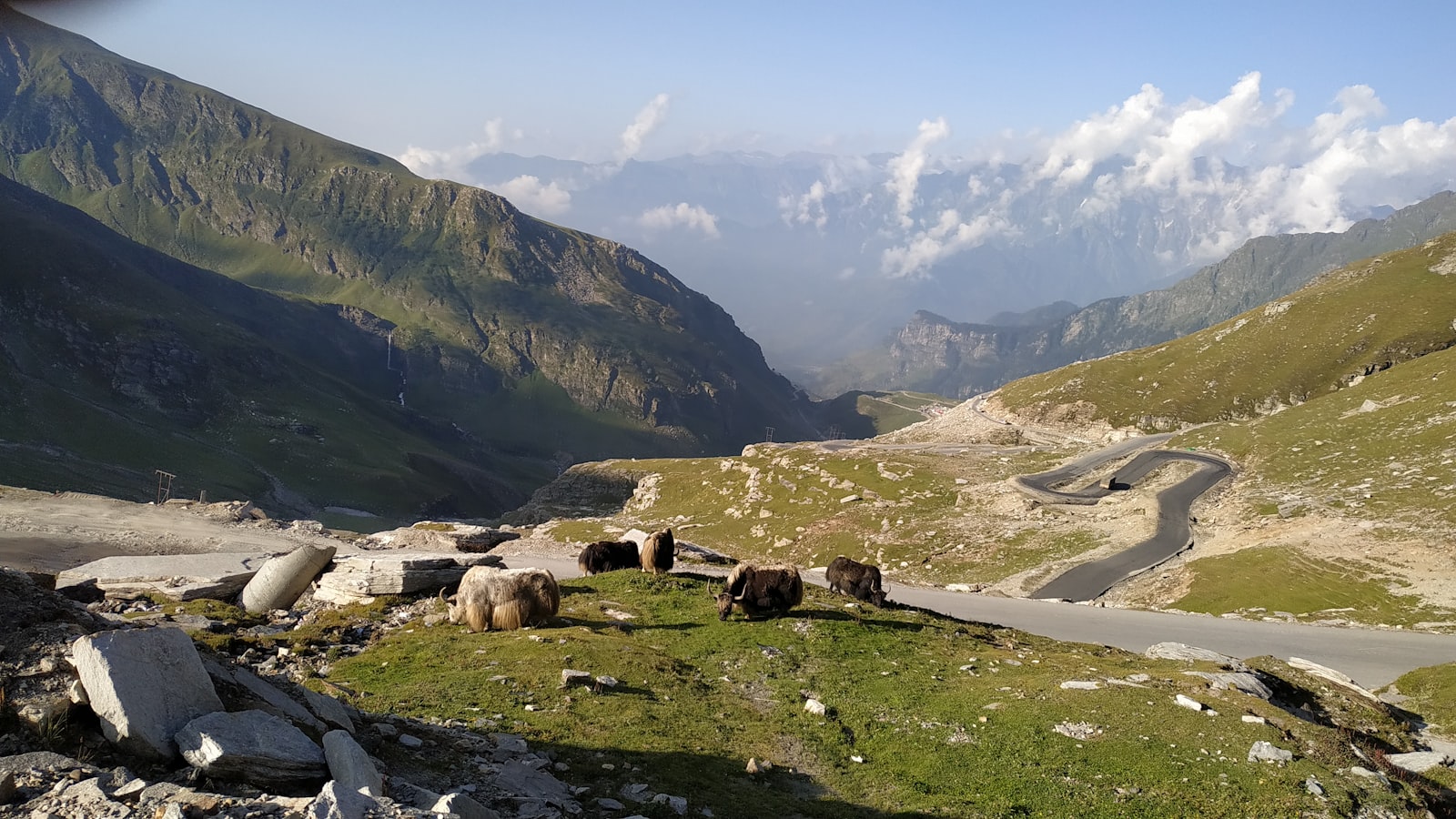
Photo by Harish Bharti on Unsplash
Most visitors arrive overland from South Africa, and the country has well over a dozen border posts. The crossings are generally quick and informal compared with larger African frontiers, though opening hours vary, so check before travelling to remote posts. The main lowland gateway is Maseru Bridge, opposite Bloemfontein's region, open long hours daily.
The most celebrated entry is the Sani Pass, a rough 4x4-only mountain road that climbs from Underberg in KwaZulu-Natal to a summit at about 2,876m. The South African side is being upgraded but the steep upper switchbacks remain unpaved and demanding; you need a high-clearance 4x4, and many travellers join a guided day tour from the South African side instead of driving themselves.
Flying in is possible via Moshoeshoe I International Airport, about 18km from Maseru, with scheduled regional flights connecting principally to Johannesburg. Many self-drive travellers, however, simply hire a vehicle in South Africa and cross by road, which is usually cheaper and more flexible.
- Self-drive from South Africa via Maseru Bridge or another lowland post (2WD fine for Maseru and main routes)
- Sani Pass 4x4 from Underberg, KwaZulu-Natal (high-clearance 4x4 essential)
- Fly into Moshoeshoe I International Airport from Johannesburg
- Guided tours and shuttles from Bloemfontein, Durban or the Drakensberg
The Sani Pass and the highest pub in Africa
The Sani Pass is the experience many people come for. The road gains roughly 1,300m in altitude over its final stretch, threading hairpin bends with sheer drops and frequent cloud. In winter it can close after snow, and conditions change fast, so an early start and a sober assessment of your vehicle and skills matter.
At the top, just inside Lesotho, the Sani Mountain Lodge is home to what it bills as the highest pub in Africa, at around 2,874m. It is a fitting reward for the climb: a fire, a beer and views back down the gorge you have just driven. You can also stay overnight, which lets you watch the light change over the escarpment without rushing the descent.
If you would rather not drive the pass, operators in Underberg and the southern Drakensberg run full-day 4x4 trips that include the border formalities, the pub and a short look at Basotho village life on the plateau.
Maletsunyane Falls and Semonkong
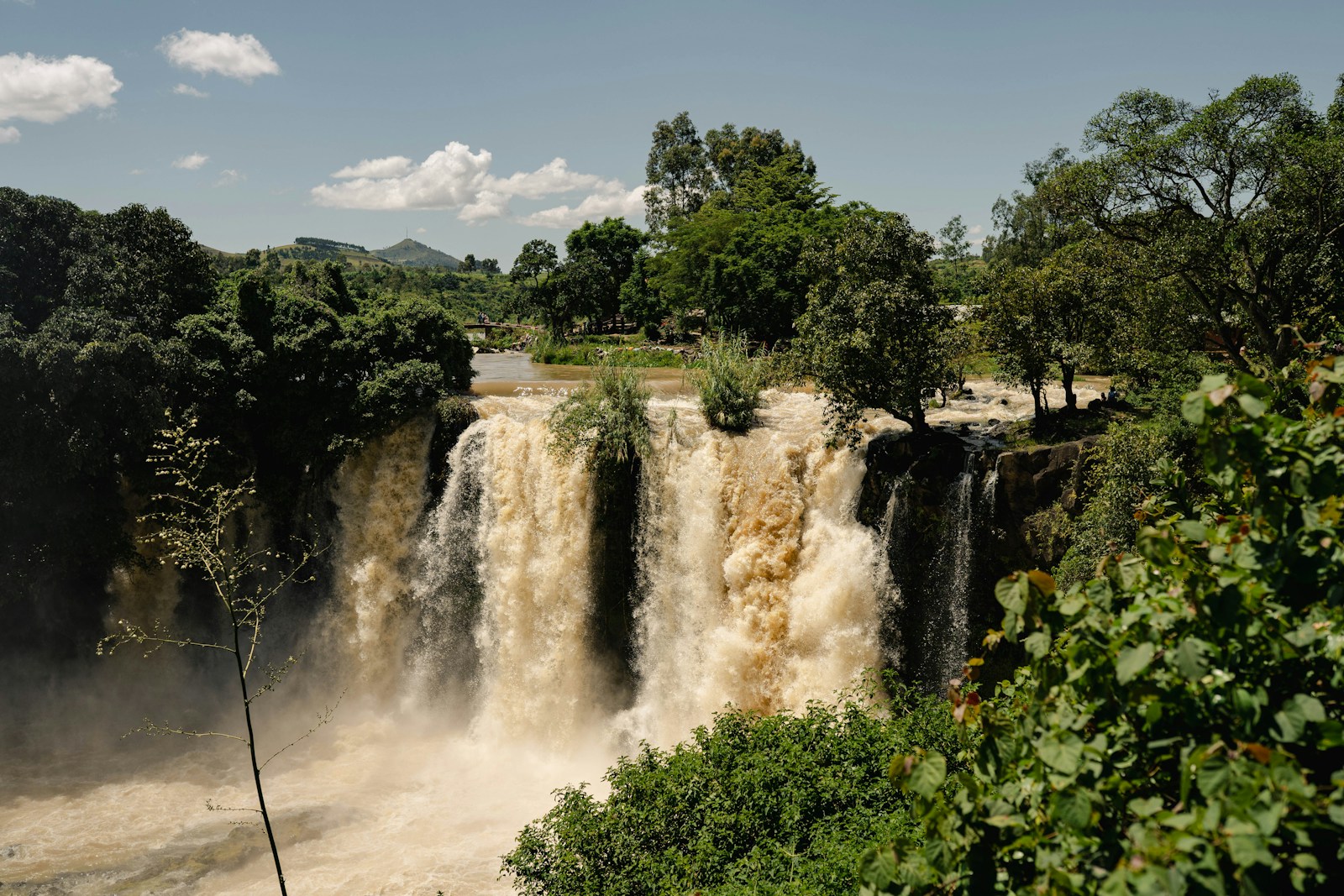
Photo by Noah Grossenbacher on Unsplash
Near the highland town of Semonkong, the Maletsunyane Falls drop around 192m in a single plume into a basalt gorge, throwing spray that gives the settlement its name, "place of smoke". In a cold snap the spray freezes into a column of ice, and the surrounding amphitheatre of cliffs is striking in any season.
The falls are also home to what is recognised as the world's longest commercial single-drop abseil, descending roughly 204m beside the water. It is run by Semonkong Lodge and is not for the faint-hearted; participants are briefed and roped by guides, and no prior abseiling experience is required, though a head for heights certainly helps.
Semonkong is reached by a rough road from Maseru and works well as an overnight base. Beyond the falls and the abseil, the lodge arranges pony treks to viewpoints and villages, a relaxed way to see the surrounding country at Basotho pace.
Afriski, Katse Dam and the highland highlights
Afriski Mountain Resort, in the Maloti Mountains near the Mahlasela Pass at about 3,200m, is one of only two ski resorts in Southern Africa. The season runs roughly from June to August, with snow-making supplementing natural falls on a main run of around a kilometre. Lift passes, rental gear and lessons are available, and the resort stays open in summer for mountain biking and trail running.
Katse Dam, part of the Lesotho Highlands Water Project, holds back the Malibamatso River to form a vast reservoir ringed by steep slopes. The dam wall is among the tallest in Africa, and a visitor centre runs tours explaining the engineering and the scheme that pipes water north to South Africa. The drive in, over the Mafika-Lisiu Pass above 3,000m, is spectacular in its own right.
Other highland draws include Thaba-Bosiu, the mountain stronghold central to Basotho history, with a visitor centre and guided walks; and remote Sehlabathebe National Park in the south-east, a wilderness of sandstone formations, rock pools and the rare Maloti minnow, reached by a long but rewarding drive.
- Afriski — skiing and snowboarding June–August; biking in summer
- Katse Dam — engineering tours and a dramatic mountain drive
- Thaba-Bosiu — the founding mountain fortress of the Basotho nation
- Sehlabathebe National Park — sandstone wilderness and pony trekking
- Pony trekking and overnight stays in Basotho villages
Basotho culture, pony trekking and the Basotho blanket
Culture is woven into a Lesotho trip rather than staged for it. The Basotho pony, a hardy mountain breed, remains a genuine form of transport in the highlands, and multi-day pony treks between villages, run from Semonkong, Malealea and Ramabanta among others, are one of the most rewarding ways to travel. Treks come with local guides and overnight stops in village rondavels.
The Basotho blanket is the country's most recognisable symbol, a thick wool wrap worn against the cold and bearing patterns that carry meaning around status and life events. You will see them everywhere, paired with the conical mokorotlo grass hat that appears on the national flag. Blankets make a practical, authentic souvenir.
Village visits, craft cooperatives and the music and food of the highlands round out the cultural picture. Travel respectfully, ask before photographing people, and use local guides, who add context and ensure your spending reaches the communities you pass through.
When to go, getting around, money and safety
Timing depends on your goal. For skiing at Afriski, come between June and August, accepting hard frost and possible snow that can block high passes. For hiking, pony trekking and exploring the highlands in milder, greener conditions, September to April is better, though summer afternoons bring thunderstorms. Winters everywhere are genuinely cold, and even lowland Maseru can dip below freezing at night.
A 4x4 or high-clearance vehicle is strongly recommended once you leave the main tarred routes; highland roads are rough, steep and slow, and fuel stops are sparse, so fill up in towns and carry warm clothing year-round. Distances look short on a map but driving times are long. Public transport exists in the form of minibus taxis but is limited for sightseeing.
The currency is the Lesotho loti (plural maloti), pegged 1:1 with and interchangeable with the South African rand, which is accepted everywhere; carry cash for rural areas as cards work mainly in Maseru. Many nationalities, including the UK, EU, US and most Commonwealth countries, enter visa-free for stays of up to 14 to 90 days, but confirm current rules before travel.
- June–August: Afriski ski season; cold, snow possible on passes
- September–April: best for hiking and pony trekking; summer storms
- Currency: Lesotho loti, pegged 1:1 to the rand, which is also accepted
- Driving: 4x4 advised off the main routes; long, slow highland roads
- Altitude: acclimatise, hydrate and protect against strong sun and cold
Frequently Asked Questions
- Where is Lesotho?
- Lesotho is a small mountain kingdom in Southern Africa, completely surrounded by South Africa. It borders the Free State, KwaZulu-Natal and Eastern Cape provinces, with the capital Maseru on its western lowland edge. It is one of only three countries in the world entirely enclosed by another single nation.
- Do I need a 4x4 to visit Lesotho?
- Not for everywhere. Maseru and the main tarred roads are fine in a normal 2WD car. But for the Sani Pass, Katse Dam, Semonkong and most highland routes, a high-clearance vehicle or 4x4 is strongly recommended, as roads are rough, steep and slow. Fuel stops are sparse, so fill up in towns.
- Can you really ski in Lesotho?
- Yes. Afriski Mountain Resort, at around 3,200m in the Maloti Mountains, is one of only two ski resorts in Southern Africa. The season runs roughly June to August, with snow-making backing up natural falls on a main run of about a kilometre. Lift passes, equipment hire and lessons are available on site.
- What currency does Lesotho use?
- Lesotho uses the loti (plural maloti), which is pegged 1:1 to the South African rand. The rand is accepted everywhere in Lesotho, so you can spend either. Cards work mainly in Maseru and larger towns, so carry cash for rural areas, pony treks and remote lodges.
- Do I need a visa for Lesotho?
- Many nationalities, including British, EU, US, Canadian, Australian and most Commonwealth passport holders, can enter Lesotho visa-free for tourism, typically for 14 to 90 days depending on nationality. Rules can change, so confirm requirements with an official source before you travel, and ensure your passport has enough validity.
- How high is the Sani Pass and is it dangerous?
- The Sani Pass tops out at about 2,876m at the Lesotho border, climbing steep, unpaved switchbacks from KwaZulu-Natal. It is not inherently dangerous in a capable 4x4 with a careful driver and good weather, but it can close after snow and conditions change fast. If unsure, join a guided day tour from the South African side.
- What is the best time to visit Lesotho?
- It depends on your plans. For skiing, visit Afriski between June and August. For hiking, pony trekking and the highlands in milder, greener weather, September to April is best, though summer brings afternoon thunderstorms. Winters are very cold across the country, with frost and possible snow at altitude, so pack warm layers.