
Tuli Block
Far eastern Botswana at the meeting of three countries. Sandstone cliffs, massive baobabs, large elephant herds, and Mashatu Game Reserve's unique offering: underground photographic hides, horseback safaris, and mountain biking through elephant country.
The Land of Giants
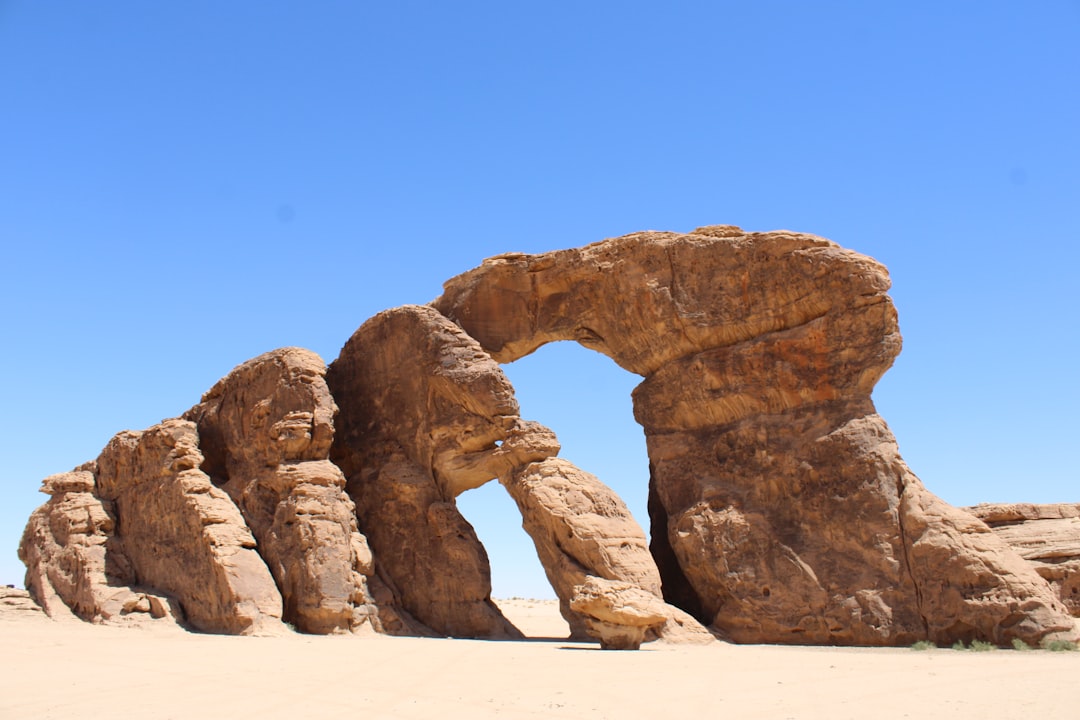
Photo by Arne Backhaus on Unsplash
About Tuli Block
The far eastern corner of Botswana, where the Limpopo and Shashe rivers converge at the meeting point of three countries (Botswana, Zimbabwe, South Africa), is nothing like the rest of Botswana. Instead of flat Kalahari sand and open Delta channels, the Tuli Block presents dramatic sandstone cliffs, deep rocky gorges, basaltic koppies, massive ancient baobab trees, and a network of seasonal riverbeds running through compressed and visually concentrated terrain. The landscape rewards close-range photography; the geological drama is constant.
The Tuli Block itself is a 350-kilometre ribbon of privately owned freehold land along the Limpopo River, a historical anomaly created in the 1890s when the British Colonial administration intended to use it as the route for Cecil Rhodes's Cape-to-Cairo railway. The railway never came (it went around through Zimbabwe instead), but the land tenure remained private rather than reverting to the Crown or to traditional community ownership. The result, a century later, is a unique conservation landscape: a contiguous stretch of private game reserves with relatively low tourist density and an active rewilding history that has restored populations of elephant, leopard, lion, and the full mammal community.
Mashatu Game Reserve is the dominant conservation force, a 30,000-hectare private reserve famous for its large elephant herds (moving through terrain so sculpted that the animals' scale is constantly recalibrated by the rock formations around them), a significant resident leopard population, and an approach to safari activities that goes substantively beyond the standard vehicle game drive. Mashatu has pioneered photographic-hide safari, horseback safari, and mountain-bike safari formats that exist almost nowhere else in southern Africa. The Tuli is the alternative for travellers who have done the standard Botswana safari circuit (Delta + Chobe + Kalahari) and want to see something materially different. It is also logistically distinct: accessed primarily by road from South Africa rather than by light aircraft from Maun, with the consequence that it sees substantially fewer international visitors than the Delta or Chobe properties. The lower volume is part of the appeal.
Things to Do in Tuli Block
Photographic hide session at Mashatu
Mashatu's most innovative offering — underground sunken hides at active waterholes, providing ground-level perspectives of drinking elephants and approaching predators. Photographers book multi-hour sessions; the compositional difference from vehicle photography is fundamental. Among the best photographic infrastructure in Africa.
Horseback safari through the sandstone country
One of the longest-established horseback safari programmes in Africa. Riding ability requirements are real — intermediate-level skills (canter on demand, ability to control the horse around game) for the full programme. Beginners can access short introductory rides. Multi-day trails operate seasonally.
Mountain bike safari through the rocky gorges
Less established than horseback but a growing activity. Guided 2-4 hour rides through varied terrain. The physical engagement with the bush, silent approach, varied pace, the wind in the acacia rather than the engine — is substantively different from vehicle work.
Game drive across the sandstone landscape
Standard dawn and afternoon drives. The compressed terrain produces shorter sight-distances than the open Kalahari but more frequent close-range encounters. Particular productivity for leopard (the rocky koppies are excellent leopard habitat) and elephant.
Walking safari and geological interpretation
Two to four hour guided walks with armed professional guides. The Tuli's rocky outcrops, gorges, and open woodland make excellent walking country. The geological and botanical interpretation depth is exceptional.
Visit the three-countries confluence
Short excursion to the meeting of the Limpopo and Shashe rivers — the precise junction of Botswana, South Africa, and Zimbabwe. The viewpoint reaches all three countries simultaneously. Of more conceptual than visual interest, but a noted activity.
When to Visit Tuli Block
Cool Dry
May, August
Daytime temperatures are mild (25-28°C); nights are cold (down to 5°C). Hide sessions are comfortable; horseback and biking are at their best. Wildlife concentrates at limited water sources. The standard recommended period.
Hot Dry
September, November
Daytime temperatures climb (35°C+ by November); wildlife concentration at water sources peaks; hide-photography productivity at its highest. Trade-off is comfort during outdoor activities — horseback and biking become more demanding.
Wet Season
December, April
Summer rains transform the landscape into green flush, dramatic skies, calving-season predator activity, migratory birds. Wildlife disperses across the productive landscape; hide productivity drops. Hot daytime continues; afternoon thunderstorms common. Landscape at its most visually saturated.
Shoulder
April, May
The transition out of the wet season. The bush is still green; the air begins to dry; wildlife starts to concentrate. A pleasant compromise window with reduced peak pricing.
Getting to Tuli Block
Most travellers arrive from South Africa rather than from Maun. By road from Johannesburg: northeast through Polokwane to the Pont Drift border post (approximately 6 hours). The Limpopo River crossing at Pont Drift is by aerial cable car during wet-season flood, or vehicle ford in dry season. Mashatu and the other lodges arrange transfers from the border (20-30 minutes). By air from Johannesburg: charter flights from Lanseria or OR Tambo to the Limpopo Valley Airfield (LMI) or Tuli airstrip (approximately 1 hour). Some premium operators include the charter in the package. By road from Gaborone: northern route via Selebi-Phikwe to the Pitsanyana or Platjan borders (8 hours). Combined itineraries pair Tuli with Mapungubwe National Park (South African side, just across the Limpopo) or with Kruger (3-4 hours by road).
Where to Stay
Premium (Rattray's): Mashatu Main Camp (flagship full-luxury), Mashatu Tent Camp (more intimate tented format), Mashatu Euphorbia Villas (newer ultra-luxury with private pools). Mid-range: Tuli Safari Lodge (alternative private reserve in the Tuli Block), Limpopo-Lipadi Game Reserve (community conservancy with mid-range accommodation). Budget/self-drive: Molema Bush Camp, Stevensford Wilderness. Limited budget options directly in the Tuli reserves; travellers on tighter budgets often use the cross-border Mapungubwe National Park (SANParks rest camps offer substantially lower pricing) and day-trip into Tuli.
Travel Tips for Tuli Block
Frequently Asked Questions
- How does the Tuli compare to the rest of Botswana?
- Fundamentally different. The Tuli is sandstone cliffs, dramatic geological compression, and small-scale private reserves accessed from South Africa. The rest of Botswana is Kalahari sand, open landscapes, and the fly-in safari circuit from Maun. For travellers who have done the standard Botswana trip, the Tuli is a strong alternative.
- What's special about the photographic hides?
- Ground-level perspective. The sunken hides position photographers below the elephants and predators that approach the waterhole, producing the compression of angle and the proximity that standard vehicle photography cannot replicate. Multi-hour sessions reward patience; the imagery is distinctive.
- Can beginners do the horseback safari?
- Short introductory rides accept beginners. The full Mashatu horseback programme — multi-day trails, riding alongside elephants and giraffe — requires intermediate-level skills (walk-trot-canter, control around game). Be honest about your level at booking.
- Is the cable car at Pont Drift really necessary?
- During the Limpopo flood (typically January-April), the river is impassable for vehicles. The aerial cable car suspended over the river carries guests across; vehicles cross via the South African side or are met by transfers on the Botswana side. The crossing is part of the destination's character.
Explore More, Tuli Block
Plan Your Trip
More in Botswana
Okavango Delta
A vast inland delta where the Okavango River empties into the Kalahari Desert, creating 15,000 square kilometres of seasonal floodplains, pa…
Chobe National Park
The world's highest concentration of African elephants — around 120,000 across the greater Chobe ecosystem — drinks from the Chobe River eve…
Moremi Game Reserve & Khwai
The eastern third of the Okavango Delta and Botswana's only Big Five reserve. Moremi protects exceptional wild dog populations and Big Five …
Central Kalahari Game Reserve
At 52,800 square kilometres, the second-largest game reserve on earth. Black-maned Kalahari lions, cheetah hunting on open fossil valleys, S…
Makgadikgadi Pans
Twelve thousand square kilometres of salt pans, the remains of a prehistoric super-lake. Lunar landscapes for dry-season quad-biking, Africa…
Kgalagadi Transfrontier Park
A 38,000 km² transfrontier park spanning Botswana and South Africa. Rolling red Kalahari dunes, black-maned lion prides, brown hyena, and th…
Linyanti & Selinda Concessions
The private concessions between the Okavango Delta and Chobe — ultra-exclusive safari territory with extraordinary wild dog populations, mas…
Nxai Pan National Park
A fossil lakebed adjacent to the Makgadikgadi with open terrain ideal for cheetah hunting and the ancient cluster of baobabs painted by Thom…
Tsodilo Hills
A UNESCO World Heritage rock art site with over 4,500 paintings on four quartzite massifs rising from the flat Kalahari, the highest concent…