
Makgadikgadi Pans
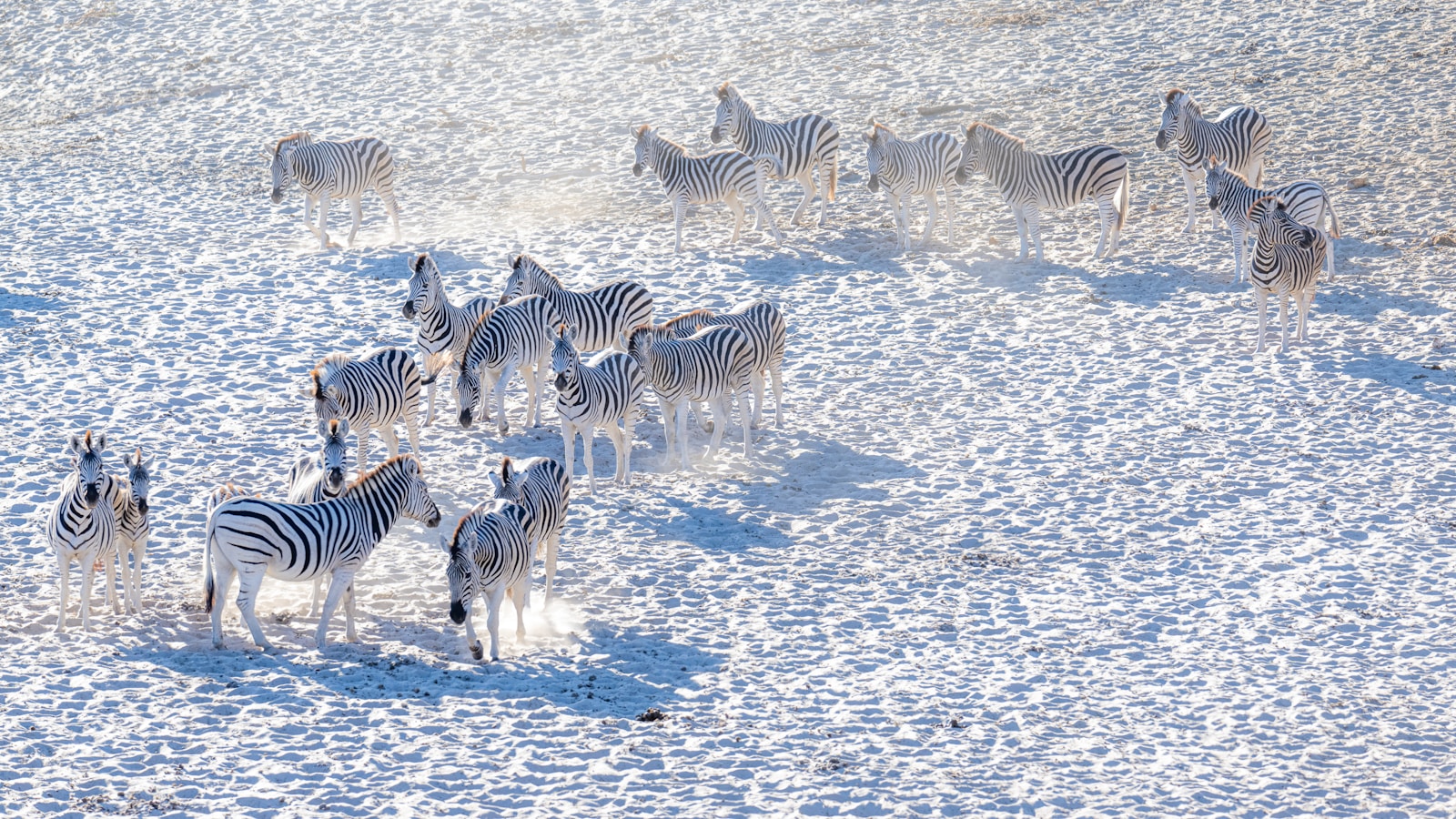
Twelve thousand square kilometres of salt pans, the remains of a prehistoric super-lake. Lunar landscapes for dry-season quad-biking, Africa's second-largest zebra migration in the wet season, and Kubu Island's ancient baobabs rising from the white crust.
Salt, Baobabs, and the Zebra Migration
Photo by Birger Strahl on Unsplash
About Makgadikgadi Pans
Twelve thousand square kilometres of salt. The Makgadikgadi is the remnant of Lake Makgadikgadi, a vast super-lake that once covered northern Botswana to depths of more than 30 metres, larger than modern Lake Victoria. The lake dried out over thousands of years as tectonic shifts redirected the rivers that fed it, leaving behind one of the largest salt pan complexes on earth: a shimmering crust of sodium and potassium that stretches beyond the horizon and produces optical effects, mirages, false horizons, vanishing distance, found nowhere else in southern Africa. The two principal pans, Sua to the east and Ntwetwe to the west, are flanked by grassy fringes and dry savannah that operate on a sharply seasonal calendar.
During the dry season (May to October), the pans are a hard bone-white lunar landscape: completely flat, blinding under the noon sun, entirely silent. Visitors quad-bike across the salt, sleep in bedrolls on the open crust under unimpeded stars, and experience a landscape that has no equivalent in the rest of Africa. During the wet season (November to April), everything changes. Summer rains turn the surface pans into shallow lakes; the fringing grasslands erupt in nutritious pasture; and Africa's second-largest zebra migration arrives, 25,000 zebra and 10,000 wildebeest moving in from the surrounding Kalahari to calve on the new grass. Predators follow. Pelicans, flamingos sometimes in the tens of thousands, and the full waterbird suite occupy the temporary wetlands.
Kubu Island, a crescent of ancient granite topped with massive baobabs rising from the flat white salt, is the pans' most photographed feature and the spiritual heart of the wider landscape. Site of San rock art and prehistoric stone tools, Kubu has spiritual significance for the local communities that goes back millennia. There are no facilities on the island: no water, fuel, or food. Visitors bring everything in and take everything out. The reward is one of the most atmospherically mystical locations in Botswana.
Things to Do in Makgadikgadi Pans
Quad-bike across the salt at sunset
The signature activity of the Uncharted Africa lodges (Jack's, San Camp, Camp Kalahari). Sunset rides across the salt crust to remote sleep-out locations. The combination of the meditative quality of crossing the pan and the immersive overnight under stars is unlike anything else in Africa.
Visit Kubu Island
A 4WD-only excursion across the pan (dry season only) to the granite crescent topped with ancient baobabs. No facilities on site; full self-sufficiency required. The sunset light against the trees and rock from the western face is among the most photographed scenes in Botswana.
Habituated meerkat encounter
Researcher-led habituation programmes at Jack's Camp and Camp Kalahari allow guests to sit with wild meerkat colonies at close range; the animals will climb onto guests as elevated lookout posts. A specific, structured experience built around the colonies' tolerance of human presence.
Walk with the San community
The Makgadikgadi-area San community partners with the lodges for bushcraft walks: tracking, plant identification, traditional bow-and-arrow technique, fire-making, ostrich-eggshell water-storage demonstrations. Substantive cultural engagement when conducted with fair-wage practices.
Photograph the wet-season migration and flamingos
December-April brings the migration herds onto the fringing grasslands. Sua Pan in good years supports substantial flamingo and white pelican populations. Game drives during this period are markedly different from dry-season landscape activities.
Sleep on the salt
Bedrolls on the crust at a remote location, no tent, the Milky Way overhead, silence so deep it becomes physical. A signature Uncharted Africa overnight experience. Cold dry-season nights are real; bring proper insulation despite the lodge bedrolls.
When to Visit Makgadikgadi Pans
Dry Season
May, October
The pans are a hard cracked white crust, perfectly flat for kilometres, intensely reflective, deeply silent. Quad-biking on the salt is at its best. Sleep-out experiences on bedrolls under open sky are signature activities. Wildlife is sparse on the pans themselves; the grass-fringe edges hold residents. Lodge rates are at peak.
Wet Season
November, April
Rains transform the pans into shallow lakes. The fringing grasslands erupt; the zebra and wildebeest migration arrives. Calving December-January draws concentrated predator activity. Flamingo populations sometimes reach 50,000+ on Sua Pan when conditions are right. Quad-biking on the salt is not possible.
Cooler Dry
June, July
Mild days (25°C), cold nights (down to 5°C), clear skies. The wilderness immersion is at its peak. Wildlife is dispersed but resident herds remain on the grasslands. The most comfortable period for the sleep-out experiences.
Hot Dry
September, October
The harshest dry period before the rains break. Daytime temperatures climb past 38°C. The pan landscape at its most extreme. October is the last comfortable month before the heat peaks; lodge rates start to ease in October.
Getting to Makgadikgadi Pans
By light aircraft from Maun (MUB) — 30-40 minutes to the Jack's/San Camp airstrip. By road from Maun: approximately 200km on tarred road to the Gweta turnoff, then 40km of variable track to the lodge area (3-4 hours total). Kubu Island access is by 4WD only, dry season only, with routes from Gweta, Mosu, or Lekubu. The pan-crossing track is unsigned in places; GPS navigation essential. Most visitors approach Kubu with experienced overlanders or as a guided day excursion. Wet-season Kubu access is generally not possible — the pan surface becomes impassable.
Where to Stay
Premium properties cluster around the Uncharted Africa portfolio: Jack's Camp (the atmospheric vintage-explorer flagship), San Camp (smaller, dry-season-only), and Camp Kalahari (the more accessible-priced sister property with the same activity range). Mid-range includes Planet Baobab near Gweta and Nata Lodge for the eastern Sua Pan side. Self-drive: Kubu Island Campsite (community-managed, basic facilities only), Nata Bird Sanctuary Campsites, and en-route Khama Rhino Sanctuary. All premium camp transfers enforce the standard 15-20kg soft-sided luggage limit.
Travel Tips for Makgadikgadi Pans
Frequently Asked Questions
- Wet season or dry season at the Makgadikgadi?
- Different experiences. Wet season (Nov-Apr) brings the zebra migration, flamingos, and lush grasslands; dry season (May-Oct) brings the lunar pan landscape, quad-biking, and sleep-outs on the salt. Quad-biking is impossible in the wet; the migration is absent in the dry. Pick based on priority.
- Can I drive to Kubu Island?
- In the dry season only, with 4WD, GPS navigation, and full self-sufficiency. The pan track is unsigned and can be confusing. Most travellers approach with experienced overlanders or as a guided excursion. Wet-season access is not safe; vehicles get stranded on the boggy surface.
- Are the meerkat encounters real?
- Yes. The colonies at Jack's Camp and Camp Kalahari have been habituated through long-term research programmes; the animals will climb onto stationary guests as elevated lookouts. Not a guarantee, but a reliable activity at the participating lodges.
- What's the difference from the Central Kalahari?
- Both are Kalahari but distinct. The CKGR is fossil river valleys, woodland, and grassland with strong wildlife year-round. The Makgadikgadi is salt pans with the wet-season migration and dry-season landscape. They pair well; many visitors do both on a Kalahari circuit.
Explore More, Makgadikgadi Pans
Plan Your Trip
More in Botswana
Okavango Delta
A vast inland delta where the Okavango River empties into the Kalahari Desert, creating 15,000 square kilometres of seasonal floodplains, pa…
Chobe National Park
The world's highest concentration of African elephants — around 120,000 across the greater Chobe ecosystem — drinks from the Chobe River eve…
Moremi Game Reserve & Khwai
The eastern third of the Okavango Delta and Botswana's only Big Five reserve. Moremi protects exceptional wild dog populations and Big Five …
Central Kalahari Game Reserve
At 52,800 square kilometres, the second-largest game reserve on earth. Black-maned Kalahari lions, cheetah hunting on open fossil valleys, S…
Kgalagadi Transfrontier Park
A 38,000 km² transfrontier park spanning Botswana and South Africa. Rolling red Kalahari dunes, black-maned lion prides, brown hyena, and th…
Linyanti & Selinda Concessions
The private concessions between the Okavango Delta and Chobe — ultra-exclusive safari territory with extraordinary wild dog populations, mas…
Nxai Pan National Park
A fossil lakebed adjacent to the Makgadikgadi with open terrain ideal for cheetah hunting and the ancient cluster of baobabs painted by Thom…
Tsodilo Hills
A UNESCO World Heritage rock art site with over 4,500 paintings on four quartzite massifs rising from the flat Kalahari, the highest concent…
Tuli Block
Far eastern Botswana at the meeting of three countries. Sandstone cliffs, massive baobabs, large elephant herds, and Mashatu Game Reserve's …