
Kgalagadi Transfrontier Park
A 38,000 km² transfrontier park spanning Botswana and South Africa. Rolling red Kalahari dunes, black-maned lion prides, brown hyena, and the most remote frontier camping in southern Africa at Mabuasehube.
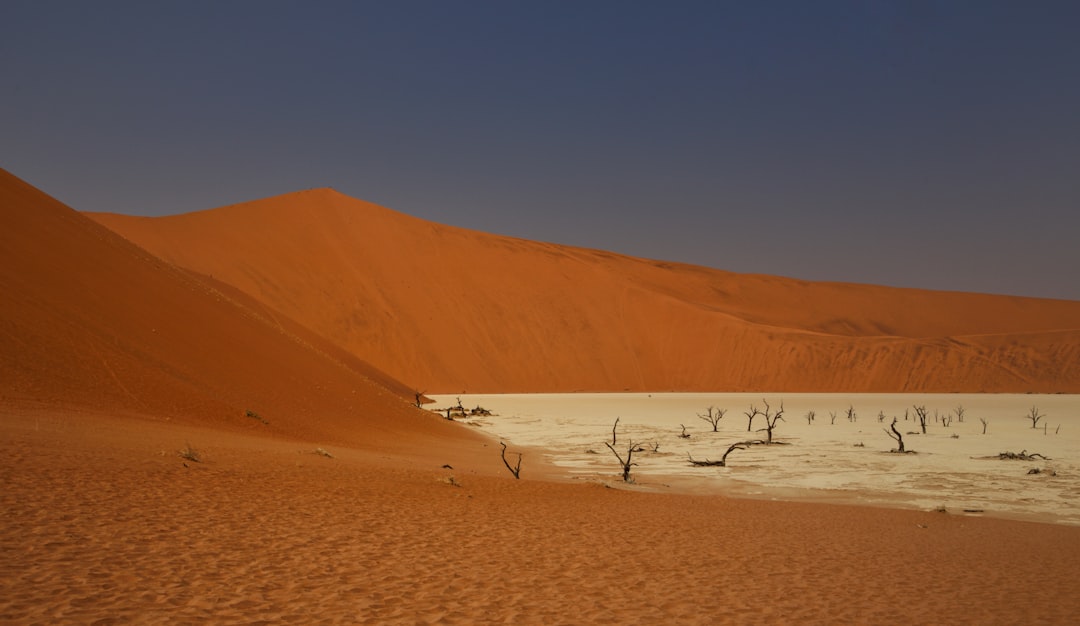
Red Dunes and Frontier Camping
Photo by Bernd Dittrich on Unsplash
About Kgalagadi Transfrontier Park
The Kgalagadi Transfrontier Park is a 38,000 square kilometre wilderness straddling the Botswana-South Africa border, a single contiguous protected area formed by the 2000 merger of South Africa's Kalahari Gemsbok National Park and Botswana's Gemsbok National Park. Its defining character is geological: rolling red sand dunes (oxidised iron content gives the famous colour), wide dry fossil riverbeds, the Nossob and the Auob, and the open pan systems where wildlife concentrates. It is one of the most visually distinctive landscapes in southern Africa.
For travellers approaching from the Botswana side, the Mabuasehube section, a series of large dry pans in the eastern Kgalagadi acting as wildlife focal points, is the primary draw. Mabuasehube is the pinnacle of remote, unsupported Kalahari camping. The DWNP campsites overlooking the major pans (Bosobogolo, Lesholoago, Khiding, Mpaathutlwa) have absolutely minimal facilities: a wooden A-frame for shade, a long-drop toilet, occasionally a bucket shower. No shops. No fuel. No staffed gate inside the reserve. No mobile signal. The Bosobogolo 4x4 trail connecting Mabuasehube to the western Kgalagadi is one of the most challenging routes in southern African overland travel, deep red sand, no fuel for 250 km, no surface water, no recovery service.
The wildlife reward is significant. Brown hyena (rare and exceptionally elusive elsewhere) are reliably encountered around the pans. Black-maned Kalahari lion prides patrol the dune valleys. Cheetah hunt the open terrain. Bat-eared fox and aardwolf are common at night. The gemsbok (oryx) for which the park is named is the perfect Kalahari adaptation, long horns, white-and-black facial pattern, the ability to survive without surface water for extended periods. The light at dawn on the red dunes, with a gemsbok silhouetted on the crest, is one of the iconic images of African wildlife photography. This is not a destination for casual safari travellers; the Kgalagadi rewards those who arrive prepared.
Things to Do in Kgalagadi Transfrontier Park
Self-drive game watch from the Mabuasehube campsites
The defining Botswana-side activity. Campsites on the pan rims overlook the wildlife focal points; spending hours observing from the campsite vantage point at dawn and dusk is the standard daily rhythm. Lion, leopard, brown hyena, gemsbok, and the full Kalahari cast move through.
Drive the Bosobogolo 4x4 trail
The east-west connector linking Mabuasehube to the western Nossob and Twee Rivieren. Three to four days of unsupported overland driving through some of the most demanding terrain in southern Africa. Two-vehicle convoy mandatory. A serious overland expedition.
Cross to the South African Kgalagadi infrastructure
The unified park's road network connects across the international boundary without internal border requirements. Twee Rivieren, Mata-Mata, and Nossob Rest Camps on the South African side offer substantially more facilities (fuel, supplies, swimming pools, formal accommodation) than the Botswana side.
Stay at a South African Wilderness Camp
Six unfenced premium SANParks wilderness camps (Kalahari Tent Camp, Bitterpan, Grootkolk, Gharagab, Kieliekrankie, Urikaruus) at remote interior locations. Significantly more atmospheric than the main rest camps; advance booking essential.
Photograph oryx on the red dunes at dawn
Dawn and dusk light on the red dunes is the iconic Kgalagadi imagery. The Auob and Nossob riverbeds offer extended dune sightlines; experienced photographers position for first light at known wildlife crossings.
Take a guided South African night drive for brown hyena
Self-driven night drives are not permitted on the Botswana side. The SANParks South African camps offer organised guided night drives, substantively the best way to see brown hyena, aardwolf, African wildcat, and the nocturnal cast.
When to Visit Kgalagadi Transfrontier Park
Cool Dry
April, May
Mild days (25-30°C), cold nights (down to 0°C), clear skies, firm surface conditions. Wildlife concentrations around the pans are excellent. The most comfortable period for camping and the standard recommendation for first-time Kgalagadi visitors.
Cool Dry
August, September
Mirror conditions to the autumn. Wildlife pressure on limited water sources intensifies through the dry months. September is the last comfortable month before the heat builds.
Hot Dry
October, November
Daytime temperatures exceed 38°C regularly. Wildlife concentrations are extreme as surface water is at its scarcest, but the heat is genuinely punishing for camping. Experienced travellers tolerate it for predator activity.
Wet Season
December, March
Summer rains transform the dune valleys into short green pasture. Wildlife disperses; pan conditions vary. Migratory birds arrive. Some tracks become temporarily impassable after heavy rain (especially the Bosobogolo). Hot daytime temperatures continue.
Getting to Kgalagadi Transfrontier Park
Self-drive 4WD is the standard. From Maun: Maun → Ghanzi → Hukuntsi → Mabuasehube Gate (approximately 800 km, 12-14 hours including stops; overnight at Ghanzi or Hukuntsi recommended). From Gaborone: via Jwaneng → Kang → Hukuntsi (600 km, 9-10 hours). From South Africa: most international travellers enter via Twee Rivieren Gate near Upington, explore both countries' road networks inside the unified park, and exit the same way. High-clearance 4WD with reduction gearing mandatory; full spare tyre, tyre repair kit, compressor, recovery gear, 40+ litres of water per person, and long-range fuel capacity. Two-vehicle convoy strongly recommended for Mabuasehube interior and mandatory for the Bosobogolo trail. All DWNP campsites must be pre-booked.
Where to Stay
Botswana side: Mabuasehube DWNP campsites (Mpaathutlwa, Lesholoago, Mabuasehube, Khiding, Bosobogolo, Monamodi) with absolutely minimal facilities. Bosobogolo trail wilderness campsites (Maatlhakola, Lang Rambuka, Swart Pan). South African side: Twee Rivieren Rest Camp (main entry with substantial facilities), Mata-Mata, Nossob, plus the six SANParks Wilderness Camps for premium remote-interior stays. There are no formal lodges on the Botswana side; travellers wanting lodge accommodation cross to the South African side or stay at Khama Rhino Sanctuary en route.
Travel Tips for Kgalagadi Transfrontier Park
Frequently Asked Questions
- Can I do the Kgalagadi without a 4WD?
- Not on the Botswana side. The Mabuasehube and Bosobogolo tracks require high-clearance 4WD with reduction gearing and sand-driving experience. The South African side (Twee Rivieren area) is more accessible with high-clearance 2WD on the main roads but the interior Wilderness Camps still require 4WD.
- When does Mabuasehube get fully booked?
- Peak windows (April-May, August-September) sell out 6-9 months ahead via the DWNP. The Bosobogolo trail permits are issued in limited numbers and book even further ahead. Plan well in advance.
- Is the Botswana side or the South African side better?
- Different experiences. The Botswana side (Mabuasehube) is genuinely wild, frontier camping with minimal facilities. The South African side has more infrastructure, more accessible wildlife viewing, and the SANParks Wilderness Camps. The unified park lets you cross between them without re-entering immigration — many travellers do both.
- Will I see the black-maned Kalahari lions?
- Yes, reliably, particularly in the cooler months and around the pans where prey concentrates. The Kgalagadi prides are less dense than in the Central Kalahari Game Reserve but visually more dramatic against the red dune backgrounds.
Explore More, Kgalagadi Transfrontier Park
Things To Do
Plan Your Trip
More in Botswana
Okavango Delta
A vast inland delta where the Okavango River empties into the Kalahari Desert, creating 15,000 square kilometres of seasonal floodplains, pa…
Chobe National Park
The world's highest concentration of African elephants — around 120,000 across the greater Chobe ecosystem — drinks from the Chobe River eve…
Moremi Game Reserve & Khwai
The eastern third of the Okavango Delta and Botswana's only Big Five reserve. Moremi protects exceptional wild dog populations and Big Five …
Central Kalahari Game Reserve
At 52,800 square kilometres, the second-largest game reserve on earth. Black-maned Kalahari lions, cheetah hunting on open fossil valleys, S…
Makgadikgadi Pans
Twelve thousand square kilometres of salt pans, the remains of a prehistoric super-lake. Lunar landscapes for dry-season quad-biking, Africa…
Linyanti & Selinda Concessions
The private concessions between the Okavango Delta and Chobe — ultra-exclusive safari territory with extraordinary wild dog populations, mas…
Nxai Pan National Park
A fossil lakebed adjacent to the Makgadikgadi with open terrain ideal for cheetah hunting and the ancient cluster of baobabs painted by Thom…
Tsodilo Hills
A UNESCO World Heritage rock art site with over 4,500 paintings on four quartzite massifs rising from the flat Kalahari, the highest concent…
Tuli Block
Far eastern Botswana at the meeting of three countries. Sandstone cliffs, massive baobabs, large elephant herds, and Mashatu Game Reserve's …