
Linyanti & Selinda Concessions
The private concessions between the Okavango Delta and Chobe — ultra-exclusive safari territory with extraordinary wild dog populations, massive dry-season elephant concentrations, and bed densities so low that vehicles rarely cross paths.
Botswana's Most Exclusive Safari
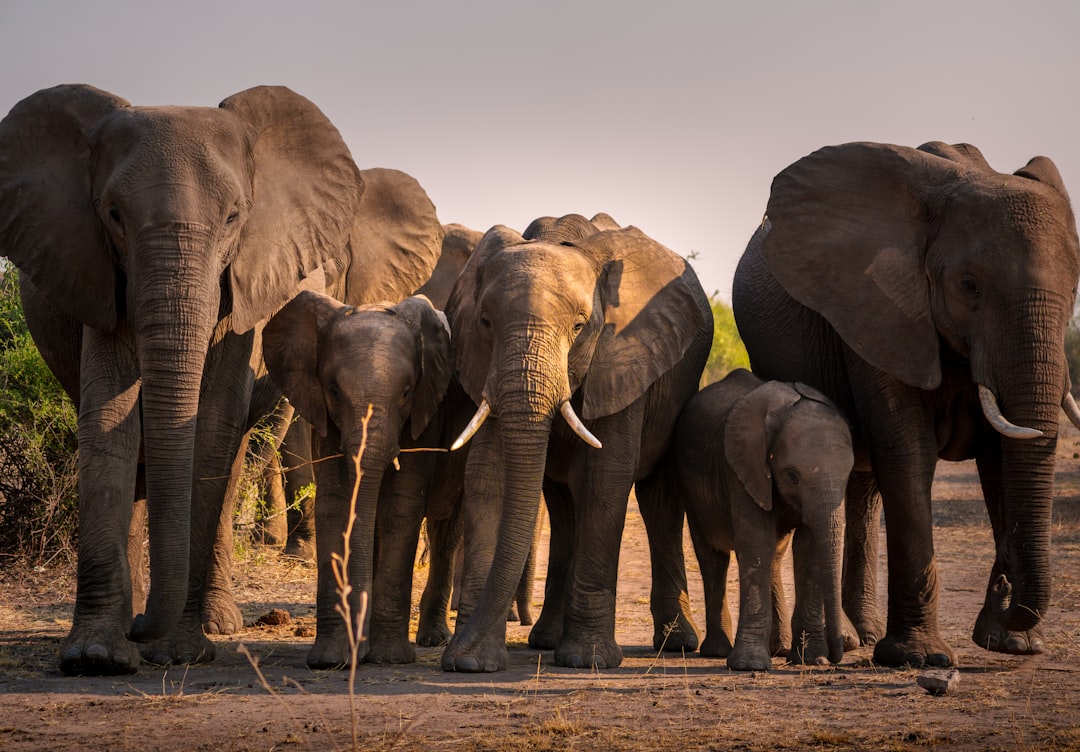
Photo by Ed Wingate on Unsplash
About Linyanti & Selinda Concessions
Tucked between the Okavango Delta to the south and Chobe National Park to the east, the Linyanti, Selinda, and Kwando private concessions exist at the extreme end of Botswana's already exclusive tourism model. The number of tourist beds per square kilometre is so severely limited that game-drive vehicles from different lodges rarely, if ever, encounter one another. The wilderness experience here is not merely intimate — it is private in the fullest sense. A single sighting may be observed by one or two vehicles maximum; often, by your vehicle alone.
The defining geography is the Linyanti fault, a tectonic line that creates a series of permanent swamps, lagoons, and dense riverine forests along the Linyanti and Kwando rivers. The habitat is distinct from both the open Delta floodplain to the south and the dry Chobe woodland to the east. The result is a high-density year-round wildlife ecosystem supporting some of the most reliable wild dog populations in Africa, massive dry-season elephant concentrations (the Linyanti and Kwando waterways are critical dry-season water sources for elephants moving from across the broader northern ecosystem), and predator densities that rival the central Delta.
Three distinct concession areas operate in this region. The Linyanti Concession runs along the Linyanti River and the Linyanti Swamps. The Selinda Concession (320,000 acres) includes the Selinda Spillway, a hydrological link between the Okavango and the Linyanti/Kwando systems, and the Zibadianja Lagoon. The Kwando Concession occupies the area along the Kwando River north of the Linyanti. Together they constitute one of the most exclusive concession clusters in Africa. Per-bed pricing here is among the highest in Botswana — USD $1,500-3,000+ per person per night at the apex camps. The defence of that pricing is the experience: extreme privacy, extraordinary guiding, and wildlife encounters at densities that the conservation framework specifically protects. This is a destination for travellers who have done the standard Delta and Chobe circuits and want to see what the highest-end Botswana product actually delivers.
Things to Do in Linyanti & Selinda Concessions
Off-road wild dog tracking
The private concessions permit guides to leave the track when tracking. Specific guide-vehicle pairings have multi-year relationships with individual wild dog packs. The combination of off-road permission and low vehicle density produces sustained predator encounters of exceptional quality.
Game drive among dry-season elephant herds
Hundreds of elephants congregate at the Linyanti and Kwando rivers during the dry season as interior water sources fail. The scale rivals Chobe; the difference is the number of observers. The same elephants, the same behaviour, viewed from a vehicle that may share the sighting with one other vehicle or none.
Photographic hide session at King's Pool
King's Pool (Wilderness Safaris) operates a sunken photographic hide at the Queen Sylvia waterhole, providing ground-level perspectives of drinking elephants and approaching predators. Among the best photographic infrastructure in Botswana; dedicated multi-hour sessions reward patience.
Walking safari with a Linyanti guide
Several Linyanti operators (Kwando Safaris particularly) have built strong walking programmes. Two to four hours on foot through riverine forest and open terrain. The Linyanti is genuinely strong walking country and worth specifically targeting if walking is a priority.
Boat safari on the Linyanti or Kwando during high water
June-September flood season opens boat-based wildlife viewing on the rivers and swamp interior. Hippo and elephant interactions, strong riparian birdlife, and access to swamp areas no vehicle can reach.
Combine with the central Delta
The standard top-end Botswana circuit pairs Linyanti or Selinda with the central Delta (Mombo, Jao, Vumbura) for ecological contrast. Transfers are short, experiences complementary. Adding Chobe for elephants completes a 10-12 day apex Botswana itinerary.
When to Visit Linyanti & Selinda Concessions
Dry Season
June, October
The signature Linyanti period. Elephant concentrations along the rivers reach their dry-season peak as inland water sources fail. Wildlife density on water margins is exceptional. Visibility maximises as vegetation thins. June-July is mild; August-October sees the heaviest pressure and the highest heat (35°C+).
Wild Dog Denning
May, July
Linyanti den sites are among the most reliably productive in southern Africa. Packs anchor to specific underground locations with pups; sustained multi-hour encounters become routine. Overlaps with comfortable dry-season weather. The optimal compound window.
Green Season
November, April
Summer rains break the dry season. Wildlife disperses across the newly productive landscape; elephants disperse from the rivers. Migratory birds arrive in extraordinary numbers; carmine bee-eater colonies along the river sandbars. Calving triggers predator activity. Lodge rates drop substantially.
Shoulder
April, May
Post-rains green flush with thinning vegetation and a building dry-season pattern. Wild dog denning begins. Lodge pricing has not hit peak. A strong choice for travellers wanting Linyanti at its best without maximum peak rates.
Getting to Linyanti & Selinda Concessions
By light aircraft from Maun (MUB, 30-45 minutes) or Kasane (BBK, 25-35 minutes). The Linyanti camp airstrips are among the better-maintained in Botswana but remain pure bush operations. Several lodges within the concession network operate paired itineraries moving guests between two or three properties; inter-camp transfers are typically 10-20 minutes. Linyanti pairs naturally with the central Delta (1-2 hour transfer), Chobe Riverfront (30 min), or Savuti (15 min). Road access is not practical for most travellers; self-drive concession access is generally not permitted at the premium properties. Standard 15-20kg soft-sided luggage limit applies.
Where to Stay
Premium (USD $1,500-3,000+ per person per night). Wilderness Safaris: Duma Tau (Linyanti), King's Pool (Queen Sylvia photographic hide), and several smaller properties. Great Plains Conservation: Zarafa Camp (Selinda, multi-award-winning, four large tented suites), Selinda Camp, Selinda Explorers Camp. Kwando Safaris: Kwando Lebala (exceptional wild dog territory), Kwando Lagoon, Kwando Splash. Mobile tented expeditions operate seasonally at substantially lower price points. There are no budget or mid-range options directly in the Linyanti-Selinda area; travellers wanting access on a more modest budget should consider Khwai community concession (substantively similar wildlife at lower density) or Chobe public sections.
Travel Tips for Linyanti & Selinda Concessions
Frequently Asked Questions
- Why is Linyanti so expensive?
- The high-value, low-volume conservation framework that defines Botswana safari is enforced through strict bed limits per concession. Linyanti's apex properties operate with very few rooms in concession areas of hundreds of thousands of acres. The pricing reflects the bed density that protects the wildlife experience.
- Is Linyanti better than the Okavango Delta?
- Different rather than better. The Delta is wet, aquatic, and built around the mokoro. Linyanti is riverine swamp and open floodplain with off-road predator tracking. Most top-end Botswana itineraries combine them.
- How many days do I need at Linyanti?
- Three to four nights is the optimal stay. Less than three is rushed. Many guests combine two Linyanti or Selinda properties (e.g., Zarafa + Kwando Lebala) over 4-6 nights to cover different areas of the concession network.
- When are the elephants most concentrated?
- September and October — peak dry-season pressure. Hundreds of elephants congregate at the Linyanti and Kwando rivers as inland water fails. Heat is significant (35°C+) but the wildlife density and predator activity is at its annual peak.
Explore More, Linyanti & Selinda Concessions
Things To Do
Plan Your Trip
More in Botswana
Okavango Delta
A vast inland delta where the Okavango River empties into the Kalahari Desert, creating 15,000 square kilometres of seasonal floodplains, pa…
Chobe National Park
The world's highest concentration of African elephants — around 120,000 across the greater Chobe ecosystem — drinks from the Chobe River eve…
Moremi Game Reserve & Khwai
The eastern third of the Okavango Delta and Botswana's only Big Five reserve. Moremi protects exceptional wild dog populations and Big Five …
Central Kalahari Game Reserve
At 52,800 square kilometres, the second-largest game reserve on earth. Black-maned Kalahari lions, cheetah hunting on open fossil valleys, S…
Makgadikgadi Pans
Twelve thousand square kilometres of salt pans, the remains of a prehistoric super-lake. Lunar landscapes for dry-season quad-biking, Africa…
Kgalagadi Transfrontier Park
A 38,000 km² transfrontier park spanning Botswana and South Africa. Rolling red Kalahari dunes, black-maned lion prides, brown hyena, and th…
Nxai Pan National Park
A fossil lakebed adjacent to the Makgadikgadi with open terrain ideal for cheetah hunting and the ancient cluster of baobabs painted by Thom…
Tsodilo Hills
A UNESCO World Heritage rock art site with over 4,500 paintings on four quartzite massifs rising from the flat Kalahari, the highest concent…
Tuli Block
Far eastern Botswana at the meeting of three countries. Sandstone cliffs, massive baobabs, large elephant herds, and Mashatu Game Reserve's …