
Tsodilo Hills
A UNESCO World Heritage rock art site with over 4,500 paintings on four quartzite massifs rising from the flat Kalahari, the highest concentration of rock art in the world and a sacred site to the San.
The Louvre of the Desert
Photo by Vitor Paladini on Unsplash
About Tsodilo Hills
Rising abruptly from the flat northwestern Kalahari, the Tsodilo Hills are an exposed outcrop of Precambrian quartzite, four distinct massifs known as the Male (highest at 410m), the Female (the most decorated with paintings), the Child, and the unnamed northernmost grandchild, surrounded by 100 km of perfectly flat sand savannah in every direction. The geological abruptness is part of what made the hills spiritually significant: a vertical landmark in a horizontal world.
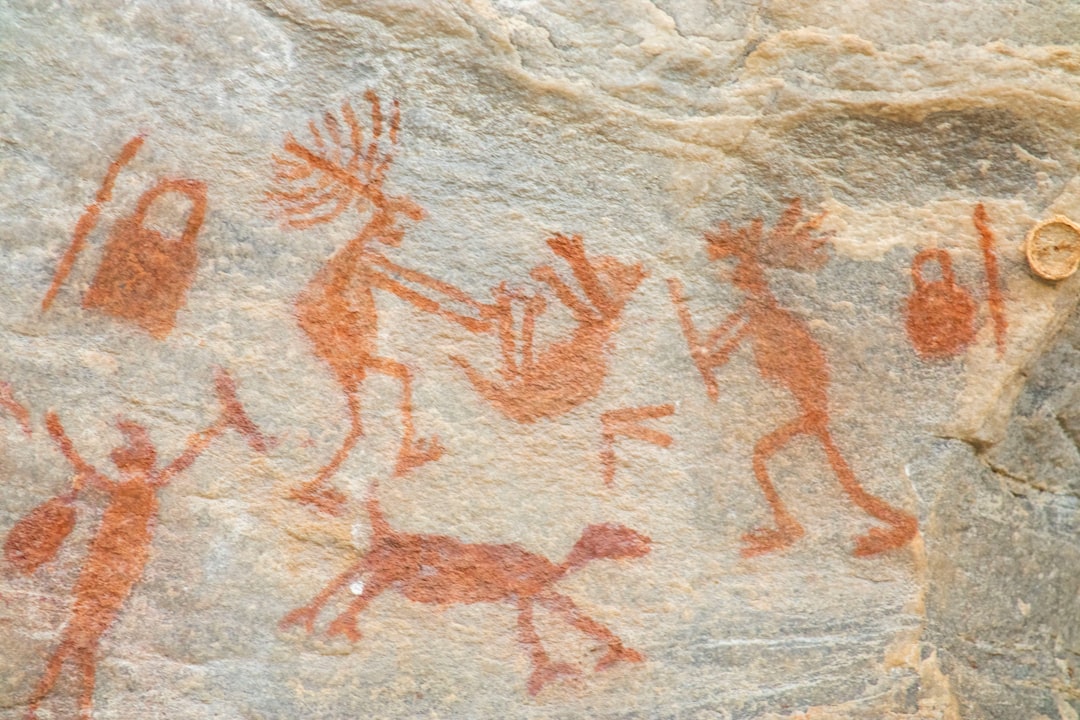
The hills contain more than 4,500 documented rock art paintings, the highest concentration of rock art anywhere in the world, and one of the most important repositories of San (Bushmen) artistic and cultural expression on earth. The earliest pigments date back several thousand years; the most recent paintings were created within the last 200 years. UNESCO inscribed Tsodilo as a World Heritage Site in 2001, and the site is informally known as the 'Louvre of the Desert', a description that does not overstate its significance. The paintings depict wild animals (eland, giraffe, zebra, antelope, predators), geometric patterns whose meanings researchers continue to investigate, scenes of dancing and ritual, handprints, and trance-state imagery associated with San shamanic practice. The art is not decorative — it is religious, communicative, and functional, a continuous record of how the San community engaged with the spiritual and material world that surrounded them.
The hills hold profound active spiritual significance for the San today. The visitor moves through this landscape as a guest in someone else's sacred geography. Visiting Tsodilo is not passive: the terrain is rugged sun-baked rock; exploration is on foot with mandatory local community guides whose knowledge of individual panel locations, the stories behind the images, and the cosmological framework of San belief transforms the visit from art-viewing into cultural education. No private vehicles beyond the base area; no facilities on the hill trails; no shortcuts. This is one of Botswana's most substantive cultural destinations and one of its most underappreciated by international visitors. Travellers who include Tsodilo in their itinerary almost universally describe it as the most affecting stop of the trip.
Things to Do in Tsodilo Hills
Walk the Rhino Trail at Tsodilo
The standard introductory loop, 3-4 hours, covering the most significant rock art panels on the Female Hill. Conducted with a community guide; appropriate for most fitness levels. The most accessible engagement with the 4,500-painting archive.
Walk the Cliff Trail or Lion Trail for deeper access
The Cliff Trail (4-6 hours) and the full-day Lion Trail reach less-visited panels and provide the deepest engagement with the rock art. Moderate to good fitness required; carry 2+ litres of water. Conducted with community guides.
Fish for tiger fish on the Okavango Panhandle
The Zambezi-Okavango system's premier freshwater sport fish. Half-day or full-day fishing excursions from the river lodges (Drotsky's Cabins, Shakawe River Lodge, Nguma Island). Light tackle gear, catch-and-release ethics, peak season September-December.
Find Pel's fishing owl
The Panhandle is one of the most reliable Pel's fishing owl destinations in southern Africa. Specialist evening or pre-dawn boat trips with experienced bird guides who know specific roost locations. The species requires effort to locate but is reliably encountered with proper preparation.
Boat safari on the Panhandle
Standard half-day excursions on the single-channel Okavango Panhandle. Different in character from the Delta proper — broader river, mature riparian forest, traditional fishing villages along the banks. Strong birding and hippo-crocodile observation.
Visit the Tsodilo museum and base centre
A small interpretive centre at the Tsodilo base camp provides historical and archaeological context for the rock art. Worth 30 minutes before the trail to frame what you are about to see.
When to Visit Tsodilo Hills
Cool Dry
April, August
Daytime temperatures are mild (25-30°C); hiking is comfortable; the dry conditions are reliable for 4WD approach roads; the Panhandle water levels are good for boat activities and tiger fishing. The standard recommended period for a Tsodilo visit.
Hot Dry
September, November
Daytime temperatures exceed 35°C; rock surfaces of the hills become punishingly hot. Full-day trails are demanding. Excellent for tiger fishing as water concentrates and fish activity peaks. Less ideal for the hill walks unless conducted at dawn.
Wet Season
December, March
Migratory birds arrive in extraordinary numbers; birding peaks; riparian forest is at its lushest. Hot daytime temperatures continue; afternoon thunderstorms common; the 4WD approach to Tsodilo can become temporarily difficult after heavy rain. Booking flexibility helps.
Shoulder
March
Tail end of the rains. Conditions remain warm and the landscape is lush. Pel's fishing owl viewing peaks in the dense riverine forest. Lower visitor numbers; some lodges offer shoulder pricing.
Getting to Tsodilo Hills
By road from Maun: tarred road north through Sehithwa and Gumare to Shakawe (370 km, 5-6 hours), then 40 km of dirt and sand track to the Tsodilo base camp. Generally manageable in any 4WD or high-clearance vehicle in dry conditions. By light aircraft: charter flights to Shakawe Airport (FBSW) or directly to the Tsodilo airstrip from Maun, approximately 1.5 hours. Less common; most visitors approach by road. Cross-border itineraries from Namibia's Bwabwata National Park and Caprivi are feasible via the Mohembo border (15 km from Shakawe).
Where to Stay
Tsodilo area: Tsodilo Community Campsite — basic community-run facilities at the base of the hills (long-drop toilets, no power, no formal water supply); full self-sufficiency required. There are no formal lodges directly at Tsodilo. Most visitors stay at the Panhandle river lodges 40 km away: Drotsky's Cabins (long-established Panhandle property, specialist fishing and birding), Shakawe River Lodge (mid-range, family-appropriate), Xaro Lodge (intimate mid-range), Nguma Island Lodge (larger family-appropriate property). Mahangu Safari Lodge on the Namibian Caprivi side is a cross-border alternative.
Travel Tips for Tsodilo Hills
Frequently Asked Questions
- How old are the Tsodilo paintings?
- The cumulative archive spans several millennia. The earliest surviving pigments are several thousand years old; the most recent paintings (the white-pigment layer often attributed to later Bantu cattle-herding communities) are within the last 200 years. Archaeological evidence of human occupation at the hills goes back tens of thousands of years.
- Can I visit Tsodilo without a guide?
- No — self-guided exploration of the rock art is not permitted, both for cultural preservation reasons and visitor safety on the rugged terrain. Community guides are arranged at the Tsodilo base camp office on arrival; the guide fees support the local community trust.
- What's the best way to combine Tsodilo with other destinations?
- Most commonly with the Okavango Panhandle (Shakawe area, 40 km from Tsodilo). The Panhandle adds tiger fishing, birding, and the Pel's fishing owl. Some travellers combine with the Caprivi Strip (Namibia) via the Mohembo border, or with the central Delta as part of a wider northwestern Botswana circuit.
- Is Tsodilo worth a special trip?
- For travellers interested in cultural depth, archaeological significance, or San heritage, absolutely yes. For travellers focused on wildlife, the answer is less clear-cut — Tsodilo is a cultural destination, not a wildlife destination. Combining with the Panhandle (for birding and fishing) adds more rounded interest.
Explore More, Tsodilo Hills
Plan Your Trip
More in Botswana
Okavango Delta
A vast inland delta where the Okavango River empties into the Kalahari Desert, creating 15,000 square kilometres of seasonal floodplains, pa…
Chobe National Park
The world's highest concentration of African elephants — around 120,000 across the greater Chobe ecosystem — drinks from the Chobe River eve…
Moremi Game Reserve & Khwai
The eastern third of the Okavango Delta and Botswana's only Big Five reserve. Moremi protects exceptional wild dog populations and Big Five …
Central Kalahari Game Reserve
At 52,800 square kilometres, the second-largest game reserve on earth. Black-maned Kalahari lions, cheetah hunting on open fossil valleys, S…
Makgadikgadi Pans
Twelve thousand square kilometres of salt pans, the remains of a prehistoric super-lake. Lunar landscapes for dry-season quad-biking, Africa…
Kgalagadi Transfrontier Park
A 38,000 km² transfrontier park spanning Botswana and South Africa. Rolling red Kalahari dunes, black-maned lion prides, brown hyena, and th…
Linyanti & Selinda Concessions
The private concessions between the Okavango Delta and Chobe — ultra-exclusive safari territory with extraordinary wild dog populations, mas…
Nxai Pan National Park
A fossil lakebed adjacent to the Makgadikgadi with open terrain ideal for cheetah hunting and the ancient cluster of baobabs painted by Thom…
Tuli Block
Far eastern Botswana at the meeting of three countries. Sandstone cliffs, massive baobabs, large elephant herds, and Mashatu Game Reserve's …