South Luangwa National Park in eastern Zambia is the birthplace of the walking safari and one of Africa's finest places for leopard. Here's how to plan your trip.
- Location
- Eastern Zambia, along the Luangwa River
- Gateway
- Mfuwe International Airport (MFU), via Lusaka
- Best for walking
- Dry season, June to October
- Signature wildlife
- Leopard, hippo, Thornicroft's giraffe
- Park size
- Roughly 9,050 square kilometres
- Typical cost
- From around USD 300 to over 1,500 per person per night, all-inclusive
South Luangwa National Park, in eastern Zambia, is widely regarded as one of Africa's greatest wildlife reserves and the acknowledged birthplace of the modern walking safari. It was here, in the second half of the twentieth century, that the conservationist Norman Carr first led visitors through the bush on foot rather than from a vehicle, an idea that has since spread across the continent.
The park follows the meandering Luangwa River and a chain of old oxbow lagoons that draw enormous concentrations of game into a classic riverine and miombo landscape. The result is exceptional density: large herds of elephant and buffalo, some of the densest hippo populations anywhere, and a leopard sighting record that places South Luangwa among the finest big-cat destinations in Africa.
This guide covers what makes the park special, when to visit, how the walking safari works, how to get there via Mfuwe, what it costs and how it compares with Zambia's other great parks.
Why South Luangwa is one of Africa's best parks
South Luangwa covers around 9,050 square kilometres of the Luangwa Valley, a southern arm of the Great Rift Valley. The river itself is the engine of the ecosystem: as it shifts course over the seasons it leaves behind oxbow lagoons that hold water and pull wildlife in, particularly as the surrounding bush dries out.
The concentration and variety of animals are what set the park apart. It supports large herds of elephant and Cape buffalo, prides of lion, abundant hippo and crocodile, and significant numbers of African wild dog, one of the continent's most endangered predators. The birdlife is outstanding too, with more than 400 recorded species, from carmine bee-eaters that nest in the riverbanks to storks, raptors and waterbirds.
Two local specialities give South Luangwa added appeal for serious wildlife watchers. The Thornicroft's giraffe, a subspecies found only in the valley, is distinguished by its differently patterned coat, while Cookson's wildebeest is another regional endemic. Neither is found anywhere else, which makes the park a destination in its own right rather than a stop on a wider circuit.
Norman Carr and the birth of the walking safari
The walking safari as we know it was effectively invented in the Luangwa Valley. Norman Carr, a former game ranger turned conservationist, argued that visitors gained far more from exploring the bush on foot than from a vehicle, and from the 1950s onward he developed guided walking trails in the area. His approach combined genuine conservation with low-impact, immersive tourism, and it shaped the way safaris are run across Zambia today.
Carr's legacy is also institutional. He helped establish the camps and guiding standards that the valley is still known for, and the country's professional guiding qualification remains among the most rigorous in Africa. Many of the guides working in South Luangwa today trace their training lineage directly back to his methods.
For travellers, this history is not just a footnote. It means walking is treated as a core activity rather than a novelty, and the park's camps and guides are organised around it. Few other destinations can claim the same depth of walking expertise.
What a walking safari is actually like
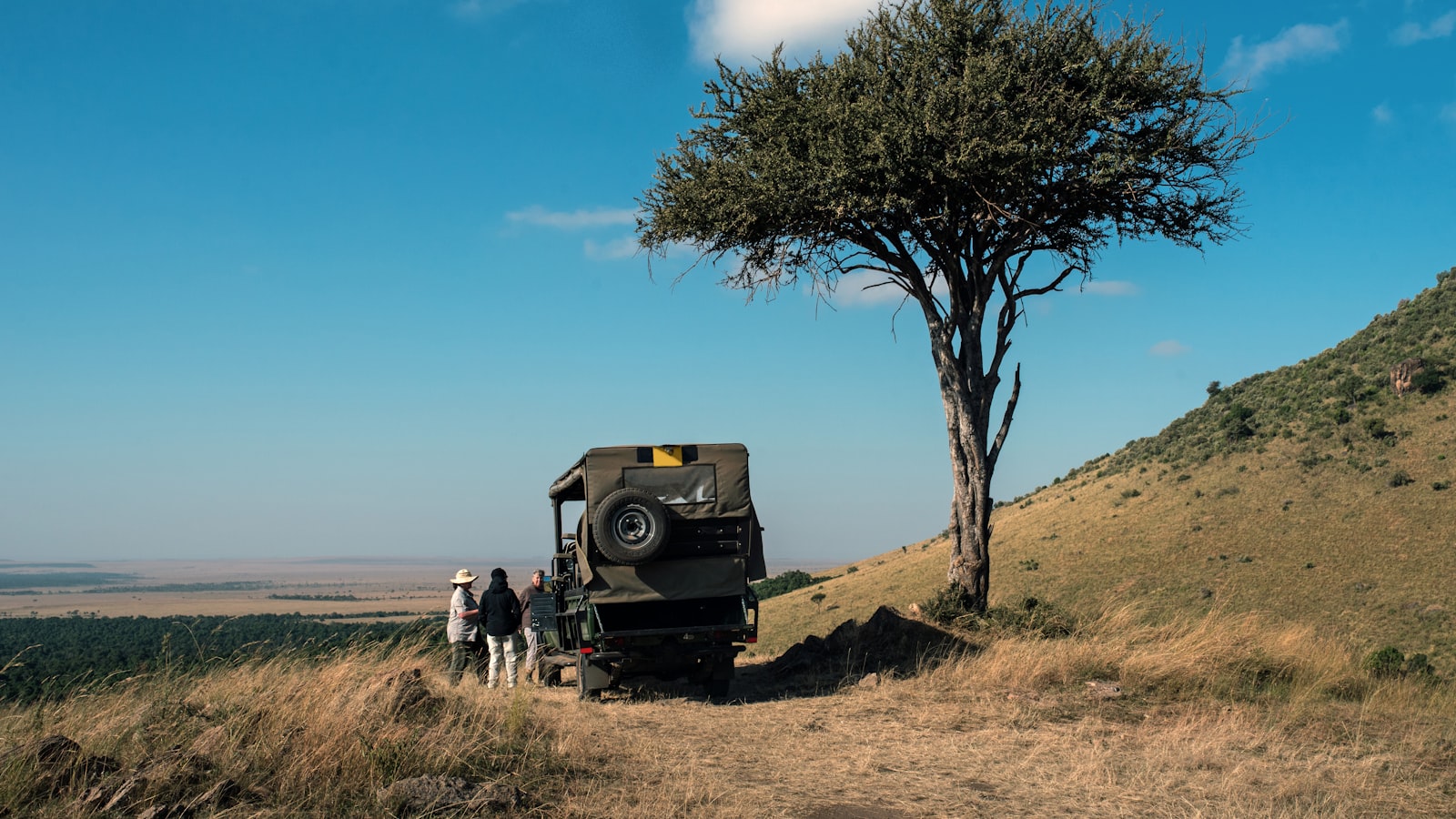
Photo by David Clode on Unsplash
A typical walking safari sets out in the cool of early morning, usually for three to four hours, led by a professional guide and accompanied by an armed scout who walks ahead. Groups are kept small, often no more than six or seven people, and you move quietly in single file. The pace is unhurried and the emphasis is as much on small details as on big game.
Rather than chasing a checklist of large animals, a good walk focuses on tracks, dung, birdsong, insects, plants and the way the bush fits together. You might follow lion spoor, watch a colony of carmine bee-eaters, or read a story written in the sand from the night before. When larger animals are encountered, the guide manages the approach carefully and the experience is far more visceral than from a vehicle.
Some operators run mobile or multi-day walking trips that move between remote, seasonal bushcamps, carrying guests on foot from one simple camp to the next. These deliver the most authentic version of the experience, away from the busier areas near the main gate.
- Walks usually last three to four hours, starting at first light
- An armed national parks scout always accompanies the group
- Group sizes are small, typically no more than six or seven guests
- Children below a minimum age (often around twelve) are usually not permitted on walks
- Multi-day trails between bushcamps offer the most immersive option
Leopards and night drives
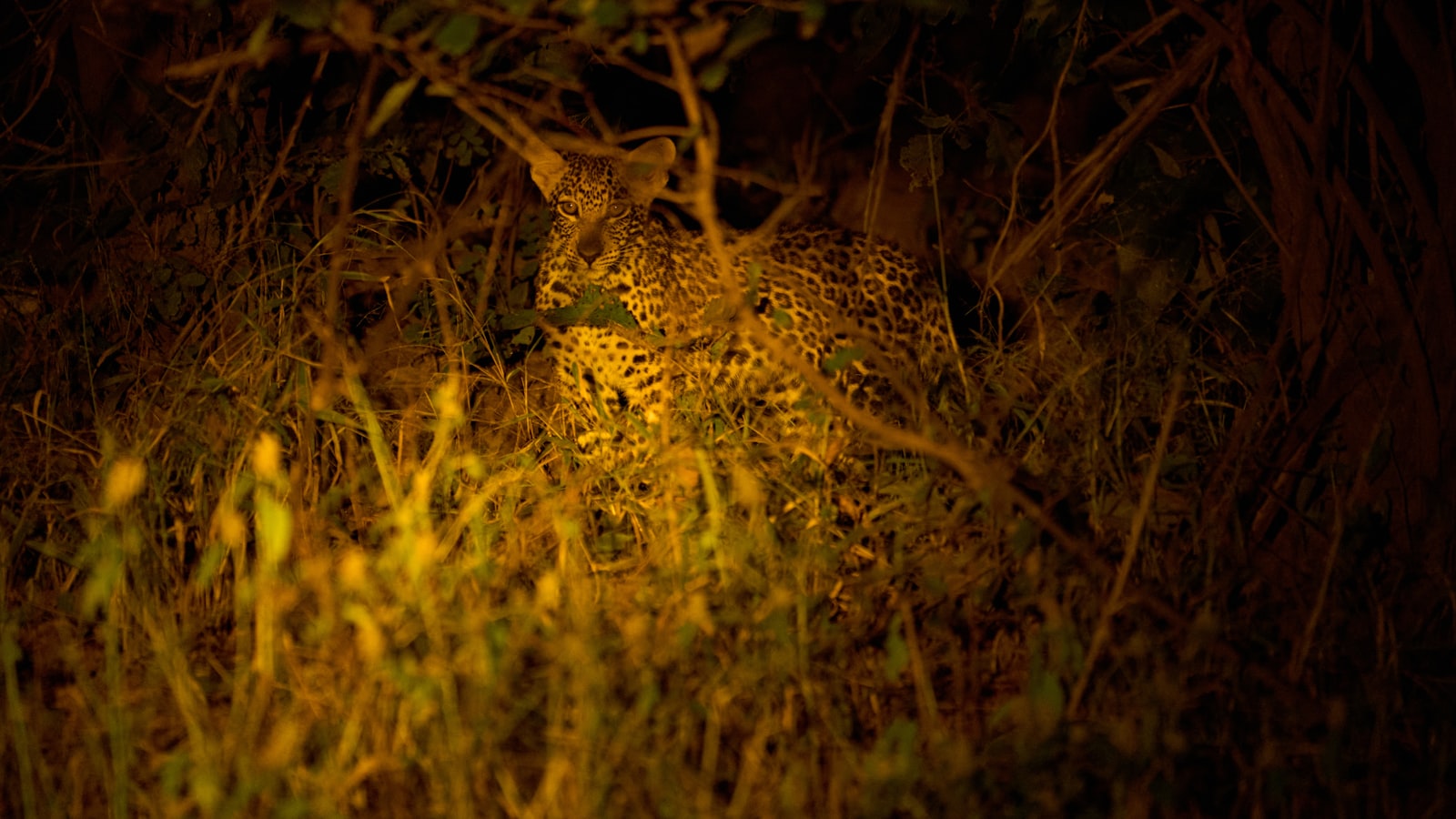
Photo by Dmitrii Zhodzishskii on Unsplash
South Luangwa is widely rated among the very best places in Africa to see leopard. The dense riverine vegetation along the Luangwa suits the cats well, and the population here is both healthy and relatively relaxed around vehicles, which means sightings are frequent and often prolonged.
The single biggest reason for the park's leopard reputation is that night drives are permitted, which is not the case in many national parks elsewhere on the continent. Game drives that begin in late afternoon continue after dark with a spotlight, and this is when leopard, along with other nocturnal species such as genet, civet, porcupine and bushbaby, are most active and most likely to be seen hunting.
Lion, elephant and buffalo are all common on drives, and the park's wild dogs, though wide-ranging and harder to pin down, are seen regularly enough that a stay of several nights gives a reasonable chance. Combining day and night drives with walking gives the fullest picture of the valley's wildlife.
Best time to visit: dry season versus emerald season
South Luangwa is strongly seasonal, and choosing the right months matters more here than in many parks. The dry season runs roughly from May to October and is prime time for walking and game viewing. As the bush thins and water sources shrink, wildlife concentrates along the river and lagoons, and the cooler early months are comfortable before the build-up to the rains brings real heat in October.
August to October is the peak for game concentrations, though by late October temperatures can be punishing. The green or emerald season, roughly November to April, transforms the valley into a lush, bird-rich landscape and is excellent for photography, migrant birds and newborn animals. It is also low season, with lower prices, fewer visitors and, where rivers are high enough, the chance to explore by boat.
The trade-off is access. Heavy rain can make roads impassable, and many of the seasonal bushcamps close entirely during the wettest months, with some lodges shutting from around January to March or April. If walking and classic dry-season game viewing are your priority, plan for June to October.
- May to October: dry season, best for walking and concentrated game
- August to October: peak game viewing, but increasingly hot
- November to April: emerald season, lush scenery, birding and boating
- January to March: wettest months, when many bushcamps close
Getting there: Mfuwe and the road from Lusaka
The usual way to reach South Luangwa is to fly into Mfuwe International Airport (MFU), which sits just outside the main park gate. Most visitors arrive via Lusaka, the Zambian capital, on a scheduled or charter flight; the hop from Lusaka takes a little over an hour. From Mfuwe, camps arrange road transfers that range from a short drive to a couple of hours for the more remote properties.
Driving from Lusaka is possible but long, typically a full day on the road covering several hundred kilometres, with the final stretch in variable condition. Most international travellers choose to fly to save time and avoid the tougher driving, though self-drive and overland options exist for the adventurous and budget-conscious.
International visitors generally connect through Lusaka or, depending on routing, regional hubs. Check current visa requirements before travelling; Zambia's entry rules have changed in recent years, so confirm the latest position with an official source or your operator.
Costs and combining with other Zambian parks
South Luangwa caters to a wide range of budgets, and rates are usually all-inclusive, covering accommodation, meals, drinks, activities and park fees. Value-focused bushcamps and owner-run lodges can start from around USD 300 to 500 per person per night, while high-end and exclusive camps run well above USD 1,000 and sometimes beyond USD 1,500 in peak season. These figures are indicative and vary by season, camp and how you book.
Many travellers combine South Luangwa with Zambia's other flagship parks for a fuller picture of the country. The Lower Zambezi, on the Zambezi River downstream of Victoria Falls, adds canoeing, fishing and water-based game viewing, while Kafue, the largest park, offers vast wilderness and the wildlife-rich Busanga Plains. Internal flights link these areas, making a two- or three-park itinerary straightforward to arrange.
South Luangwa pairs naturally with a visit to Victoria Falls and can be built into a wider southern African trip taking in Zimbabwe's Mana Pools or Hwange. For a first safari, however, the valley stands comfortably on its own.
Frequently Asked Questions
- Is South Luangwa good for a walking safari?
- Yes. South Luangwa is the birthplace of the modern walking safari, pioneered here by Norman Carr, and walking remains a core activity. Guides are exceptionally well trained, and options range from short morning walks to multi-day trails between remote bushcamps. Few places in Africa offer the same depth of walking expertise and infrastructure.
- When is the best time to visit South Luangwa?
- For walking and classic game viewing, the dry season from May to October is best, peaking from August to October as wildlife concentrates along the river. The green emerald season, November to April, brings lush scenery, excellent birding and boating but heavy rain, and many bushcamps close during the wettest months.
- How likely am I to see leopard in South Luangwa?
- Very likely on a multi-night stay. The park is rated among the best leopard destinations in Africa, helped by dense riverine habitat and a relaxed population. Crucially, night drives are permitted, and leopard are most active and visible after dark, so combining day and night drives gives an excellent chance of good sightings.
- How do I get to South Luangwa?
- Fly into Mfuwe International Airport (MFU), usually via Lusaka, on a flight of a little over an hour, then take a road transfer to your camp. Driving from Lusaka is possible but takes a full day over several hundred kilometres, so most international visitors choose to fly to save time.
- Are night drives allowed in South Luangwa?
- Yes. Night drives are permitted in South Luangwa, which is one reason for its strong reputation for nocturnal wildlife. Late-afternoon game drives continue after dark with a spotlight, revealing leopard, genet, civet, porcupine, bushbaby and other species rarely seen by day. This is a significant advantage over many parks elsewhere in Africa.
- What wildlife is special to South Luangwa?
- Beyond leopard, lion, elephant, buffalo and huge hippo pods, South Luangwa has two regional endemics: the Thornicroft's giraffe, a subspecies unique to the valley, and Cookson's wildebeest. African wild dog are also present, and birdlife is exceptional, with carmine bee-eater colonies nesting in the riverbanks during the dry season.
- How much does a South Luangwa safari cost?
- Rates are usually all-inclusive, covering meals, drinks, activities and park fees. Value bushcamps and owner-run lodges start from roughly USD 300 to 500 per person per night, while luxury camps exceed USD 1,000 and can top USD 1,500 in peak season. Prices vary by season, camp and how you book.