A practical guide to Ethiopia, from the rock-hewn churches of Lalibela and the Simien Mountains to the Danakil Depression, Omo Valley cultures, coffee and the best time to travel.
- Capital
- Addis Ababa (around 2,355 m altitude)
- Currency
- Ethiopian birr (ETB)
- Main airport
- Bole International (ADD), Addis Ababa
- Best time to visit
- October to March (main dry season)
- Languages
- Amharic, Oromo, Tigrinya and others; English widely used in tourism
- Visa
- Online e-Visa for most visitors (confirm officially)
Ethiopia is a large, ancient country in the Horn of Africa, and one of the few African nations never formally colonised. It keeps its own script (Ge'ez), its own 13-month calendar that runs several years behind the Gregorian one, and a deeply rooted Ethiopian Orthodox Christian tradition that shapes daily life and the calendar of festivals.
This is also a strong contender for the title of cradle of humankind: the 3.2-million-year-old fossil known as Lucy was unearthed in the Afar region. For travellers, the draw is variety packed into one country, from rock-hewn churches and medieval castles to high trekking peaks and one of the hottest, lowest landscapes on Earth.
This guide covers the famous Historic Route of the north, the Simien and Bale mountains, the Danakil Depression, the cultures of the Omo Valley, the food and coffee, plus the practical details of visas, money, getting there and when to go.
What makes Ethiopia singular
Few countries pack as much distinctiveness into one place. Ethiopia resisted European colonisation, defeating an invading Italian army at the Battle of Adwa in 1896, and the only significant interruption to its independence was the Italian occupation of 1936 to 1941. That continuity helped preserve an indigenous culture with its own alphabet, calendar and church.
The Ethiopian calendar has 13 months: twelve of 30 days plus a short month of five or six days, and it sits roughly seven to eight years behind the Gregorian calendar. The clock is different too, with the day commonly counted from dawn. None of this trips up visitors much, but it is a reminder that Ethiopia runs on its own terms.
Ethiopian Orthodox Christianity, one of the oldest Christian traditions in the world, underpins many of the country's headline sights and its biggest festivals. Islam, present since the earliest days of the faith, and a range of other beliefs add to a layered religious landscape.
The Historic Route: Lalibela, Gondar, Axum and Bahir Dar
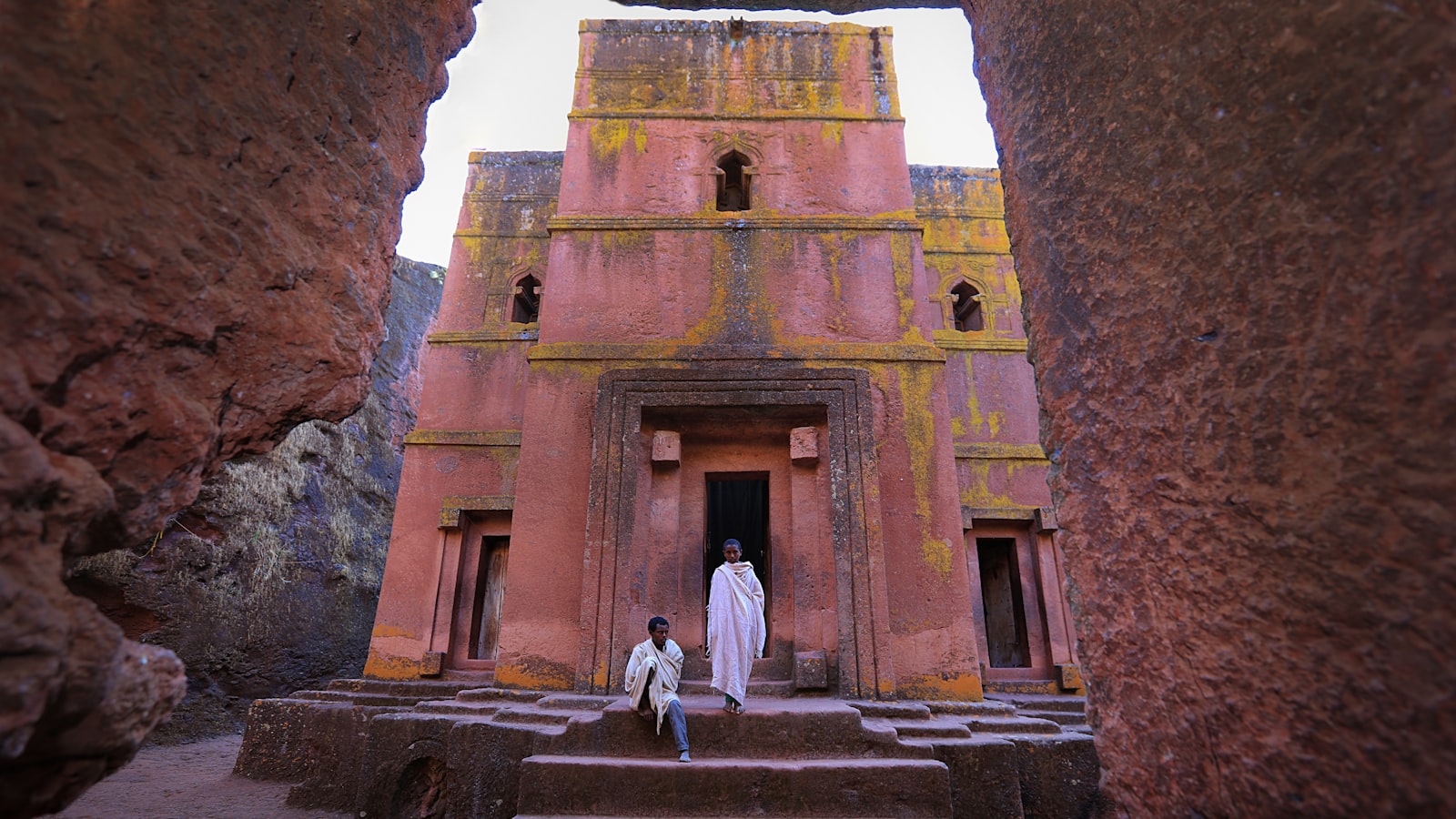
The northern Historic Route links the country's great medieval and ancient sites and is usually travelled by a short series of internal flights, often on Ethiopian Airlines. Lalibela is the centrepiece: eleven churches hewn downward out of solid rock in the 12th and 13th centuries, still in active use and a major pilgrimage destination. It is a UNESCO World Heritage Site, and Bete Giyorgis (the Church of Saint George), cut in the shape of a cross, is its most photographed structure.
Gondar, a former imperial capital, holds Fasil Ghebbi, a walled compound of 17th-century castles and palaces that gives the city its nickname as Africa's Camelot. Axum, far to the north, was the heart of an ancient trading kingdom and is known for its towering carved stone obelisks (stelae) and its claim, held by the Orthodox Church, to house the Ark of the Covenant.
Bahir Dar sits on Lake Tana, the source of the Blue Nile, where island and peninsula monasteries hold centuries-old manuscripts and paintings. A short distance away, the Blue Nile Falls (Tis Issat) are most impressive in and just after the rainy season; flow can be reduced when water is diverted to a nearby hydroelectric plant.
- Lalibela: eleven rock-hewn churches, a living pilgrimage site
- Gondar: Fasil Ghebbi, 17th-century royal castles
- Axum: ancient obelisks and Orthodox heritage
- Bahir Dar and Lake Tana: island monasteries and the Blue Nile
Trekking the Simien and Bale mountains
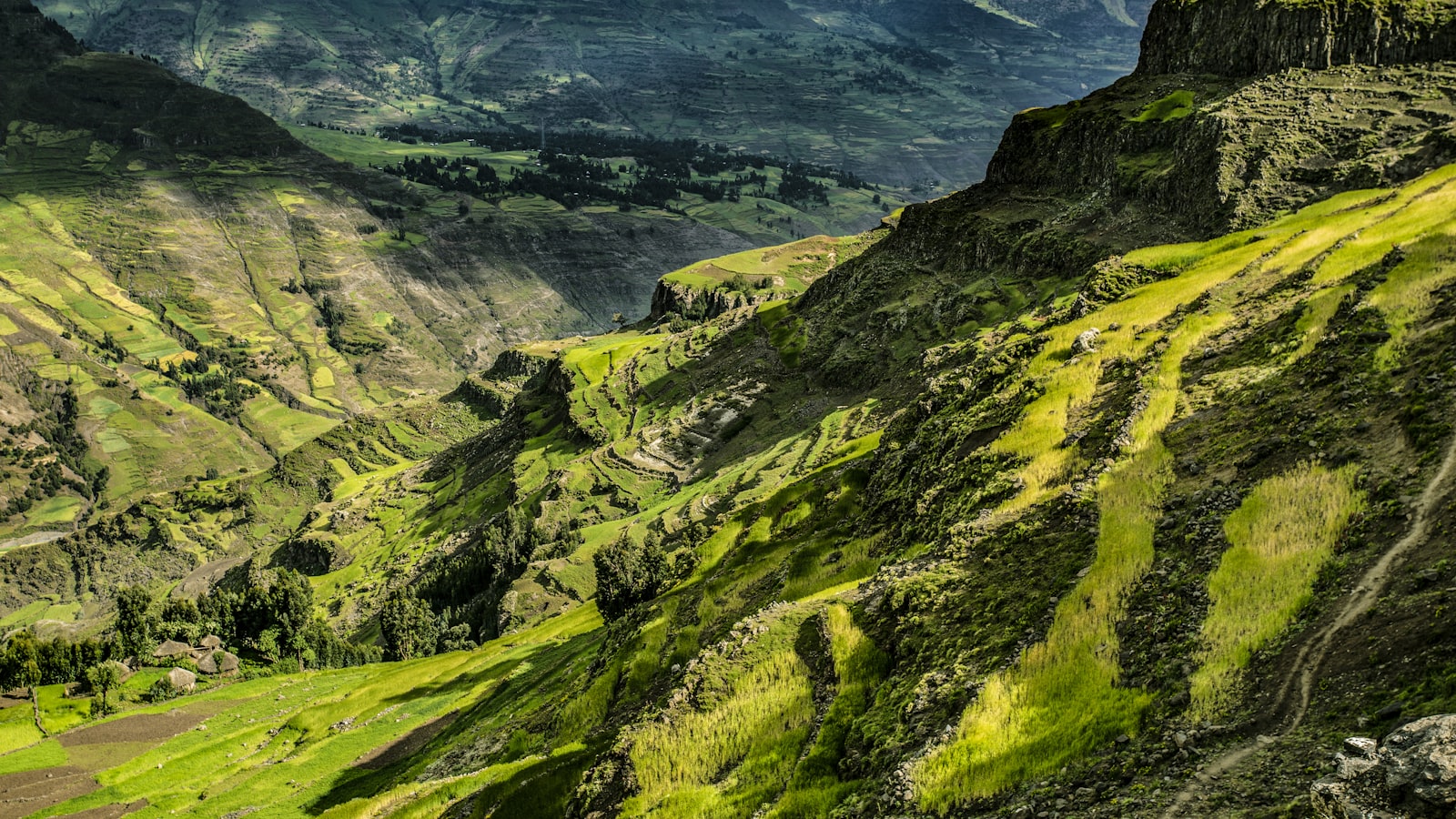
Photo by Erik Hathaway on Unsplash
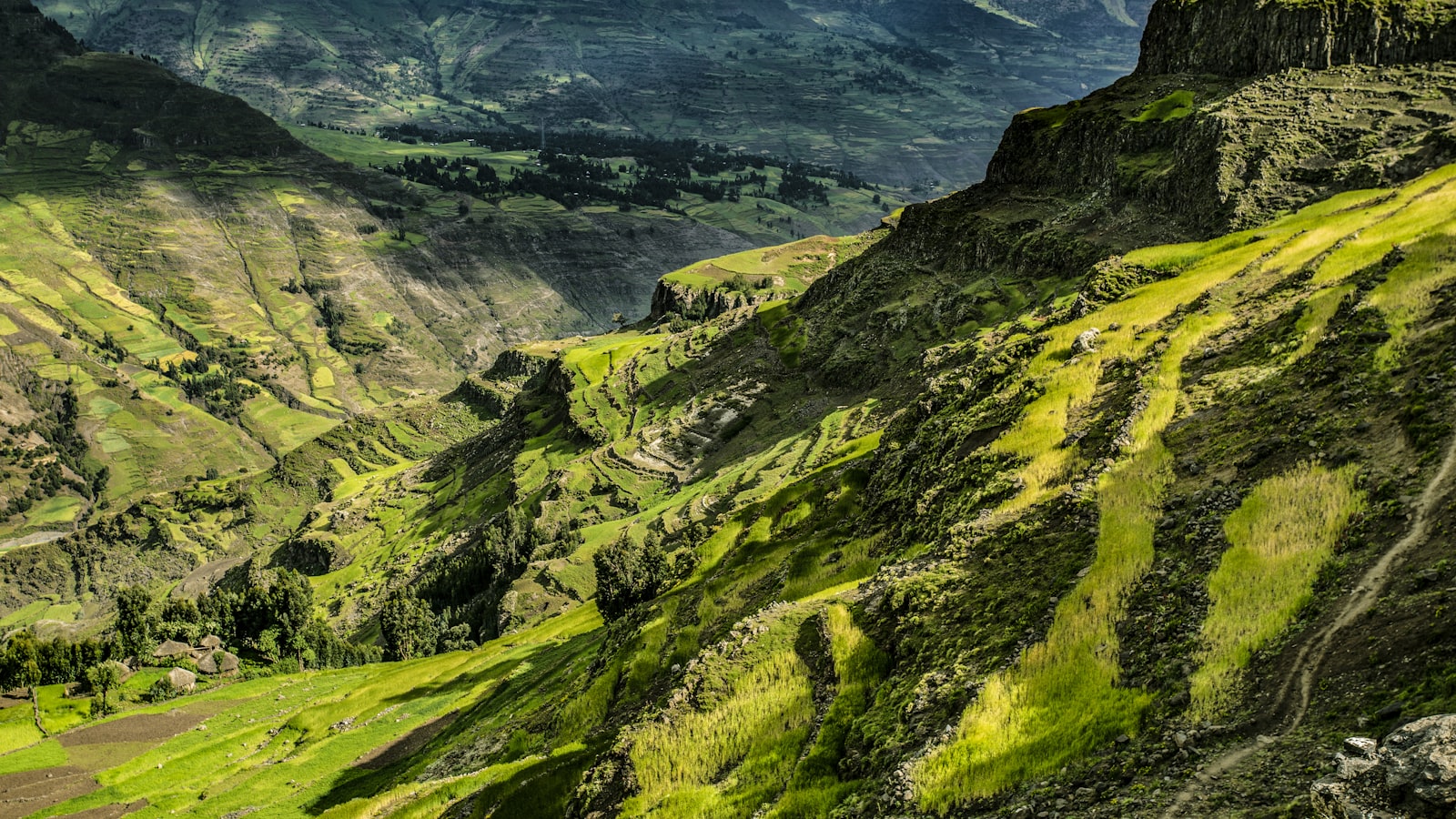
The Simien Mountains National Park, a UNESCO site in the north, offers some of Africa's most dramatic highland trekking, with escarpments dropping away into deep valleys. Treks range from day walks to multi-day routes, and the park is reached from Gondar via the town of Debark, where guides and scouts are arranged. Wildlife is a highlight: large troops of gelada baboons graze on the grasslands, and the endangered Walia ibex and Ethiopian wolf can be seen.
Ras Dashen (also spelt Ras Dejen), the highest peak in Ethiopia at roughly 4,550 metres, lies within reach of longer Simien itineraries and is a serious multi-day undertaking. Altitude is real here; most trekkers spend several days acclimatising and walking at elevations above 3,000 metres.
Far to the south-east, the Bale Mountains National Park protects the Sanetti Plateau, one of the best places on Earth to see the Ethiopian wolf, the world's rarest canid. The Harenna Forest on the park's southern flank adds a very different, mist-soaked highland woodland to the experience.
The Danakil Depression and the Afar lowlands
The Danakil Depression in the Afar region is one of the hottest and lowest places on the planet, lying well below sea level with daytime temperatures that regularly climb past 40C. It is visited on organised expeditions from Mekele, typically with a guide, support vehicles and an armed escort, given the remoteness and the harsh conditions.
Two sights define the area. Erta Ale is an active shield volcano with a persistent lava lake, usually reached by an overnight trek and watched after dark. Dallol, near a salt flat where camel caravans still work, is a low volcanic field of surreal yellow, green and orange sulphur and mineral springs.
This is a demanding trip and conditions can change, so it should only be done with a reputable operator and with attention to current safety advice for the region. Some parts of the Afar and Tigray areas have seen instability in recent years.
Omo Valley cultures and the south
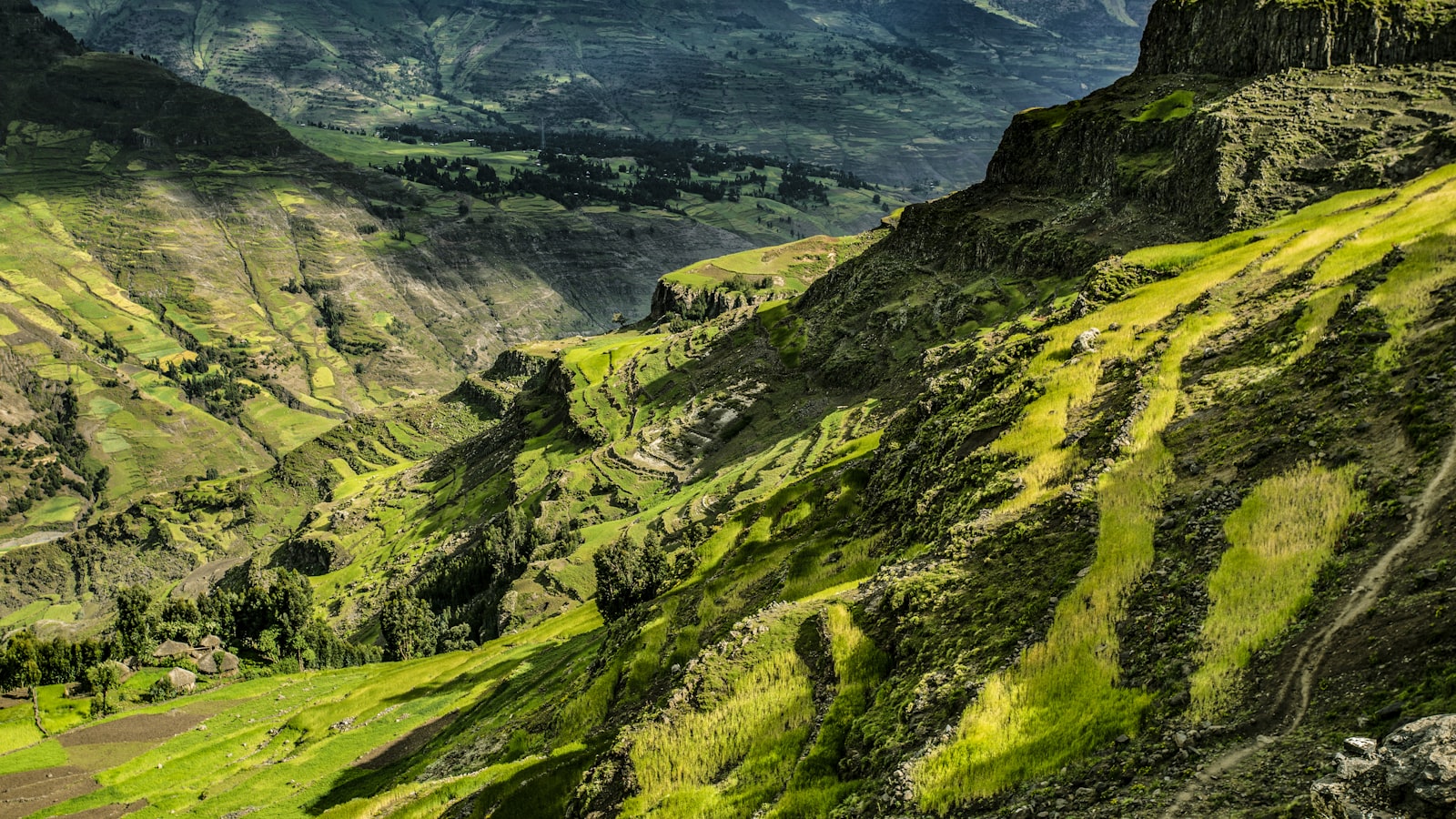
Photo by Erik Hathaway on Unsplash
The Lower Omo Valley in the south-west is home to a remarkable concentration of distinct peoples, among them the Mursi, Hamar, Karo, Daasanach and Banna, many with long-held traditions of body decoration, dress and ceremony. The region is on the UNESCO World Heritage list for its archaeological significance as well as its living cultures.
Visits are usually arranged through specialist operators on multi-day overland trips, often built around market days when communities gather. Travel respectfully: ask before photographing, agree any photo fees in advance, and follow the lead of a knowledgeable local guide. Roads are rough and distances long, so journeys here take time.
The south also holds the Rift Valley lakes and the forested hills around Jimma and Kaffa, the region most associated with the origins of coffee.
Food, coffee and festivals
Ethiopian food centres on injera, a large sourdough flatbread made from teff, served with an array of spiced stews known as wat. Doro wat (chicken) and various meat and vegetable dishes share a single platter, eaten by hand with torn pieces of injera. During Orthodox fasting periods, vegan dishes are widespread, which makes the cuisine unusually friendly to plant-based travellers.
Coffee is woven into daily life, and Ethiopia is widely regarded as its birthplace. The traditional coffee ceremony, in which green beans are roasted, ground and brewed in front of guests over several rounds, is an act of hospitality you will encounter often.
The festival calendar is a major draw. Timkat (Epiphany), celebrated in January, sees huge, colourful processions marking the baptism of Christ, with Gondar and Lalibela among the most popular places to witness it. Meskel, marking the finding of the True Cross, features large bonfires and is another high point of the Orthodox year.
Addis Ababa and getting around
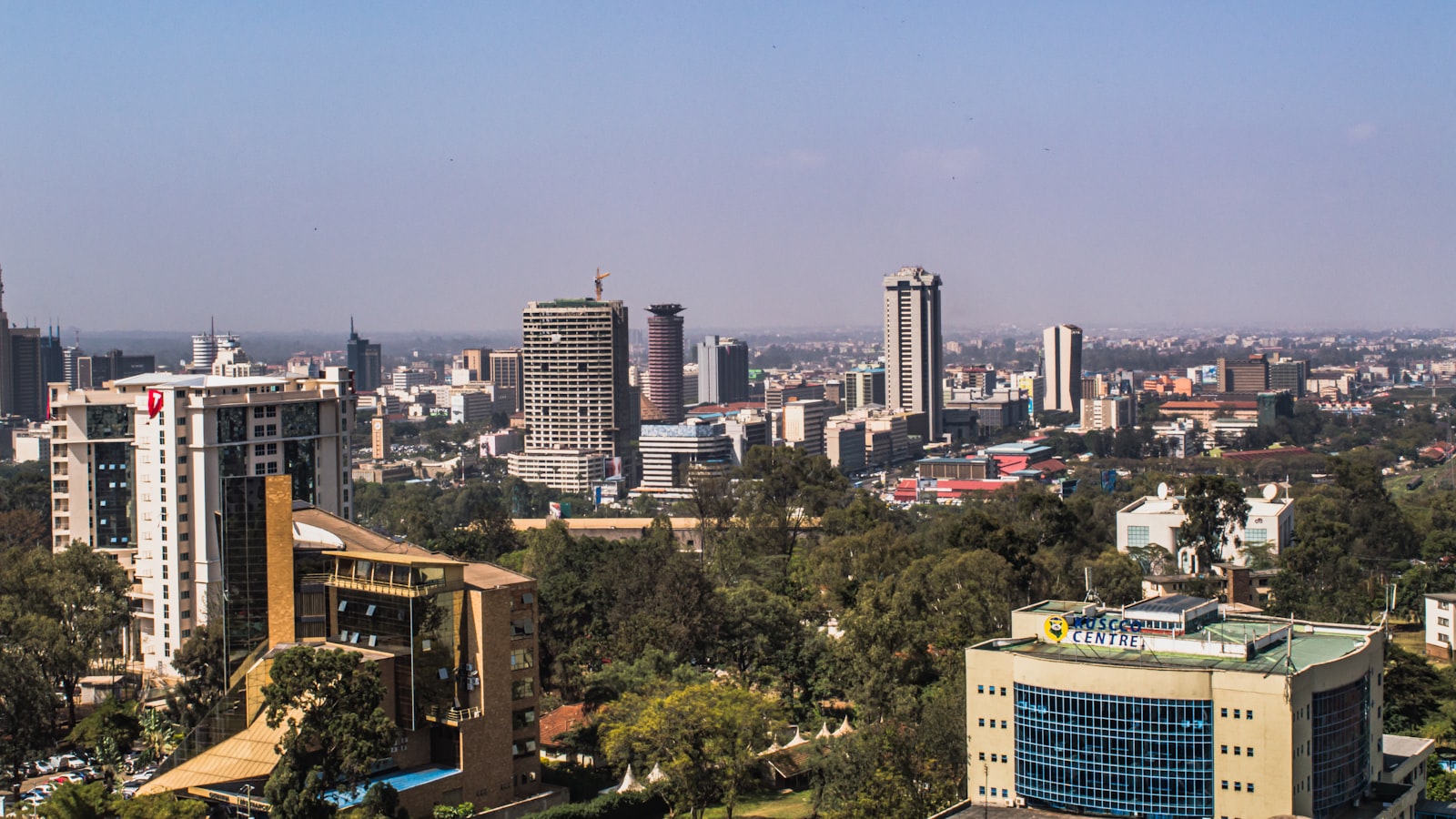
Addis Ababa, sitting at around 2,355 metres, is one of the highest capital cities in the world and the political hub of the African Union. The National Museum, home to the Lucy fossil, the Holy Trinity Cathedral and the lively Merkato market are common stops, and the city is the natural base for onward travel.
Bole International Airport (ADD) is one of Africa's busiest hubs, served by the extensive network of Ethiopian Airlines, which connects the country to much of the continent and beyond. Domestic flights are the practical way to cover the long distances of the Historic Route, and travellers flying internationally with Ethiopian Airlines often get reduced domestic fares.
Overland travel is possible but slow, with long drives on mountain roads. Most visitors combine internal flights for the big distances with road transfers and local guides for trekking and the cultural south.
Visas, money, safety and when to go
Most visitors enter on an electronic visa: Ethiopia operates an official online e-Visa system, and you should apply through the government portal and confirm the current requirements officially before you travel. The currency is the Ethiopian birr (ETB); cash is still king in much of the country, card acceptance is limited outside larger hotels, and you should budget accordingly and carry US dollars to change.
The main dry season runs from October to March and is the best window for trekking and the Historic Route, with clear highland skies. The long rains fall roughly from June to September, which greens the highlands and fills the Blue Nile Falls but can make rural roads difficult. The Danakil is best avoided in the hottest months around June to August.
On safety, Ethiopia rewards careful planning. Some border areas and certain outlying regions have experienced instability in recent years, so check your government's current travel advisories, avoid affected areas, and stick to established routes and reputable operators. With that homework done, the headline destinations are well set up for visitors.
Frequently Asked Questions
- Do I need a visa to visit Ethiopia?
- Most travellers need a visa, and Ethiopia runs an official online e-Visa system that lets you apply before you arrive. Apply through the government portal and confirm the current rules, fees and entry conditions officially, as requirements can change. Keep a printed copy of your approval to show on arrival.
- When is the best time to visit Ethiopia?
- The main dry season from October to March is the best overall window, with clear skies ideal for trekking and the northern Historic Route. The long rains roughly from June to September green the highlands and boost the Blue Nile Falls but can make rural roads hard going. The Danakil is best avoided in the hottest mid-year months.
- Is Ethiopia safe for tourists?
- The main tourist destinations are generally set up for visitors, but some border areas and certain outlying regions have seen instability in recent years. Check your government's current travel advisories before booking, avoid affected areas, use reputable operators, and stick to established routes. The Danakil in particular should only be visited on an organised expedition.
- How do I travel the Historic Route?
- The northern Historic Route, linking Lalibela, Gondar, Axum and Bahir Dar, is usually covered by a short series of internal flights, most on Ethiopian Airlines, with road transfers in between. Distances by road are long and slow, so flights save considerable time. Flying internationally with Ethiopian Airlines can earn you reduced domestic fares.
- What is the food like, and is it good for vegetarians?
- Ethiopian food centres on injera, a sour flatbread made from teff, served with spiced stews called wat. It is unusually friendly to vegetarians and vegans because Orthodox fasting traditions make plant-based dishes widely available. Coffee is central to daily life, and the traditional coffee ceremony is a common act of hospitality.
- What currency is used in Ethiopia, and can I use cards?
- The currency is the Ethiopian birr (ETB). Cash dominates much of the country, and card acceptance is limited outside larger hotels and a few city venues. Carry US dollars to change and budget for cash payments, especially when travelling in rural areas, on treks and in the cultural south.
- What are Timkat and Meskel?
- Timkat is the Ethiopian Orthodox celebration of Epiphany, held in January, marked by large, colourful processions, with Gondar and Lalibela among the best places to see it. Meskel marks the finding of the True Cross and features large bonfires. Both are major events in the Orthodox calendar and a striking time to visit.