Everything you need to plan mountain gorilla trekking in Uganda, Rwanda and the DRC, from permit prices and booking to fitness, packing and the unforgettable hour itself.
- Where
- Uganda (Bwindi, Mgahinga), Rwanda (Volcanoes NP), DRC (Virunga NP)
- Permit price (2026)
- Rwanda ~USD 1,500, Uganda ~USD 800, DRC lower; confirm current rates
- Group size
- Around 8 trekkers per gorilla family
- Time with gorillas
- Strictly one hour
- Minimum age
- 15 years
- Best months
- June–September and December–February (drier)
Gorilla trekking is the guided hike to spend a strictly limited hour with a habituated family of endangered mountain gorillas in the high forests of the Virunga region and Uganda's Bwindi. There are only around 1,000 mountain gorillas left on Earth, and they live nowhere in captivity, so the only way to see them is to walk into their misty, mountainous habitat on foot.
It is possible in just three countries that share these forests: Rwanda, Uganda and the Democratic Republic of Congo. Each offers a different balance of cost, accessibility and atmosphere, and each requires a compulsory permit booked well in advance.
This guide explains how the three destinations compare, what permits cost in 2026, the rules that protect the gorillas, what the trek is actually like, how fit you need to be, what to pack and when to go.
What is mountain gorilla trekking?
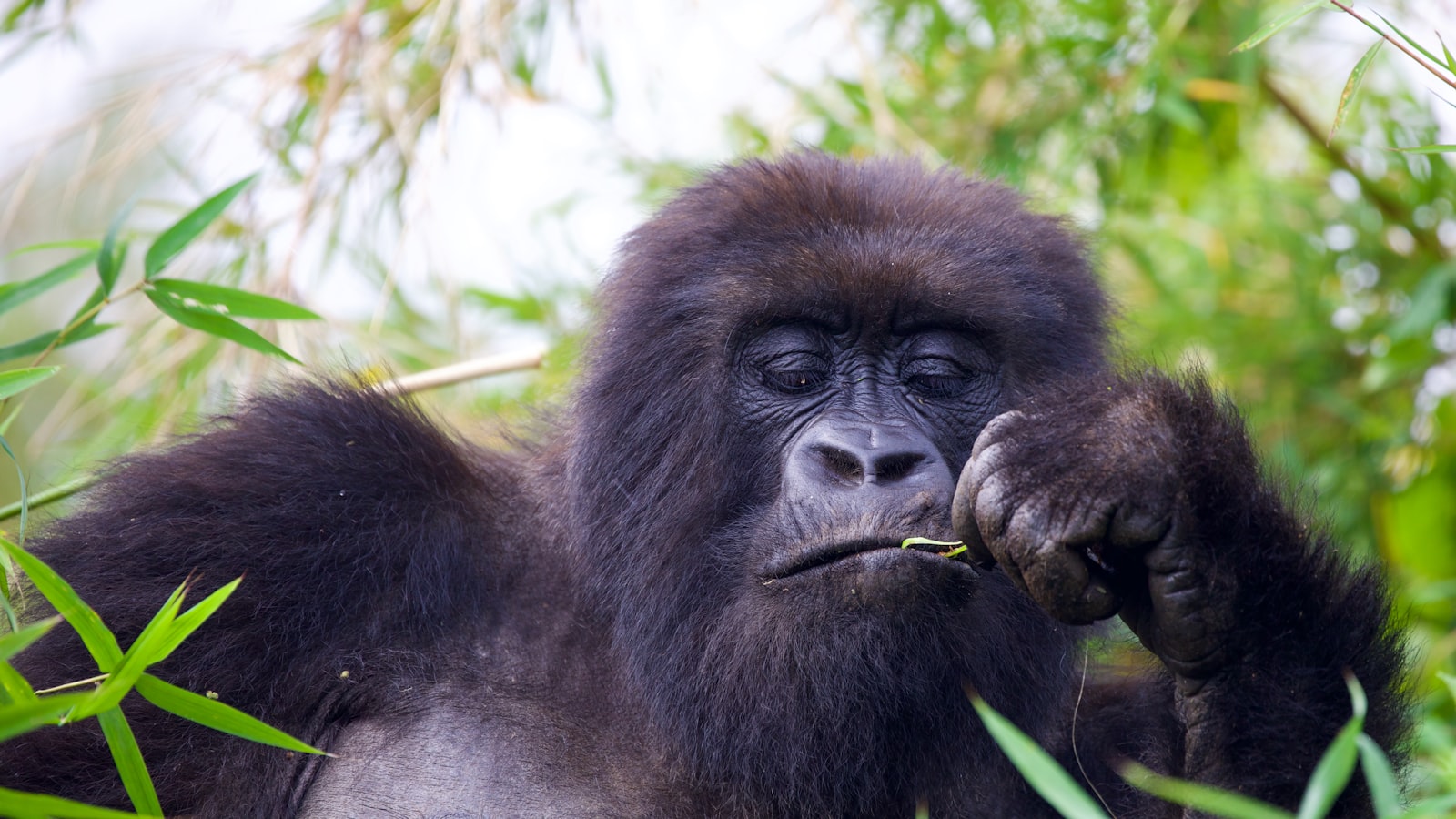
Mountain gorilla trekking is a ranger-guided hike to find a specific gorilla family that has been habituated, meaning it is accustomed to brief human presence. Once your group reaches the gorillas, you are allowed exactly one hour to watch them feed, play, groom and rest, usually from a distance of around seven metres.
The gorillas are wild and free-ranging, so there is no fence and no guarantee of how long the walk will take. Trackers set out at dawn to locate the family, then radio your guide, who leads you to them through dense, steep, high-altitude forest. The reward is one of the most powerful wildlife encounters anywhere: sitting quietly while a silverback, weighing up to 200kg, and his family carry on with their day a few metres away.
These are mountain gorillas (Gorilla beringei beringei), distinct from the lowland gorillas seen elsewhere in Central and West Africa. The same forests are home to other primates, including golden monkeys and chimpanzees, which many travellers combine into a single trip.
Rwanda, Uganda or DRC: how the three compare
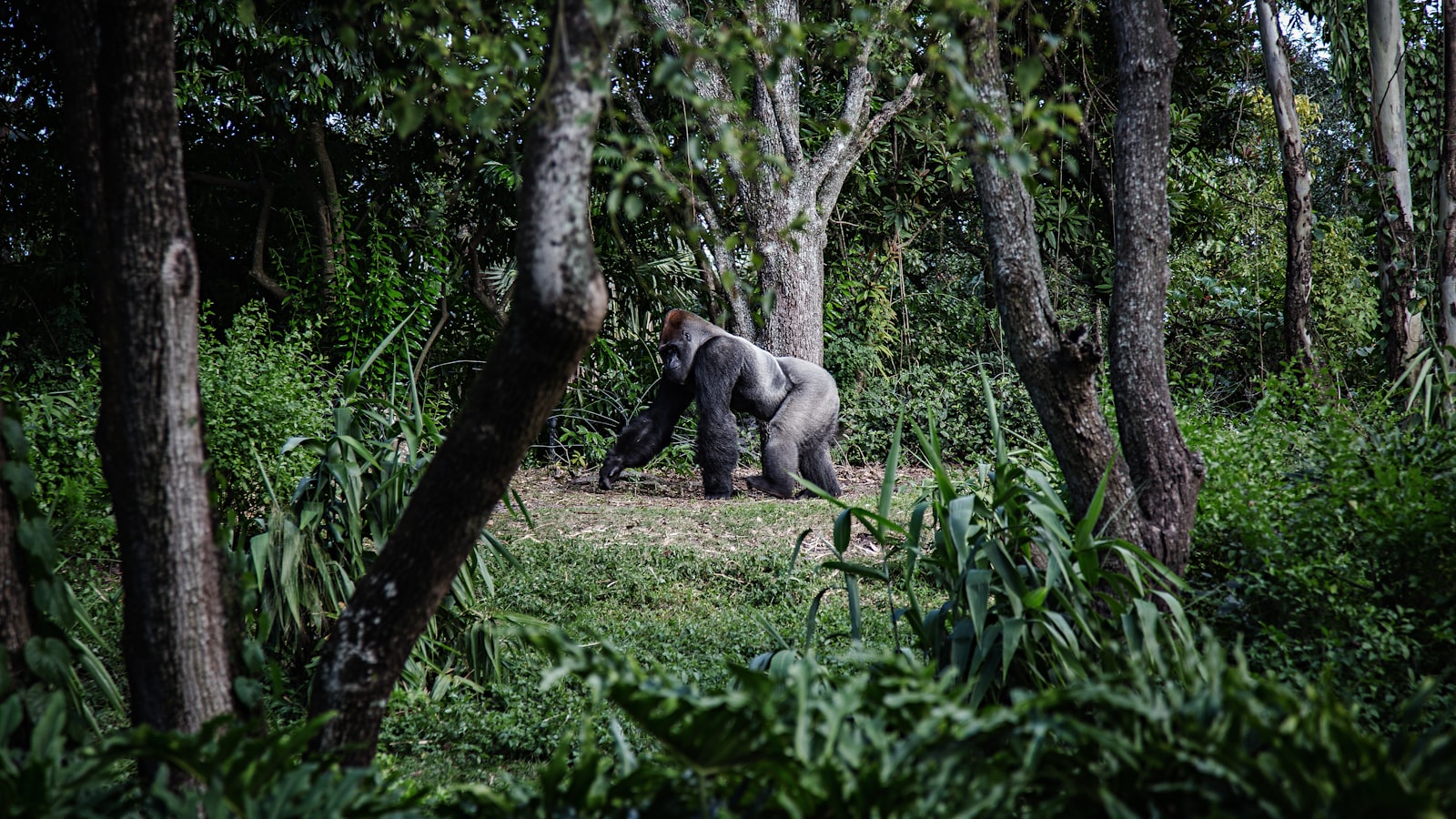
Photo by Mike Arney on Unsplash
Rwanda's Volcanoes National Park is the most accessible: roughly two to three hours by road from Kigali International Airport, on good tarmac, which makes a short, premium trip feasible. The trade-off is the price, with Rwanda holding the world's most expensive gorilla permit. The experience is polished, the lodges are luxurious and the volcanic scenery of the Virunga chain is superb.
Uganda is the choice for value and variety. Permits are markedly cheaper, there are more habituated families across Bwindi Impenetrable National Park and Mgahinga Gorilla National Park, and a Uganda trip combines naturally with chimpanzee tracking in Kibale, savanna game viewing in Queen Elizabeth National Park and its tree-climbing lions. The catch is distance: Bwindi is a long overland transfer of eight to ten hours from Entebbe, or a short domestic flight.
The DRC's Virunga National Park offers the cheapest permits and dramatic scenery, but it is subject to security closures and the park's status can change at short notice. Always check your government's travel advisories and the park's official channels before committing.
- Rwanda (Volcanoes NP): most accessible, priciest permit, premium and manicured
- Uganda (Bwindi & Mgahinga): cheaper permits, more families, easy to combine with chimps and big-game parks, longer transfers
- DRC (Virunga NP): cheapest permits, but subject to security closures, check advisories first
Gorilla permits: prices, booking and why they are limited
A permit is compulsory and there is no way to trek without one. The number issued each day is deliberately tiny, because only a limited set of families is habituated and each may be visited by just one small group per day. In peak season permits sell out months ahead, so book early through the national park authority or a reputable tour operator.
Indicative 2026 prices are around USD 1,500 in Rwanda (through the Rwanda Development Board), around USD 800 in Uganda (through the Uganda Wildlife Authority) and lower again in the DRC. These figures change periodically and discounts sometimes apply in Uganda's low-season months, so always confirm current rates before you plan a budget.
Most travellers buy permits as part of a packaged trip, where the operator secures the permit, arranges park transfers and matches your fitness to an appropriate trekking sector. If you book independently, you must hold the physical or electronic permit before you arrive at the briefing point.
The rules that protect the gorillas
Because gorillas share much of our DNA, they are vulnerable to human respiratory and other illnesses, so the rules are strict and enforced. They exist to keep both the animals and visitors safe, and breaking them can mean being turned back without a refund.
Trekkers are screened for fitness and health, and anyone with a cold, flu or other infection may be asked to stay behind. The core rules are consistent across all three countries.
- Groups are limited to around eight trekkers per gorilla family
- The visit is strictly one hour from the moment you reach the gorillas
- Minimum age is 15 years
- Keep a minimum distance (around 7–10 metres) and follow your guide's instructions
- Wearing a face mask is required or strongly encouraged to reduce disease transmission
- No eating, drinking or flash photography near the gorillas; lower your voice and never touch them
What the trek is actually like
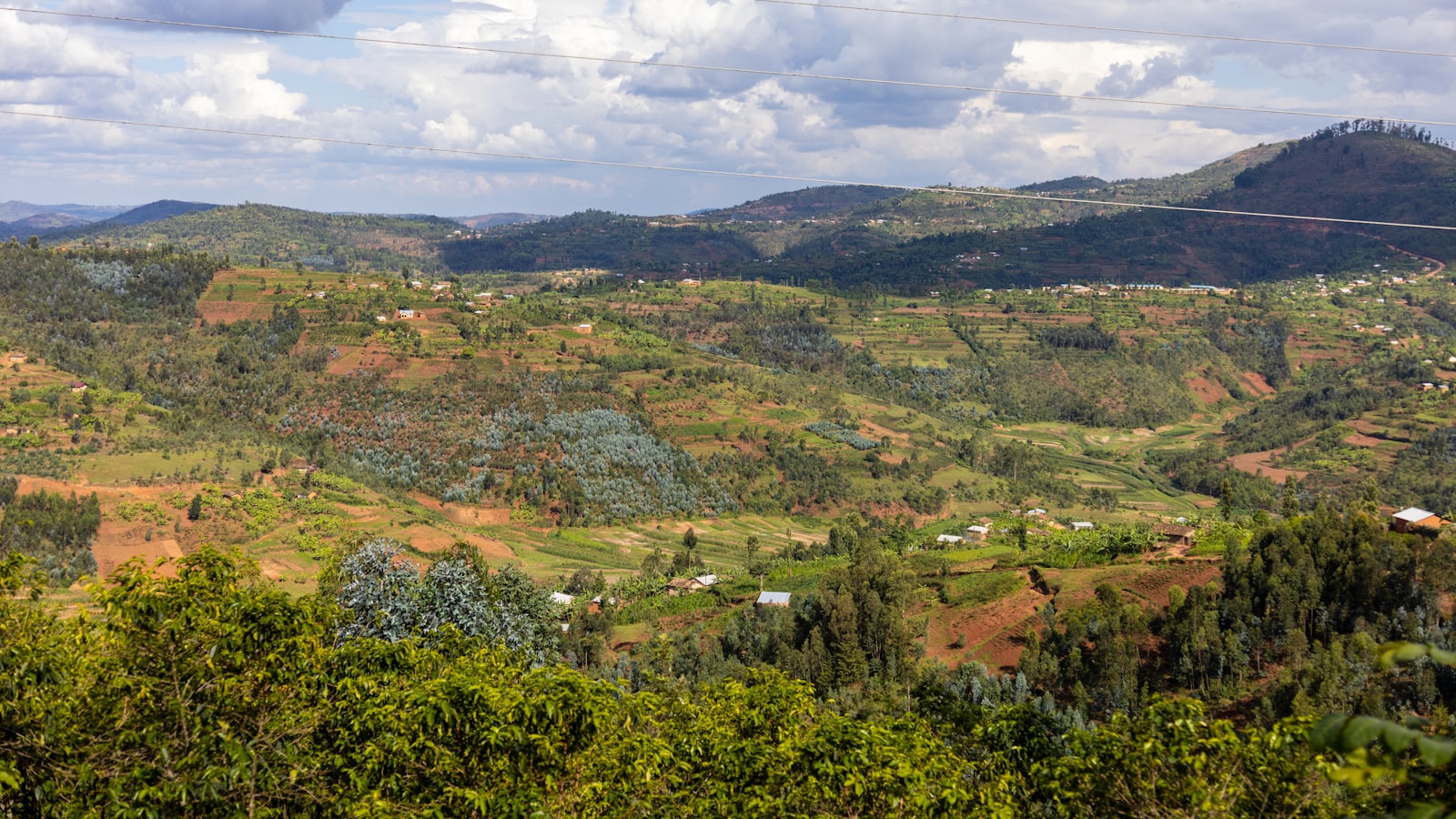
Photo by Tobias Doering on Unsplash
The day starts early. You report to the park headquarters for an 07:00–08:00 briefing, where rangers assign you to a gorilla family and run through the rules. Allocation often takes account of fitness, so tell your guide honestly how strenuous a hike you want.
Then you walk. The trek can last anything from under an hour to six hours or more each way, over steep, muddy, root-tangled terrain at altitudes of 2,000–3,000 metres or higher. The forest is genuinely thick, and trackers may cut a path with machetes. Hiring a porter for around USD 15–20 plus a tip is strongly recommended: they carry your daypack, steady you on slippery slopes and provide vital income to local communities.
When you reach the family, the effort falls away. For one hour you watch them at close range, then begin the descent. Most treks finish by early afternoon, though longer ones can fill the day, so carry enough water and snacks for a full outing.
Fitness and what to pack
You do not need to be an athlete, but a reasonable level of fitness helps, as the combination of altitude, mud and gradient is demanding. If you have limited mobility, ask about shorter sectors or, in some parks, a sedan-chair carrying service arranged in advance for an extra fee. Walking poles and a porter make a real difference.
Dress for a wet, scratchy, changeable forest. The right kit turns a gruelling day into a manageable one.
- Sturdy, waterproof, broken-in hiking boots with good grip
- Gardening-style gloves to grip nettles, vines and thorns
- Waterproof jacket and rain cover for your daypack
- Long-sleeved top and long trousers tucked into socks
- A walking pole or two (often available to borrow or buy at the park)
- Plenty of water, snacks, insect repellent, sunscreen and a camera with no flash
Best time to go and combining your trek
Gorilla trekking is possible year-round, but the drier seasons, roughly June to September and December to February, make for firmer trails and easier walking. That said, this is rainforest and it can rain in any month, so always expect mud. The wetter seasons bring lower visitor numbers, lush scenery and, in Uganda, occasional permit discounts.
It is well worth building a wider trip around the trek. In Rwanda, pair Volcanoes National Park with Kigali's moving Genocide Memorial and a separate golden monkey trek. In Uganda, combine Bwindi with chimpanzee tracking in Kibale Forest and a classic savanna safari in Queen Elizabeth National Park, famous for its tree-climbing lions in the Ishasha sector.
Many visitors cross between Rwanda and Uganda by road, flying into Kigali and trekking in Bwindi, which sits close to the border. A good operator can stitch the logistics, permits and park transfers together into one seamless itinerary.
Conservation: where your money goes
The high permit fees are central to why mountain gorillas are one of conservation's rare success stories. Numbers have climbed back above 1,000, and the subspecies was downgraded from critically endangered to endangered in 2018, largely because tourism gives the forests and the gorillas a tangible economic value worth protecting.
A meaningful share of permit revenue funds ranger patrols, veterinary care and anti-poaching work, while a percentage is channelled to the communities living around the parks through schools, clinics and revenue-sharing schemes. Hiring porters, tipping guides and buying locally amplify that benefit. In a real sense, the price of your permit is the reason the gorillas are still there to visit.
Frequently Asked Questions
- How much does a gorilla permit cost in 2026?
- Indicative 2026 prices are around USD 1,500 in Rwanda, around USD 800 in Uganda and lower again in the DRC. Prices change periodically and Uganda sometimes discounts low-season permits, so confirm current rates with the national park authority or your operator before budgeting.
- Is gorilla trekking better in Uganda or Rwanda?
- Rwanda is more accessible and premium but has the priciest permit. Uganda offers cheaper permits, more gorilla families and easy combinations with chimpanzees and savanna safaris, but involves longer overland transfers. Choose Rwanda for a short, polished trip and Uganda for value and variety.
- How fit do I need to be?
- You need reasonable fitness rather than athletic ability. Treks range from under an hour to six hours or more over steep, muddy, high-altitude terrain. Walking poles and a porter help greatly, and some parks offer shorter sectors or a paid carrying service for those with limited mobility.
- What is the minimum age for gorilla trekking?
- The minimum age is 15 years in all three countries. This protects both the young trekker on demanding terrain and the gorillas, who are vulnerable to human illnesses that children more commonly carry. Proof of age may be checked at the briefing.
- How long do you spend with the gorillas?
- The visit is strictly limited to one hour from the moment your group reaches the family. This rule minimises stress on the gorillas and the risk of disease transmission. The hike to and from the gorillas is separate and can take anywhere from under an hour to most of the day.
- When is the best time to go gorilla trekking?
- The drier seasons, roughly June to September and December to February, offer firmer trails and easier walking. Trekking is possible year-round, but as this is rainforest you should expect mud in any month. Wetter months bring fewer visitors and sometimes discounted permits in Uganda.
- Is the DRC safe for gorilla trekking?
- The DRC's Virunga National Park has the cheapest permits but is subject to periodic security closures, and its status can change at short notice. Always check your government's travel advisories and the park's official channels before booking, and be prepared to switch to Rwanda or Uganda if needed.